

Dr.Zarin Modiwala,Dr.Suhas Haldipurkar,Dr.Harsha Dahake
Introduction
Nowadays cataract surgery has become more of a refractive surgery and patients expectations for unaided visual outcome has increased.
Patients not only expect good objective results like improved visual acuity but also subjective results in terms of good visual quality post cataract surgery.
Patients expects spectacle free vision for working at multiple distances (far, intermediate and near)
Visual function and patient satisfaction: Comparison between bilateral diffractive multifocal intraocular lenses and monovision pseudophakia
Fuxiang Zhang, MD, Alan Sugar, MD, Gordon Jacobsen, MS, Melissa Collins, COA . J cataract refract surg 2014
Purpose
To assess patient satisfaction and Spectacle dependency after phacoemulsification surgery in eyes with monovision, multifocal, & trifocal IOL.
Methods
Study Population
| Monovision | Multifocal | Trifocal |
| (Acriol-EC;Tecnis;Acrysof IQ | (Restor) | (Physiol) |
| 62 patients | 32patients | 31 patients |
NCLUSION Inclusion CRITERIA criteria:
- Patients who underwent bilateral cataract surgery with implantation of any of these procedures. (monovision,multifocal & trifocal IOL)
- IOL in the capsular bag with optic edge fully overlapped by anterior capsulorrhexis.
EXCLUSIONExclusionCRITERIACriteria:
- Patients with BCVA less than 6/9 and or N/6.
- Patients with previous ocular surgery or any active ocular disease
- Patients developing significant PCO
- Patients not willing for participation in study
Study design : Prospective cohort study
Study site : Laxmi eye institute,Panvel,Maharashtra
Methodology :
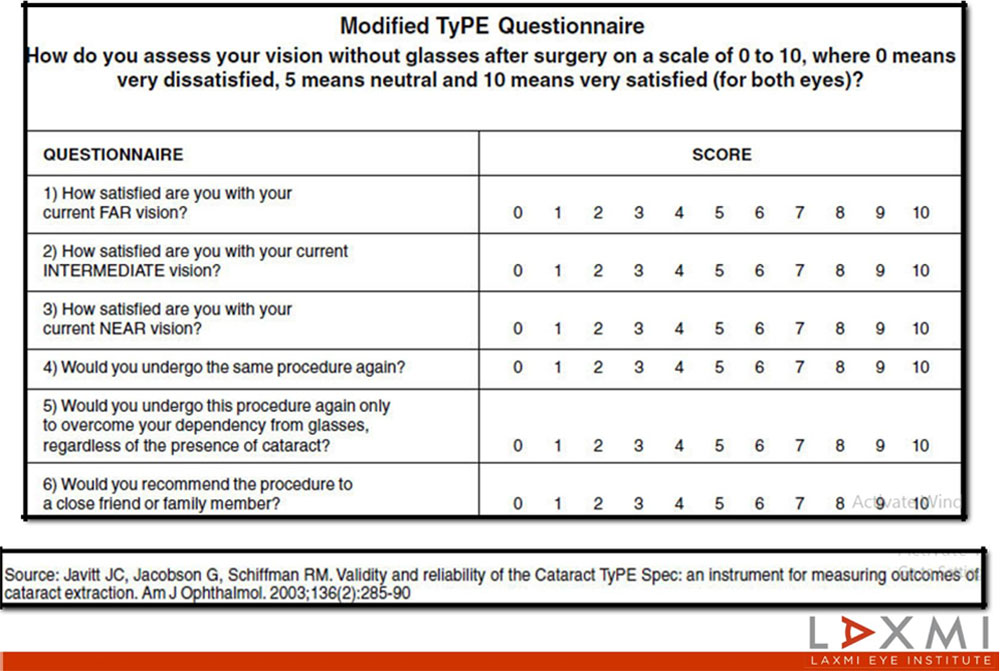
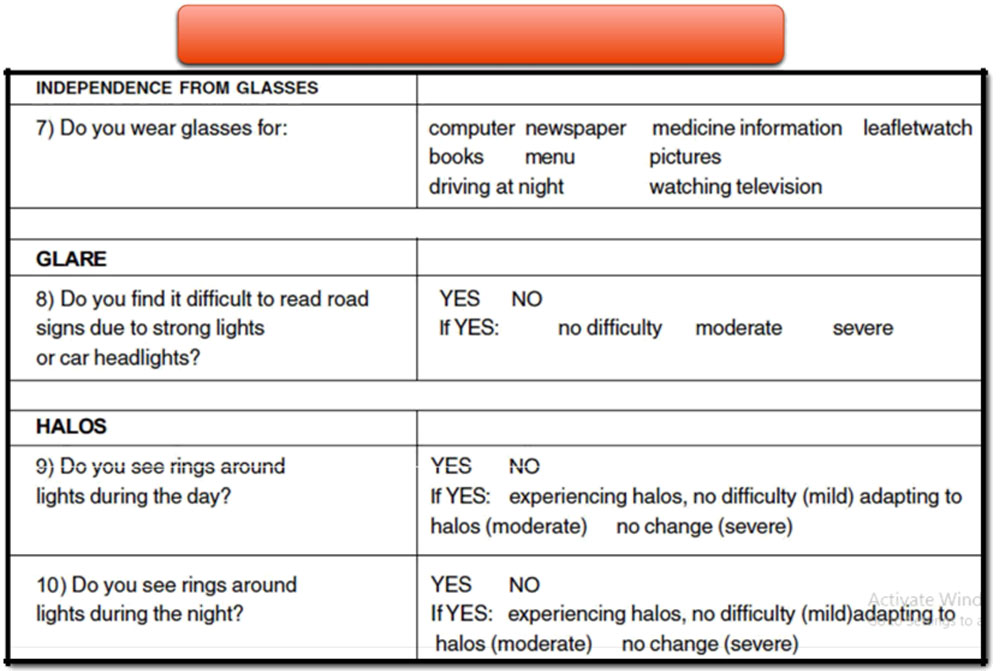
At 3 month follow-up , spectacle dependancy[modified TyPE] questionnaire was administered.
Prior to it routine examination i.e. refraction and slit lamp examination was done to check visual acuity & position of IOL.
Prior written informed consent was taken.
Questionnaire instillation interviews was carried out by a single interviewer for consistency .
Modified TyPE Questionnaire

Statistical methods
We estimated the means and standard deviation for continuous variables .
The means across groups were compared using analysis of variance.
The pairwise comparison was done using Tukey’s correction.
A p value of <0.05 was considered significant.
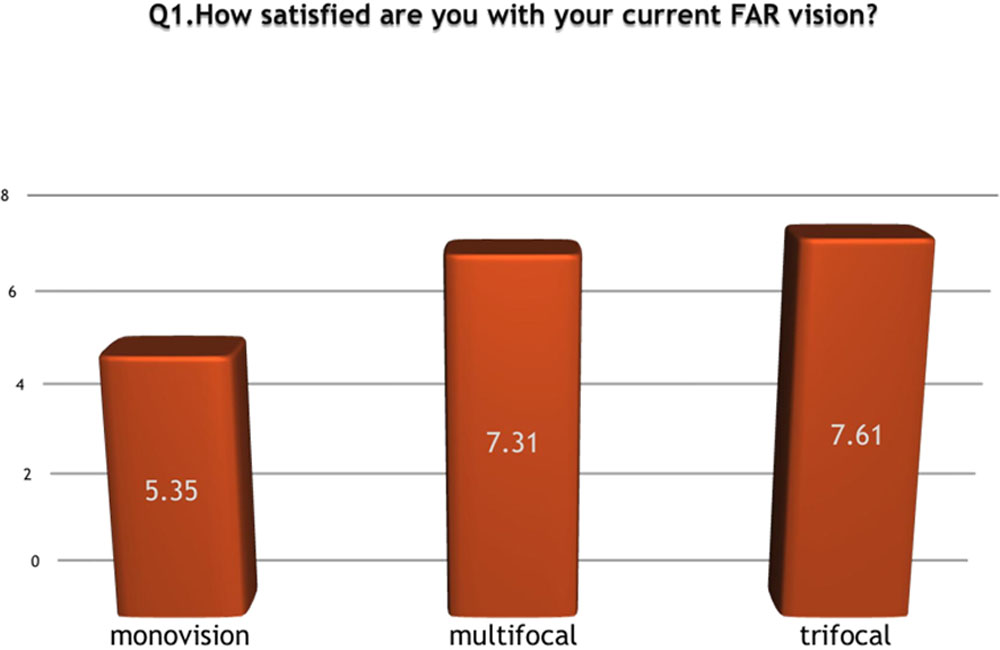
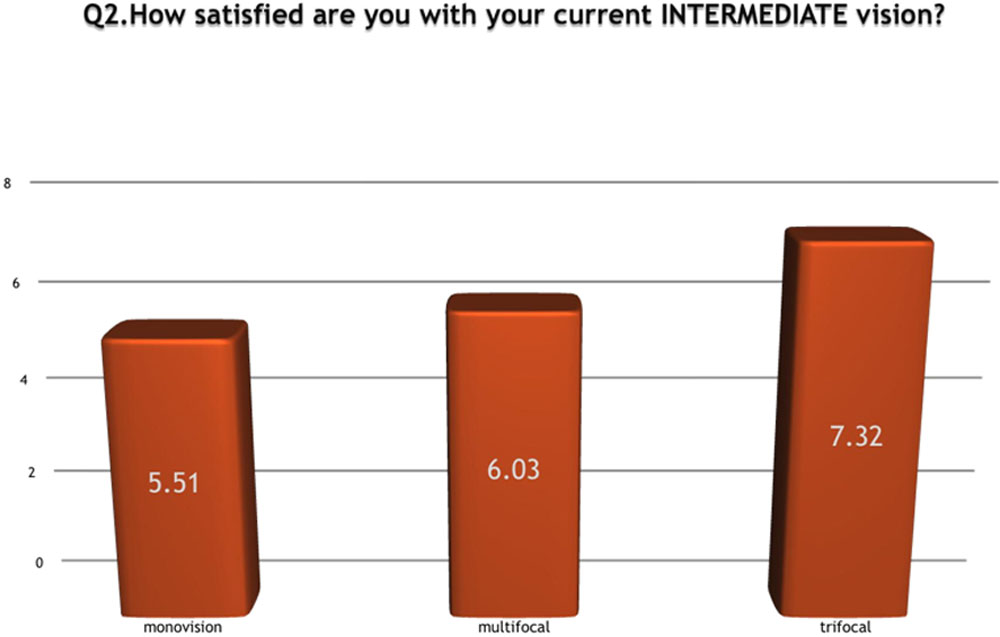
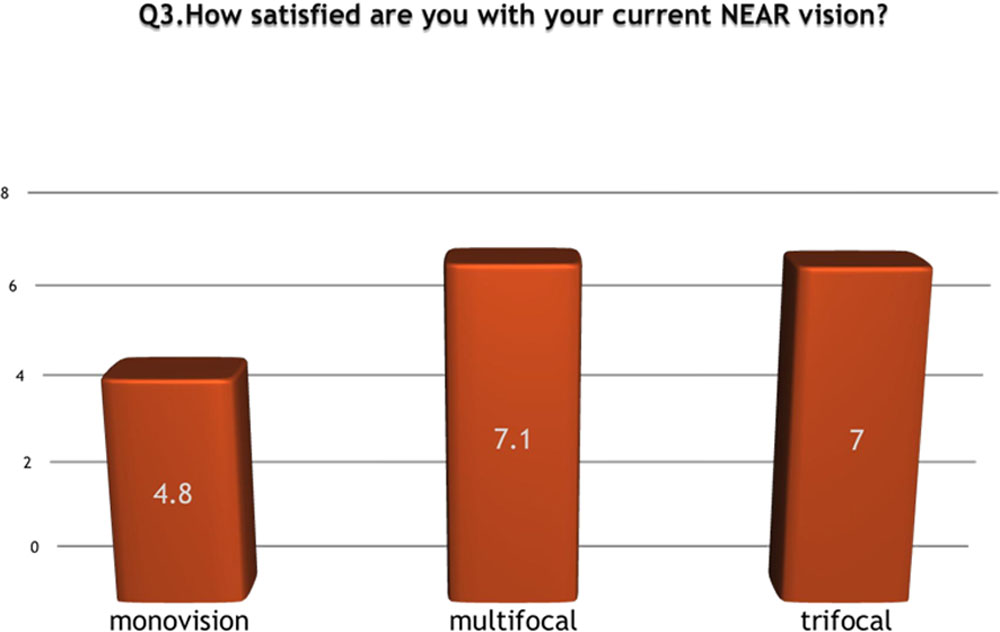
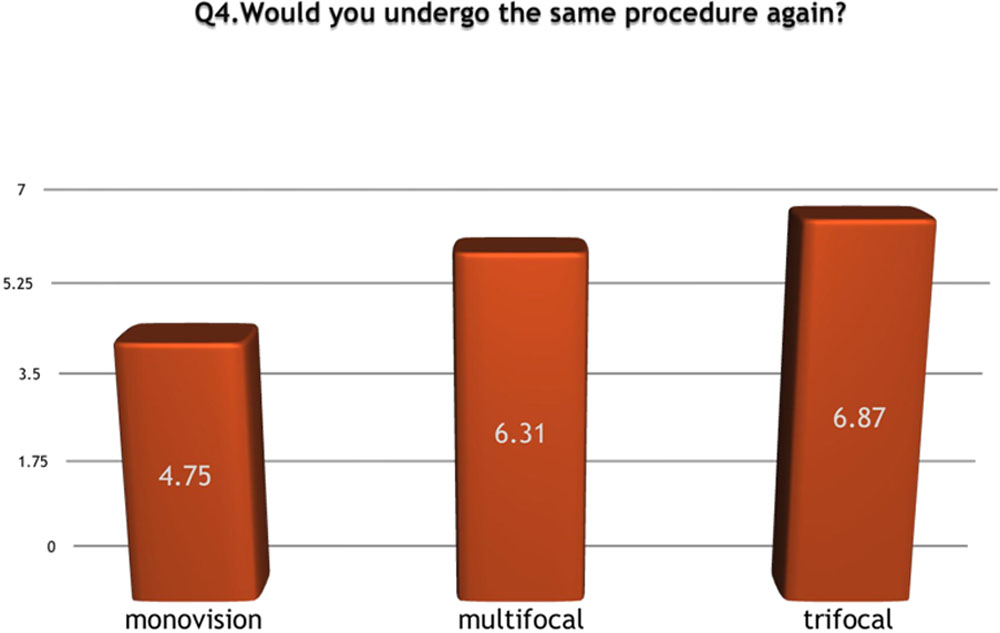
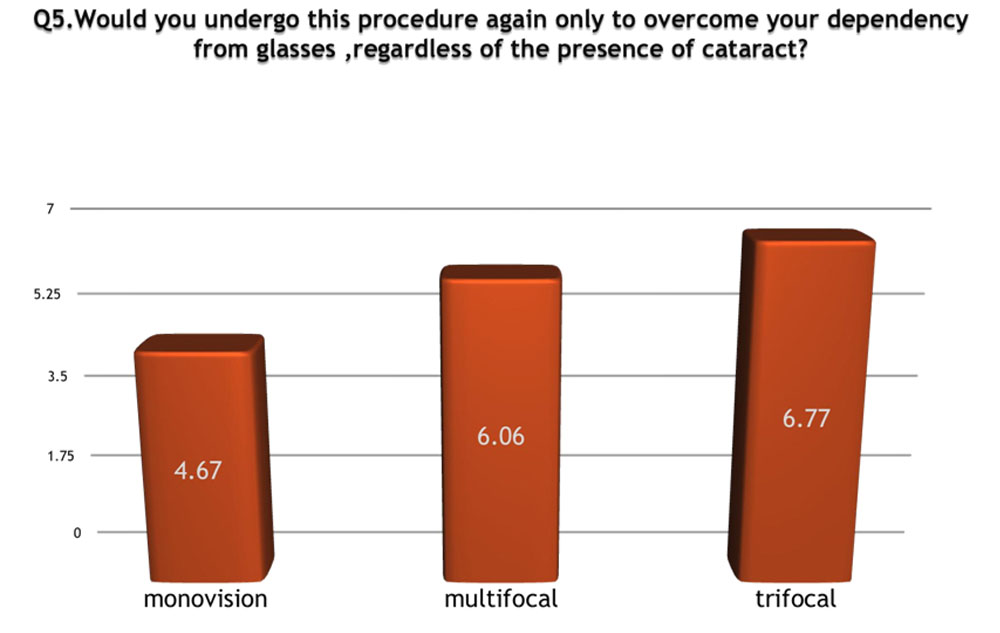
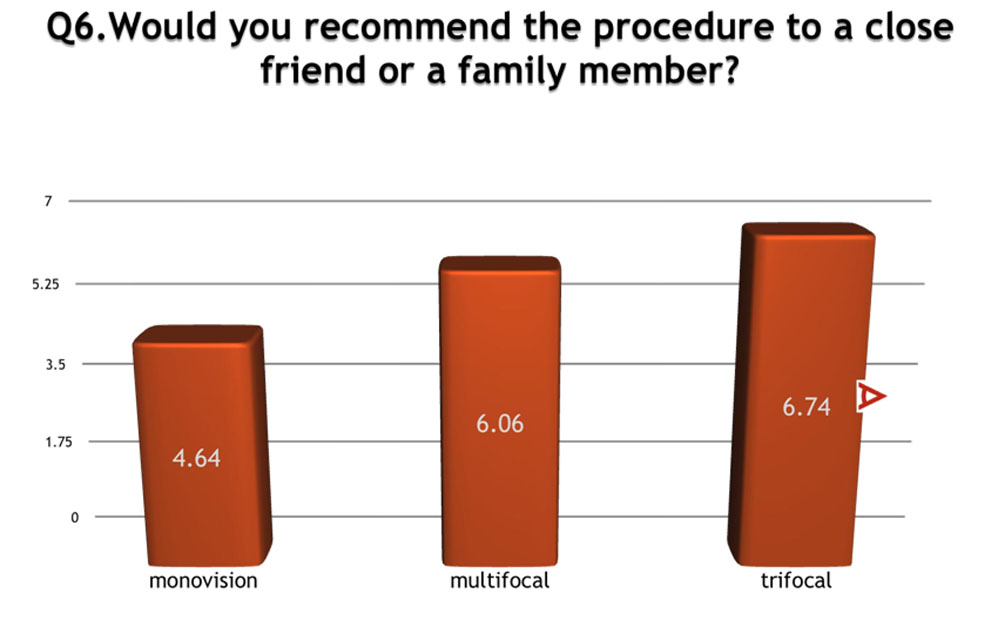
Trifocal & Multifocal IOLs were significantly better than monovision for all questions.(p<0.05)
There was no significant difference between trifocals and multifocals for Q1,3,4(p>0.05); whereas the trifocals performed significantly better than multifocals for Q 2,5,6. (p<0.05)
Discussion
Monovision patients were more spectacle dependant compared to other groups.
In term of far vision , trifocals were most satisfied followed by multifocals.
For intermediate vision trifocals were more satisfied.
For near vision multifocals performed marginally better than trifocals.
Overall spectacle dependancy was least and patient satisfaction rate was more in trifocal group.
Conclusion
Bilateral implantation of trifocal IOL is a good option for presbyopia correction post cataract surgery with lesser spectacle dependence and more patient satisfaction.
Leave a Comment