

Dr.ASHRAF HUMAYOUN, Dr.GIBY THACHIL,Dr. ASHRAF MOHD.,Dr.Bhupinder Pal Kaur
ABSTRACT
Purpose: To determine the socioeconomic aspects of long-term glaucoma therapy in glaucoma patients by means of questionnaire in diagnosed glaucoma patients.
Materials and Methods: One hundred consecutive adult patients with primary glaucoma for at least 1 year and on regular follow-up at our glaucoma clinic were enrolled in this study. A questionnaire was administered to the patients by a single observer. Information regarding expenditure on drugs per month, family income per month, educational status and health insurance cover or reimbursement of medical expenses was collected.
Results: In this study, the maximum number of cases were diagnosed with primary open angle glaucoma (60%).Majority of the patients belonged to lower and higher middle income group(63%) i.e. with monthly income between Rs.5000 – Rs.30000.Approximately 82 patients were on combination drug therapy. In those patients using combination medications, the most common combination consisted of beta blockers, alpha agonist and PG analogues.The mean monthly expenditure on glaucoma medications was Rs. 677.49 per month, with a range of Rs. 40 – 1665 (p <0.001).The expenditure on anti-glaucoma medications ranged from 1.54% – 3.34% in high income group to 10.24 % – 10.92% of their monthly gross incomein low income group. The total expenditure including stay, travel and loss of wages of patients and accompanying persons ranged from 1.75% – 4.77% in high income group to12.64% – 16.97% of the monthly income in low income group.
Conclusions: we conclude that the economic burden associated with visual impairment from glaucoma are considerable. Early identification and individualization of treatment of patients with glaucoma are very likely to reduce an individual’s loss of health related quality of life as well as his personal and socioeconomic burden.
Key words: Chronic glaucoma patients, economic burden, socioeconomic profile, long term glaucoma therapy.
INTRODUCTION
Glaucoma is characterized by chronic and progressive damage to the optic nerve.1 It is the second leading cause of blindness worldwide (after cataract), and is responsible for about a third of those currently blind. Most cases of blindness (75%–80%) due to glaucoma can be prevented.1 Lifelong control of intraocular pressure (IOP) is very essential for glaucoma treatment. The primary treatment for glaucoma is mainly medical, as surgical treatment have a risk of failure and complications.1,2 Even though medicines are thought to be safer, patients often need more than one medication to reach the “target” IOP,which may elevate the chances of side effects, as well as long-term treatment expense.3,4 Early population based studies reported a prevalence of glaucoma between 2% and 13%.Although glaucoma cannot be prevented or cured, it can be controlled, but cannot be regained once the visual field is lost it.2 Treatment costs are directly related to severity of the disease and the number of glaucoma medications used, and most Indians are living below the poverty line. We observed that patients found it difficult to maintain compliance with the treatment options for glaucoma, and the socio-economic challenges involved may be a significant contributing factor.1 Therefore, this study was performed to identify the extent to which glaucoma challenges patients economically in this part of the country.
MATERIAL AND METHODS
This was a cross – sectional study, conducted at Eye OPD, JN Medical College, and Glaucoma clinic of Institute of Ophthalmology, AMU, Aligarh. The study was conducted from October 2015 to September 2017. A total of 100 consecutive adult patients with primary glaucoma using glaucoma medications for at least 1 year and on regular follow-up were enrolled in the study after giving details regarding the nature of study.
The patients were diagnosed with glaucoma, following slit lamp biomicroscopy, fundus examination using +78 D lens, applanation tonometry, gonioscopy, diurnal phasing and perimetry (Humphrey® Field Analyzer/HFA™II – iSeries) by at least a glaucoma expert. A questionnaire was administered by an observer, to the patient. Information regarding educational status, expenditure on drugs per month, family income per month and health insurance cover or reimbursement of medical expenseswere collected. Patients who were non compliant or were unable to answer all questions were excluded.
This study was approved by the institutional ethics committee of faculty of medicine, Jawaharlal Nehru Medical College, Aligarh and was carried out in accordance with the Declaration of Helsinki.
Data were analyzed using IBM SPSS STATISTICS, Version 23.0 (IBM Corporation, Armonk, NY, USA). Besides descriptive Statistics and chi-square test, the comparison of expenditure was done by applying one-way ANOVA test. Pvalue <0.05 was considered significant.
RESULTS
Demographics
Of the 100 consecutive patients who gave their informed consent for this survey, 46 were males and 54 were females. The mean age of the male patients in this study was 53.0 ± 12.0 years, range (26 – 72 years) and mean age of the female patients was 55.0 ± 9.0 years, range (36 – 80 years). Within these 100 patients, 74 belonged to Aligarh, whereas the remaining 26 patients were from outside Aligarh.
Among the patients studied, 60 out of 100 glaucoma cases were POAG and the rest 40 were PACG cases. POAG consisted of 33 males and 27 female patients. PACG consisted of 13 males and 27 female patients. Of the 100 patients studied 43 patients had under gone trabeculectomy. Among those 43 patients who were on regular follow-up, 4 patients were found to be not on any medications following trabeculectomy. ( Table 1)
Income Distribution
Seventeen percent of patients had a monthly income of <Rs.5000, 27.0% patients earned between Rs.5000 – 10,000, 36.0% patients earned between Rs.10,000-30,000 and 20.0% patients had a monthly income of >Rs.30,000 per month. Majority of the patients belonged to middle income group (Figure 1).The p value between the groups was 0.036, which was significant (P< 0.05).
Eighty one percent of the patients bought medications on their own expense, when mere 19% of patients got reimbursement through their health insurance.
Different drug regimen
Of the 100 patients analyzed, 82% patients were on combination drug therapy, 14.0% patients on single drug therapy and 4.0% patients were not on any medications. Of the 82% patients on combination drug therapy, majority of the patients 41.0% were using three medications, 26.0% patients were using 2 medications and 15.0% were using four medications. Among patients on single drug therapy, the most common medication used was PG analogues.In those patients using combination medications, the most common combination consisted of beta blockers, alpha agonist and PG analogues.(Table 2).
Direct cost of treatment
Patients using beta-blocker alone spent Rs.70 per month, prostaglandin analogues costs Rs.190–495 per month, alpha agonist costs Rs.142-155 per month and those patients using carbonic anhydrase inhibitors spent around Rs.600 per month. Maximum number of patients were on three drug regimen consisting of Beta-blocker, alpha agonist and PG analogues. They had a monthly mean expenditure of Rs.609.09. Most patients who were using multiple medications had a mean monthly expenditure of Rs. 677.49 per month, with a range of Rs.40 –1665 on their glaucoma medications. (Figure 2)
The mean expenditure of perimetry for the patients was Rs. 1456.70± 953.79, with a range of Rs.550–Rs.5000. Other investigations were not charged at our institute which included applanation tonometry, diurnal variation testing, gonioscopy etc.
Direct non-medical costs
The cost of lodging, travel, food of the patient and accompanying person was an average of Rs.118.98 per visit ( Range : Rs.98.20 – Rs.139.78) to the hospital for patients coming from the same city, and Rs.269.61(Range : Rs.188.16 – Rs.351.07) for patients coming from areas outside Aligarh. The average follow – up visit in our patients within the study was once in 3 months (interval was from 1 to 6 months.
Total economic burden (Figure 3,4)
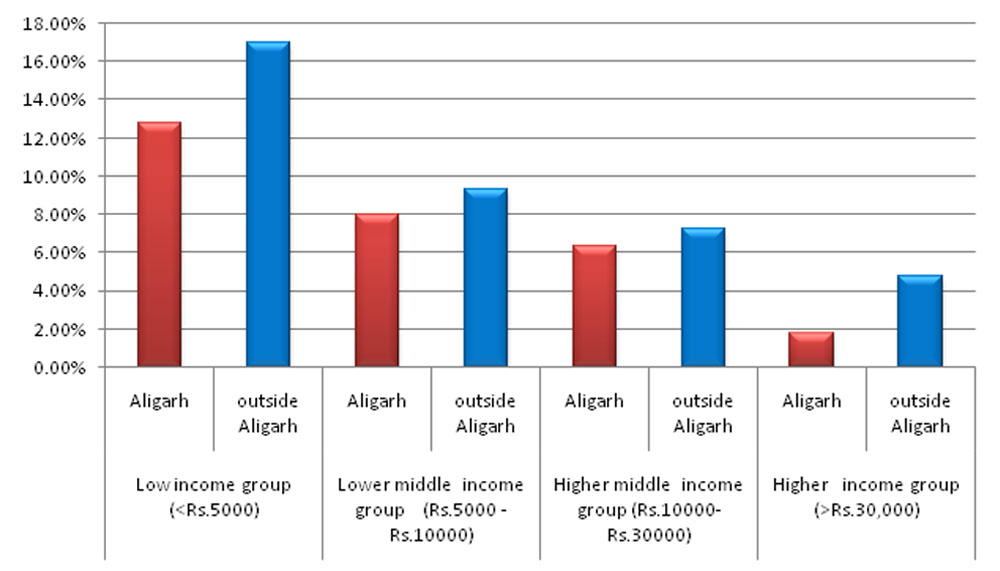
Patients belonging to the low income group (<Rs.5000/month) coming from Aligarh had a mean expenditure on medicines of Rs.456.50, (range: Rs.80–Rs.725).This amounted to 10.24%, (range: 2%–14.85%) of their monthly income. Consolidated expenditure on glaucoma management, including medicines, travel and stay, loss of wages was Rs.567.33 (range: Rs. 110-Rs.875.00), which accounted for12.74% (range: 2.75%-17.50%) of average monthly income. A patient from this low income group coming from outside Aligarh spent a mean of Rs. 359.00 (range: Rs.142-Rs.535) on medications, that is, 10.92% (range: 3.55%-17.83%) of his monthly income.His mean consolidated expenditure was Rs. 609.00 (range: Rs.442–Rs.724) that is, 16.97% (range: 11.05%–21.17%) of monthly income.
Patients belonging to lower middle income group coming from Aligarh spent 6.07% (range: 1.55%–16.41%) of his monthly income on medicines, and his consolidated expenditure was 7.96 % (range: 2.90% – 21.41%) of his monthly income. For those from distant areas outside Aligarh, the expenditure on medicines was 6.21% (range: 3.00%–11.61%) and the consolidated expenditure was 9.31% (range: 4.10% – 16.06 %) of average monthly income. patients from the higher middle income group from Aligarh had a mean expenditure of 5.54% (range: 0.16% – 16.65%) of monthly income and consolidated expense of 6.29% (range: 0.36% – 18.65%). A patient from distant rural areas outside Aligarh spent 5.48% (range: 1.14 %– 10.83%) of his monthly income on medications and 7.26% (range: 4.60% – 13.33%) as a consolidated cost on glaucoma therapy.
Patients belonging to the higher income group (>Rs.30,000/month)from Aligarh spent 1.54 % (range:0.18–2.36 %) of their monthly income on medicines, and 1.75 % (range:0.27–2.76 %) on total expenses. Those coming from distant rural areas outside Aligarh spent 3.34 % of their monthly income on medicines, and 4.77 % overall on glaucoma therapy (Figure 3, 4).
DISCUSSION
In this study, most of the patients who presented to our government hospital from Aligarh and rural areas outside Aligarh, belonged to middle income group. Buying anti-glaucoma drugs on a regular basis was a heavy burden for them since their monthly expenditure amounted to a considerable percentage of their monthly income. Only 19% of patients had their medical expenses reimbursed from health insurance or government schemes. The average cost of glaucoma drugs alone ranged from 2% to17.83% of the monthly income of the lower income group patients. This implies that the burden on the patients and their families, to finance therapy highlighting the need for a cost-effective treatment such as surgery in such patients, especially if they belong to distant rural areas.
Almost one-fourth of the patients visited from distant rural areas outside Aligarh, a fact which raised the indirect medical cost of these patients. If their stay, travel and loss of wages are included, the average consolidated cost rises to 21% of the monthly income of patients from the lower income group, especially if they lived inrural areas wherein the nondrug expenditure is almost similar to that of the direct therapy cost (P < 0.001).A study from France by Rouland et al (2005). showed that direct medical costs amounted to 45% of the total cost whereas direct nonmedical costs were 20%, and indirect costs were35%, which were considerable.5 Similarly, in Nigeria, the average cost of glaucoma medications was USD 40/month, with indirect costs of tests,transportation and escorts adding another USD 105.4/month.1 Development of the basic glaucoma related services, diagnosis, therapy or at least a good review at neighbouring district hospitals, would significantly reduce the expenses of by patients away from large cities.
Training ophthalmologists to do a good fundus examination, tonometry,
gonioscopy and even perimetry, should be undertaken periodically. Hence, there is a desperate need for cheap health insurance schemes or microloan facilities for lower income grouppatients which would help patients seek medical assistance early, and continue the prescribed lifelong medical therapy.6
A single glaucoma medication was being used by 14% of patients in our study, which consisted of beta blocker, alpha agonists and prostaglandin analogues in equal numbers incontrary to the study conducted by Nayak et al. done in Indian scenario, where of the30.75% patients on single medications almost two third patients used betablockers.6 This could be accounted to the majority of patients belonging to lower economic group in their study, whereas in this study, majority of the patients belonged to middle income group. Even though the average expenditure on betablockers was 4 times less than prostaglandin analogues in a month, minimum frequency of medications and their effectiveness helped the patients achieve their target IOP easily and with better compliance. Prostaglandin analogues cost is reported to be offset by fewer clinic visits, and by avoiding surgery or costs associated with managing low vision.7 Timolol was started as an initial treatment in poorer patients, when not contraindicated, as it is extremely cost-effective and prostaglandin analogues may be reserved as an alternative or as an optional therapy for those poor patients not achieving “target” IOP with Timolol. Pilocarpine which is a cheap, effective and comfortable alternative, should be utilized especially in cases of angle closure glaucoma and should be made available in developing countries. In our study,
The mean monthly expenditure on glaucoma medications was Rs.677.94 per month with a range of Rs.40-1665. Whereas in the study by Nayak et al. (2015), the mean monthly expenditure on glaucoma medications including those on multiple medications was Rs. 400.06 per month, with a range of Rs. 50–1873.1 About 26% patients were using two drugs while 41% were on three medications and 15% used four drugs. While in the study by Nayak et al. (2015), 42.7% patients were on two drugs, 21.3% patients on three drugs and 5.3% were using more than four drugs.6 In our study, 15% patients were found to be using 4 drug therapy even when the medical treatment was expensive and associated with chances of poor compliance. The availability of proper quality controlled generic drugs may make a remarkable impact on the cost of medical therapy. As most patients were on more than one drug, combinations may be considered, both from an economic and quality of life aspect, after considering the efficacy of each component.6 Moreover, the economic condition of the patient must be always kept in our mind before prescribing medications.
Besides, all glaucoma investigations, except perimetry, such as the gonioscopy, applanation and schiotz tonometry, diurnal variation tests were not charged for in our institution, but in private hospitals, the cost of tonometry which is included in consultation charges is on average Rs. 400 for a patient in Delhi.6 Hence, the total cost would rise significantly if the cost of these essential investigations at least twice a year is included. Thus, there is a need for proper follow-up guidelines, which should be drafted for these patients to avoid unnecessary outpatient visits at short intervals.
Among the respondents in our sample of consecutive patients most of them (60.4%) opted for surgical treatment rather than medical treatment of glaucoma, even though the risk associated with trabeculectomy and the need for further, but probably few topical medications were properly explained. Many quoted the high cost of topical medications as a factor in their decision. Varma et al.(2011) reported that treatment of glaucoma was cost-effective if the costs associated with diagnostic assessment were excluded. However, it may be difficult for diagnostic costs to be separated from treatment costs, and all have to be paid for one way or another. In the same study they concluded that despite the high initial cost, the surgical option may be better in the long term for selected cases, in particular younger individuals, and also when compliance would be an issue.8 In contrary to these opinions, few studies done abroad, stresses that medical therapy should be opted above surgical management of glaucoma therapy.
Adio et al.(2011) on a study on “Economic burden of glaucoma in Rivers State, Nigeria” states that almost all the patients had opted for medical treatment rather than surgical treatment of glaucoma, even though quite a number of them were well educated.1 Therefore, the choice of treatment, whether surgical or medical, needs to be individualized.
The human misery and social cost of blindness, especially in countries that can ill afford it, like India, are profound. Loss of productivity from high numbers of blind people is enormous. Asuccessful surgery may still be affordable in the long term than constant use of medication, which is not necessarily used consistently. In fact, the global economic productivity loss due to blindness was estimated to be USD19 billion in 2000.9 Even a developed economy cannot afford the costs of avoidable blindness, and vision loss has been ranked seventh in the causes of loss of well-being in an Australian study.10 If government and policymakers were to reduce the costs of surgical treatment of glaucoma, particularly for those who have not had medical treatment before hand, or at least subsidize it, there is likely to be better uptake which will, in turn, mean better control of intraocular pressure in the long term and less burden to the economy.
Furthermore, it has been quoted by Taylor et al.(2011) that, “for each dollar spent in the prevention of vision loss and eye care, there is a 5 dollar return to the community”.10 It is important for policymakers to know this, so that effective health care strategies canbe taken up to mitigate the effects of glaucoma on the economy.
Management of the disease has to be cost-effective. Early disease identification is also important, because this helps to contain both direct and indirect expenses and also limits loss of economic productivity from functional visual loss or impairment as a result of delayed treatment.11,12,13 Once vision is impaired, the cost of accessing eye care proportionally increases.
Also, one third of our patients had related systemic diseases, including diabetes and hypertension, which have a strong association with glaucoma due to the problems they create with optic nerve perfusion, and further which resources have to be spent.
Caregivers or escorts significantly assist patients whatever the disease stage, but
Particularly for individuals with visual impairment. They escort them for doctor’s visits and help in daily activities, which impacts their working time (productivity loss) and leisure time. While most caregivers are family members, neighbours and friends are often involved, particularly in rural areas with insufficient public transport. A few papers have addressed the real costs of caregivers.14
In our study, 55 patients were accompanied by escorts or caregivers on each follow up visit to our glaucoma clinic.Of which, 37 of the escorts had to sacrifice an entire working day per visit. This amounted to a huge amount in terms of travel cost, food and loss of working hours of theses escorts along with that of the patient.
Implementing glaucoma screening programs for all patients above 40 years presenting to the hospital would help detect glaucoma early, which would reduce the cost in the long-term. Vaahtoranta-Lehtonen et al.(2007) stated that an organized screening program in Finland, was a cost-effective strategy, especially in older age groups, and was acceptable to decision makers and patients at any level.15
CONCLUSION
From this study we conclude that the economic costs associated with visual impairment from glaucoma are considerable. The present study demonstrates that the main socioeconomic consequences of visual impairment lie beyond health care systems, and that visual impairment, particularly from glaucomaminimize an individual’s loss of health related quality of life as well as the personal and socioeconomic burdens.
We usually tend to neglect the economic burden of travelling and loss of livelihood due to the frequent follow ups. Another field of interest, which has not yet been fully investigated, is the involvement of caregivers (family, neighbours) assisting glaucoma sufferers. Since visual impairment leads to incapacity and dependence, our government should promote finance health innovations that aim to preserve vision. Implementation of certain steps such as, introduction of quality assured generic drugs, and the use of cheaper alternatives in suitable candidates may address the cost issue for some patients.
Disclosure
The authors report no conflicts of interest in this work or any financial interest.
References
- Adio AO, Onua AA. Economic burden of glaucoma in Rivers State, Nigeria. Clin Ophthalmol Auckl NZ. 2012;6:2023–31.
- Devindra Sood, Deepak Goyal, N.N. Sood. Open Angle Glaucoma-Trends in Management. 2010;23:3.
- Smith RJ. The Lang lecture 1986. The enigma of primary open-angle glaucoma. Trans Ophthalmol Soc U K. 1986;105 ( Pt 6):618–33.
- Thylefors B, Négrel AD, Pararajasegaram R, Dadzie KY. Global data on blindness. Bull World Health Organ. 1995;73(1):115–21.
- Rouland J-F, Berdeaux G, Lafuma A. The Economic Burden of Glaucoma and Ocular Hypertension. Drugs Aging. 2005; 1;22(4):315–21.
- Nayak B, Gupta S, Kumar G, Dada T, Gupta V, Sihota R. Socioeconomics of long-term glaucoma therapy in India. Indian J Ophthalmol. 2015; 63(1):20–4.
- Hoevenaars JGMM, Schouten JSAG, Van Den Borne B, Beckers HJM, Webers CAB. Socioeconomic differences in glaucoma patients‟ knowledge, need for information and expectations of treatments. Acta Ophthalmol Scand. 2006 ;84(1):84–91.
- Varma R, Lee PP, Goldberg I, Kotak S. An Assessment of the Health and Economic Burdens of Glaucoma. Am J Ophthalmol. 2011 ;152(4):515–22.
- Hiratsuka Y, Ono K, Kanai A. The present state of blindness in the world. Nippon Ganka Gakkai Zasshi. 2001 ;105(6):369–73.
- Taylor HR, Pezzullo ML, Keeffe JE. The economic impact and cost of visual impairment in Australia. Br J Ophthalmol. 2006 ;90(3):272–5.
- Lee PP, Levin LA, Walt JG, Chiang T, Katz LM, Dolgitser M, et al. Cost of Patients with Primary Open-angle Glaucoma: A Retrospective Study of Commercial Insurance Claims Data. Ophthalmology. 2007 ;114(7):1241–7.
- Schmier JK, Halpern MT, Jones ML. The Economic Implications of Glaucoma. PharmacoEconomics. 2007 ;25(4):287–308.
- Doshi A, Singh K. Cost-effective evaluation of the glaucoma suspect. Curr Opin Ophthalmol. 2007 ;18(2):97.
- Sharma A, Jofre-Bonet M, Panca M, Lawrenson JG, Murdoch I. Hospital based glaucoma clinics: what are the costs to patients? Eye. 2009;24:999.
- Vaahtoranta-Lehtonen H, Tuulonen A, Aronen P, Sintonen H, Suoranta L, Kovanen N, et al. Cost effectiveness and cost utility of an organized screening programme for glaucoma. Acta Ophthalmol Scand. 2007 ;85(5):508–18
Table 1: Demographic pattern of the study population.
| GROUPS | MALES | FEMALES | TOTAL |
| NO OF PATIENTS | 46 (46.0%) | 54(54.0%) | 100(100%) |
| AGE
[MEAN±SD] YEARS |
53.0 ± 12.0 | 55.0 ± 9.0 | |
| AGE RANGE (Years) | 26 – 72 | 36 – 80 | |
| ALIGARH | 33 (44.6%) | 41 (55.4%) | 74 (74.0%) |
| OUTSIDE ALIGARH | 13 (50.0%) | 13 (50.0%) | 26 (26.0%) |
| POAG | 33 | 27 | 60 |
| PACG | 13 | 27 | 40 |
Table 2: Distribution of patients with regard to no of glaucoma medications used
Groups.
| NO OF DRUGS | NO OF PATIENTS | PERCENTAGE | p value |
| SINGLE DRUG | 14 | 14.0% | 0.000 |
| 2 DRUGS | 26 | 26.0% | |
| 3 DRUGS | 41 | 41.0% | |
| 4 DRUGS | 15 | 15.0% | |
| Post TRAB
( not on any medications)* |
4 | 4.0% | |
| TOTAL | 100 | 100% |
(*Out of the 100 patients who were on regular follow-up, 4 patients were not on any medications following trabeculectomy)
Figure 1: Bar diagram showing distribution of patients with regard to different income groups
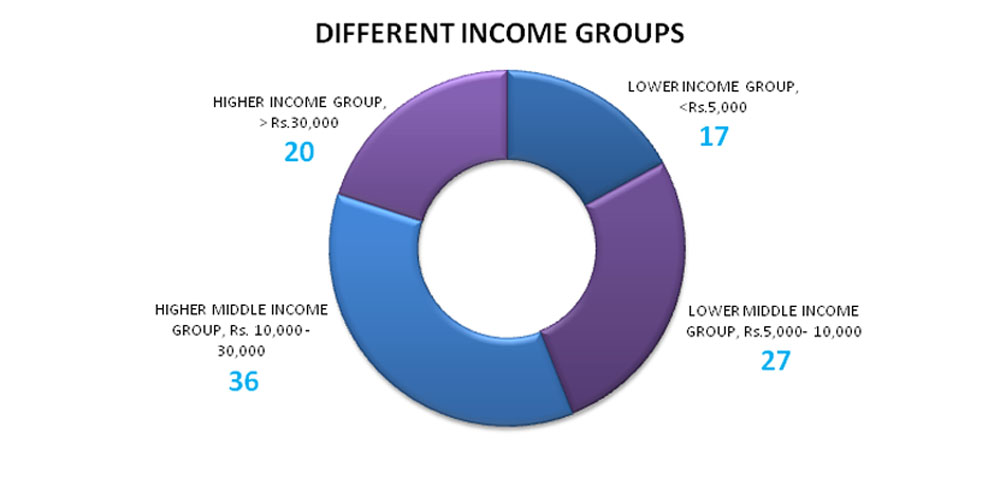
Figure 2: Bar diagram showing mean monthly expenditure of patients on each drug regimen
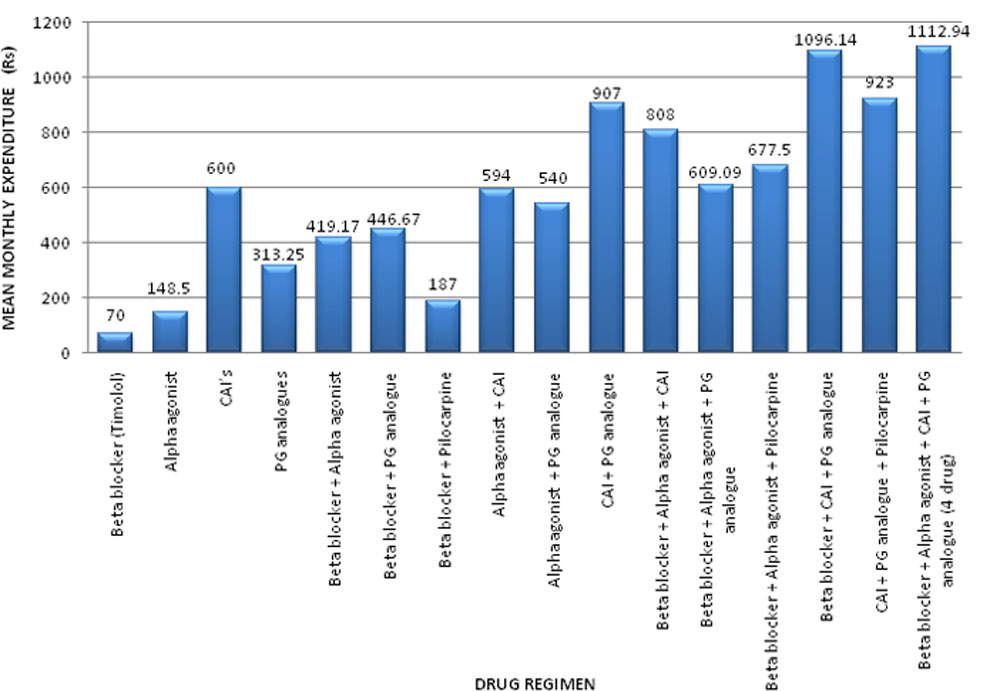
Figure 3: Mean drug cost in percentage of monthly income in patients both from Aligarh and from outside Aligarh in different income groups
Mean drug cost in percentage
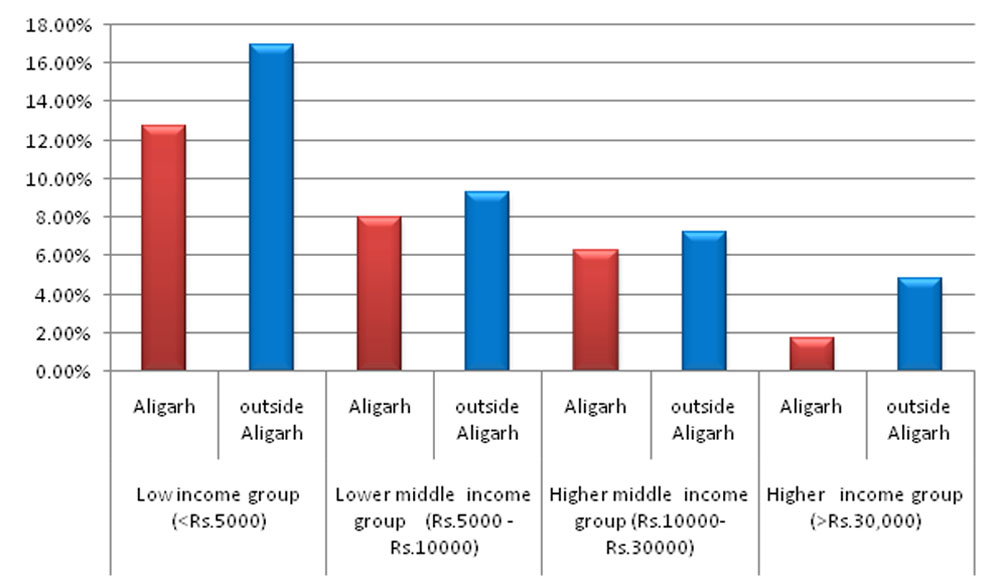
Figure 4: Mean total expense in percentage of monthly income in patients both from Aligarh and from outside Aligarh in different income groups
Mean total expense in percentage
Leave a Comment