

Dr. Akhilesh Kumar, Dr. Kavita Kumar, Dr. Aditi Dubey, Dr. Bhavana Sharma
INTRODUCTION:
Ocular chemical burn is a serious ocular emergency requiring prompt treatment and meticulous follow-up.The primary objectives of therapy in a case of acute ocular chemical burns are promotion of epithelialization, reduction of inflammation, support of the reparative processes and prevention of complications.These factors help to minimize scarring and vision loss.(1)Standard medical treatment used in acute ocular chemical burns comprises topical steroids, topical antibiotics, mydriatic,cycloplegics, anti-glaucoma therapy, citrate andascorbate. Autologous serum eye drops have been shown to be effective in the treatment of various ocular surface disorders includingneurotrophickeratitis, severe dry eye, persistent epithelial defects and recurrent corneal erosions.(2-9)
Similarly umbilical cord serum has been shown to be safe and effective in the treatment of neurotrophickeratitis, dry eye syndrome, and persistent epithelial defects.(11-12)Both autologous serum and umbilical cord serum owe their efficacy to the presence of various growth factors like Epidermal growth factor (EGF), Acidic and basic fibroblast growth factor(FGF), Platelet-derived growth factor, Hepatocyte growth factor, Vitamin A, Transforming growth factor (TGF)-beta, Substance P, Insulin-like growth factor (IGF)-1, Nerve growth factor (NGF), Fibronectin, and Serum Antiproteases such as alpha2-macroglobulin.(7,10,11-14)In the present study, we tested the hypothesis , that umbilical cord serum with its higherconcentration of these growth factors may promote an early healing of the ocular surface in cases of chemical burns.
AIM AND OBJECTIVES:
To evaluate the umbilical cord blood serum therapy in acute ocular chemical burns in reference to eye sensitivity score, visual acuity and re-epithelisation time.
STUDYDESIGN:
A prospective hospital based observational study.
MATEIALS AND METHODS:
The present study “To Evaluate Efficacy Of Umbilical Cord Serum In Acute Ocular Chemical Burn” is an observational hospital based clinical study including new patients of acute ocular burn who have attendedtertiary eye care center during a period of 18 months from March 2017 to August 2018.The study complied with the tenets of the Declaration of Helsinki.
PATIENT SELECTION:
The study included 21eyes of 20 new diagnosed cases of acute ocular chemical burn. These were divided into two groups. GroupA (control) was given the conventional treatment autologous serum(AS) for acute ocular chemical burn. Group B (test) was given umbilical cord blood serum (UCBS) for acute ocular chemical burn .These 21eyes were alternately allotted to each group.
A detailed history was taken regarding demographic profile and ocular history to know about the onset, severity, laterality, duration, and progress about the symptoms and the nature of the disease.
EAXMINATION:-
Visual acuity assessed in logMar units.All the patients were examined thoroughly aided with slit lamp .The upper and lower lid margin was examined closely for foreign or lime particles, charringand cicatrization.Conjunctivawas examined for signs such as congestion,symblepharonandforeign or lime particles.Cornea was examined to seecorneal clarity, epithelial defect, mucus plug, pannus, conjuctivalisation, limbal ischemiaand corneal vascularization.
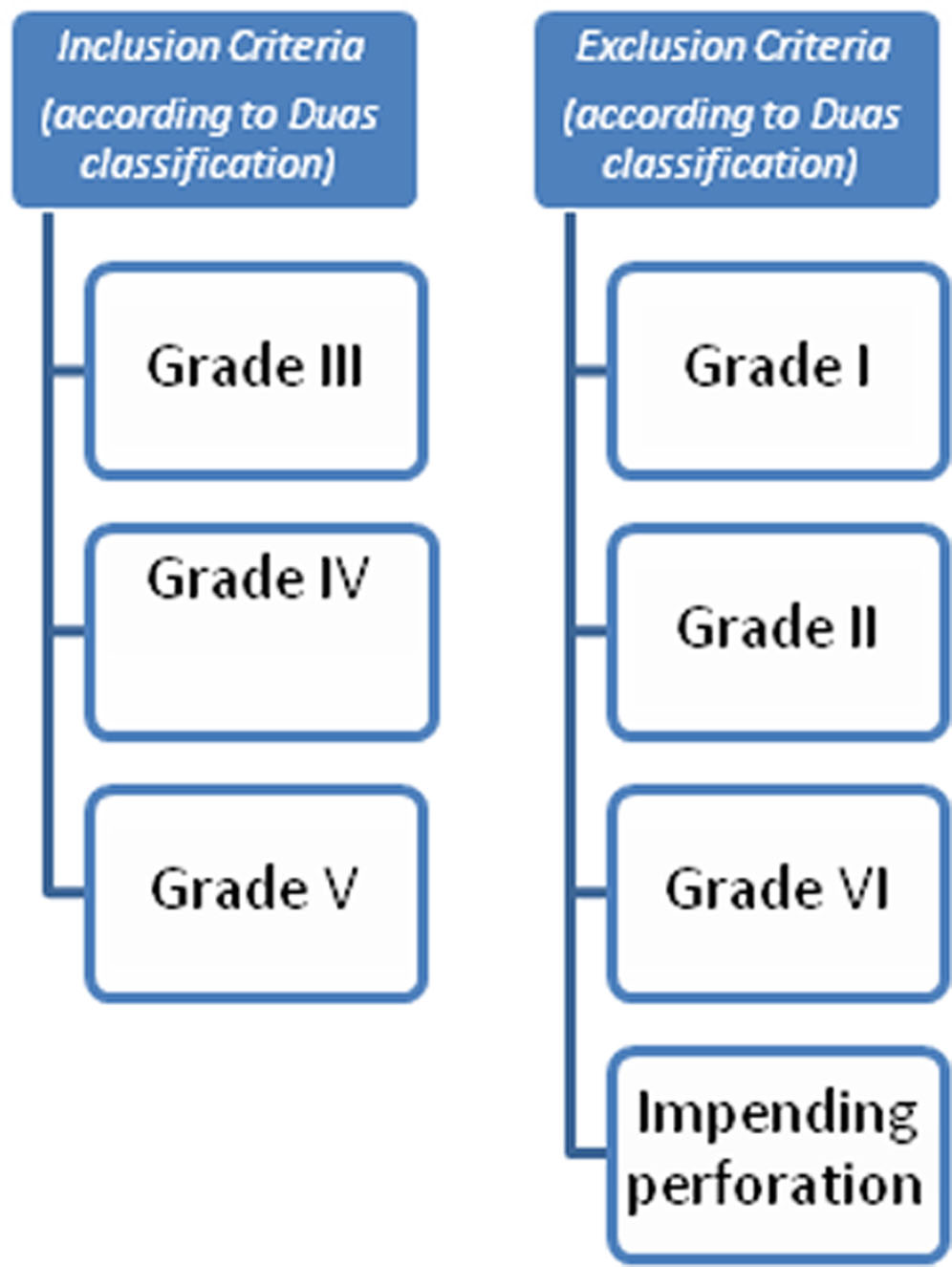
In Ocular Chemical Injury the degree of limbal involvement (in clock hours) and percentage of conjunctival involvement was determined by HarminderDua classification.Patients with grade I, II, and VI injury and those with impending perforation were excluded from the study due to different management protocol.
Other anterior segment and posterior segment examinations were done.
Umbilical Cord Serum and Autologous Serum:
Collection, Preparation, and Storage
The umbilical cord blood was collected from mothers with uncomplicatedcaesarean deliveries after obtaining informed consent andscreening for parenterally transmitted diseases such as hepatitis B,hepatitis C, HIV, and syphilis. These investigations were performed atthe time of antenatal care registration and were subsequently repeatedat the time of cord blood collection and after the preparation of serum sample.
The blood was collected by directly canulating the umbilical vein with the component transfer bag (Poly Medicure Ltd. Faridabad India), taking all sterile precautions after the infant was removed from the field and the umbilical cord was clamped.Milking was avoided to prevent hemolysis of blood. No anticoagulants were used during the procedure. The blood was allowed to clot, and the serum was obtained by centrifuging it at 1800g for 10 minutes. It was then diluted with sterile balanced salt solution and dispensed into glass containers as a 20% solution.
They were stored at 4.0°C. A culture for bacterial and fungal contaminants was sent on each occasion when a fresh serum batch was prepared. The patient using the serum was asked to store it in a cool place, preferably in a refrigerator. The patient was instructed to use an open vial within 7 days and told to look for the presence of any thread like floating objects in the serum each time before instilling the drops and to the discard the drops if such contaminants were seen. The autologous serum drops were prepared from the patient’s blood in a manner similar to that described for umbilical cord serum.
Patients were started on standard medical therapy. It includes systemic and topical antibiotics, anti-inflammatory therapy, anti-allergic therapy, cycloplegic, anti-glaucoma therapy, lubricants, citrate and ascorbate.
Beside this, patients were started on adjuvant therapy in which control group had received 20% autologous serum 6 times a day for 7 days and case group had received 20% UCBS 6 times a day for 7 days under proper written and informed consent.
FOLLOW UP PROTOCOL:
Patients were subsequently followed up on 7th day, 1month and at 3 month. . Visual acuity was recorded on snellens chart and the values were converted into LogMAR units. The parameters assessed were eye sensitivity score, size of epithelial defect, limbal ischemia and corneal clarity and compared in between two groups.
STATISTICALANALYSIS:
Data were recorded on a predesigned proforma and managed on a spread sheet (Excel sheet) with appropriate statistical tests to analyse the results. The Kruskal-Wallis test was used to determine the significance of changes between two groups at each follow-up visit. The Wilcoxon signed rank test was used to determine the significance of changes within a group over a period (longitudinally). The chi-square was used to compare the categorical variables. Level of significance in statistical test was 0.05.
OSERVATIONS AND RESULTS:
PRETREATMENT VARIABLES IN TWO GROUPS
| VARIABLES
|
UCBS | AS | P value |
| AGE +/- SD | 25.4+/-4 | 25.3+/-4 | 0.8 |
| NATURE OF CHEMICAL | 0.6 | ||
| Alkali | 5 | 7 | |
| Acid | 3 | 2 | |
| Unknown | 2 | 1 | |
| Time in days between exposure and presentation+/-SD | 4.1+/-0.7 | 5+/-0.8 | 0.5 |
| GRADE OF INJURY | 0.3 | ||
| III | 7 | 4 | |
| IV | 2 | 4 | |
| V | 1 | 3 |
A total of 21eyes with acute ocular chemical burns were studied and followed up for a minimum of 3 months.10 eyes received umbilical cord serum therapy and 11 received autologous serum therapy.
The mean ages at presentation were 25.4+/-4 and 25.3+/-4 years in the umbilical cord serum group and autologous serum group respectively, and were comparable (P=0.8).
The mean time interval between exposure of the chemical and presentation to us was 4.1+/-0.7 and 5+/-0.8 days in the umbilical cord serum group and autologous serum group respectively, which was comparable (P =0.05).
There were 5eyes exposed to acid, 12 to alkali, 3 to unknown chemicals. The groups were comparable with regard to the nature of the chemical (P =0.6).
According to Dua’s classification, 11 of 21 eyes had a grade III injury, 6 had a grade IV injury, and 4 had grade V injury. The groups were comparable in the distribution of patients according to the grade of injury. (P=0.3)
No case of symblepharon was present in any of the two groups at the time ofpresentation.
IMPROVEMENT IN EYE SENSITIVITY SCORE(ESS) OVER FOLLOW UP PERIOD
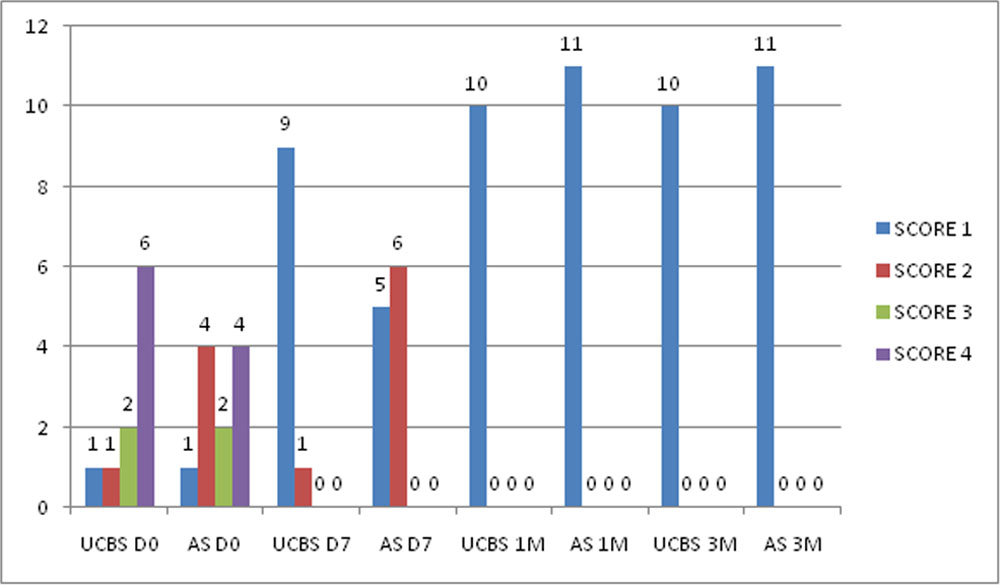
10 of the 21 patients eyes had a pain score of 4 at presentation, and 2 of 21 had no pain (pain score 1) at presentation.P(D0)=0.5
By day 7, 14 of the 21patients had a pain score of 1, and none of the patients had a pain score of 4. However, by day 7 the patients in the cord serum group showed better pain relief. P(D7)= 0.03, Chi-square=4.677
IMPROVEMENT IN VISUAL ACUITY (in logmar) OVER FOLLOW UP PERIOD
D0 D7 1M 3M
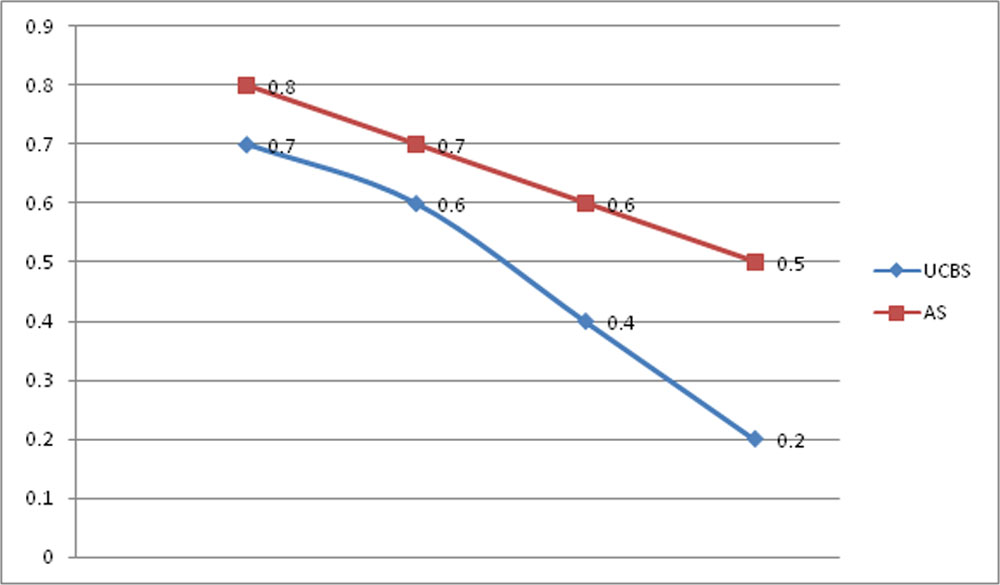
The mean visual acuity at presentation was 0.7+/-0.2 and 0.8+/-0.2 in the cord serum group and autologous serum group respectively, and were comparable P(#) = 0.3.
By 3 month, the mean visual acuity was 0.2+/-0.0 and 0.5+/-0.1 in the cord serum group and autologous serum group respectively. Result was significant P(#) =0.003, Kruskalwalllis(H) at 3M= 8.54
RE-EPITHELISATION IN TWO GROUPS OVER FOLLOW UP PERIOD
D0 D7 1M 3M
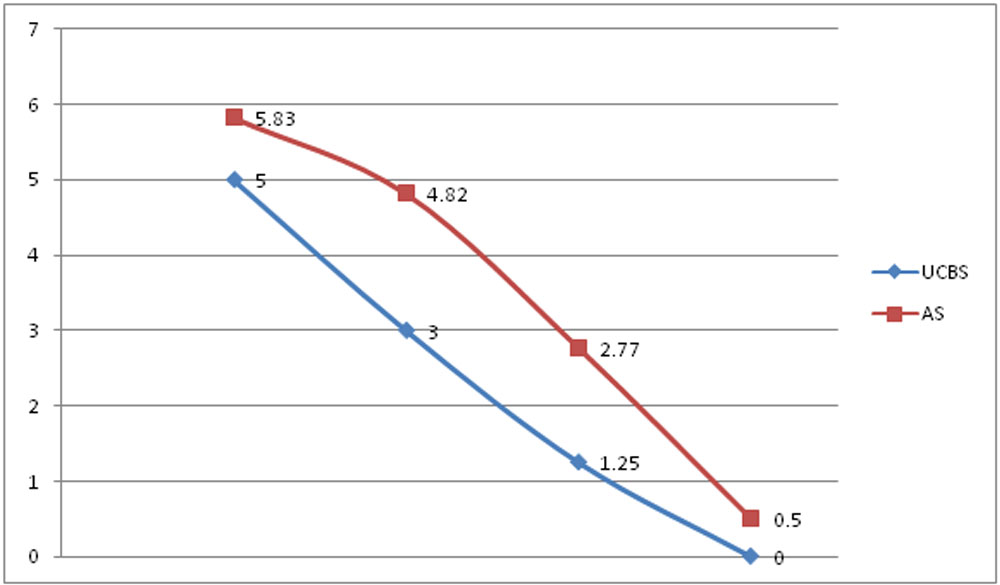
The mean epithelial defect diameter (EDD) at presentation was 5+/-0.69mm and 5.83+/-0.63 mm in the cord serum group and autologous serum group
respectively, and were comparable. P(#) =0.4
By 1month, the mean EDD was 1.25+/-0.45mm and 2.77+/-0.41 mm in the cord serum group and autologous serum group respectively . A statistically
significant decrease was seen in the cord serum group. P(#) = 0.02,Kruskal Wallis(H) at 3M =5.565
The mean epithelial defect area (EDA) at presentation were 24.6+/-7.12mm2 and 32.5+/-6.54 mm2 in the cord serum group and autologous serum group respectively, and were comparable. P(#) =0.4
By day 7, the mean EDAs were 24.6+/-7.12mm2 and 32.5+/-6.54 mm2 in the cord serum group and autologous serum group respectively. A statistically significant decrease was seen in the cord serum group. P(#) =0.02, Kruskal Wallis(H) at D7 (EDA)=5.567
PRECENTAGE DECREASE IN LIMBAL ISCHEMIA OVER FOLLOW UP PERIOD
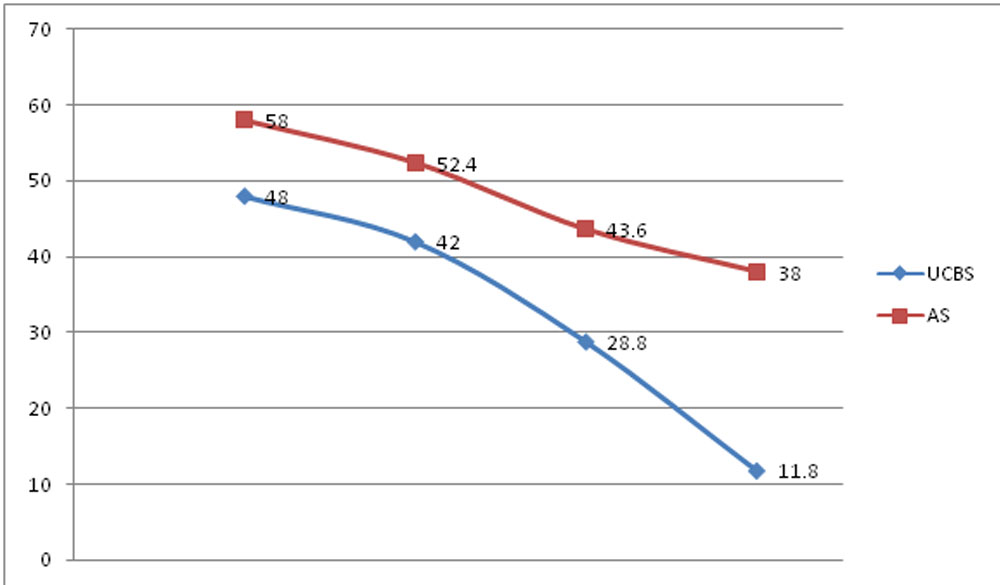
D0 D7 1M 3M
Patients in the cord serum group showed a statistically significant decrease in limbal ischemia compared with the other group. The mean percentage of limbal ischemia at day 0 was 48.0+/-4 and 58.0+/-6 in the cord serum group and autologous serum group, respectively. P(#)=0.2
The decrease in limbal ischemia continued to be significantly greater in the cord serum group, and by the end of 3 months, the mean percentage of limbalischemia was decreased to 11.8+/-1 and 38.0+/-4in the cord serum group and autologous serum group respectively. P(#) =0.0001, Kruskalwallis(H) at 3M= 15.
IMPROVEMENT IN CORNEAL CLARITY GRADE(CCG) OVER FOLLOW UP PERIOD
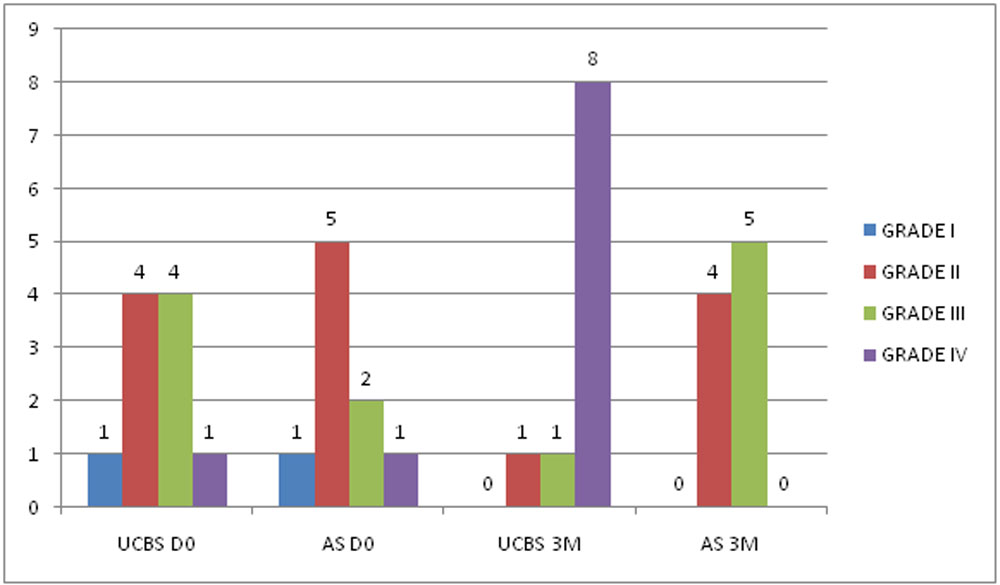
The two groups were comparable with regard to corneal clarity at presentation. P(D0) = 0.6
However, at the end of 3 months, patients in the cord serum group showed significantly clearer corneas compared with the other group. 8 of 10 patient’s eyes had grade IV corneal clarity in the cord serum group compared with 2 of 11 in autologous serum group. Corneal clarity had shown a significant improvement in the cord serum group.P(3M) = 0.018, Chi-Square=8.037
None of the patients in either group had corneal vascularization at presentation. By the end of 3 months, significantly fewer patients in the cord serum group had vascularization, when compared with the other group.
No significant complications associated with umbilical cord serum or autologous serum use was observed during the study.
DISCUSSION:
The purpose of this study was to evaluate the efficacy of umbilical cord serum therapy in achieving improvement in visual acuity, subjective and objective symptoms, restoration of an intact ocular epithelium, control of acute inflammatory reaction, support of the reparative processes, and prevention of complications in acute ocular chemical burns.
Umbilical cord serum has been shown to contain many growth factors such as EGF, vitamin A, TGF- beta, substance P, IGF-1, and NGF.Concentration of these factors areseveral times higher in umbilical cord serum than peripheral blood serum.
Umbilical cord serum has been used in the treatment of various ocular surface disorders and has been found to be very effective.Sharma Net al(15) compared the efficacy of Umbilical Cord Serum Therapy over autologous serum and artificial tears in acute ocular chemical burns.Vajpayee et al(8)compared the efficacy of autologous serum drops and umbilical cord serum drops in the treatment of persistent epithelial defects and found that umbilical cord serum leads to faster healing of persistent epithelial defects than does autologous serum drops. Yoon et al(11)used umbilical cord serum therapy for the treatment of dry eye syndrome, neurotrophic keratitis, and dry eye associated with graft versus host disease (GVHD) and in all the settings found it to be very effective. Yoon et al(12)conducted a study to compare the therapeutic efficacy of autologous serum eye drops and umbilical cord serum eye drops in the treatment of severe dry eyesyndrome and found that umbilical cord serum eye drops were more effective in decreasing symptoms and keratoepitheliopathyand increasing goblet cell density in such patients compared with autologous serum eye drops.
Our findings corroborate the fact that cord serum is more efficacious than autologous serum, as we found significantly better results (in terms of faster epithelial defect healing rate, better corneal clarity, lesser vascularization, and greater decrease in limbal ischemia) with umbilical cord serum therapy than autologous serum therapy.
Umbilical cord serum therapy has certain other benefits over autologous serum therapy. A large amount of sample can be withdrawn at a time, so can be used in several patients at a time. In addition, umbilical cord serum therapy can be used in debilitating patients such as with poor general health or blood dyscrasias such as GVHD. Serum preparation is safe and nontoxic.
Umbilical cord serum therapy has few disadvantages. The accessibility of serum is possible only in tertiary care centre having obstetrics and gynaecology facility and facility for microbiological evaluation with strict preservation protocols.. The process of harvesting serum remains tedious. There is risk of allergies and possibility of transmission of parenterally transmitted organisms must be kept in mind. There is always legal and ethical issues associated with using cord serum therapy. Testing of mothers for parenterally transmitted organisms such as HIV, HBV, and HCV at least twice (once at antenatal clinic registration and then at the time of delivery) to know about the window period of infection. Patient is also bit sceptical about the use of umbilical cord serum. Both have short self life so preservation protocols should be in strict compliance
CONCLUSION: Umbilical cord serum therapy is more effective than autologous serum eye drops in ocular surface restoration after acute chemical injuries with reference to eye sensitivity score, visual acuity and re-epithelisation time.
REFERENCES:
1) McCulley JP. Chemical injuries of the eye. In: LeibowitzHM,Waring GO. Corneal Disorders: Clinical Diagnosis and Management. 2nd ed. Philadelphia: W.B. Saunders; 1998:770–790.
2)Fox RI, Chan R, Michelson JB, Belmont JB, Michelson PE. Beneficial effect of artificial tears made with autologous serum in patients with keratoconjunctivitissicca. Arthritis Rheum.1984;27:459– 461.
3)Tsubota K, Goto E, Fujita H, et al. Treatment of dry eye by autologous serum application in Sjogren’s syndrome. Br J Ophthalmol.999;83:390–395.
4)Rocha EM, Pelegrino FS, de Paiva CS, Vigorito AC, de Souza CA. GVHD dry eyes treated with autologous serum tears. Bone MarrowTransplant. 2000;25:1101–1103.
5)Del Castillo JM, del la Casa JM, Sardina RC. Treatment of recurrent corneal erosions using autologous serum. Cornea.2002;21:781–783.
6)Young AL, Cheng AC, Ng HK, et al. The use of autologous serum tears in persistent epithelial defect. Eye.2004;18:609–614.
7)Matsumoto Y, Dogru M, Goto E, et al. Autologous serum application in the treatment of neurotrophickeratopathy. Ophthalmology.2004;111:1115–1120.
8)Vajpayee RB, Mukerji N, Tandon R, et al. Evaluation of umbilical cord serum therapy for persistent corneal epithelial defects. Br JOphthalmol. 2003;87:1312–1316.
9)Yoon KC, Heo H, Im SK, You IC, Kim YH, Park YG. Comparison of autologous serum and umbilical cord serum eye drops for dry eye syndrome. Am J Ophthalmol.2007;144:86–92.
10)Yoon KC, You IC, Im SK, Jeong TS, Park YG, Choi J. Application of umbilical cord serum eyedrops for the treatment of neurotrophickeratitis. Ophthalmology.2007;114:1637–1642.
11)Yoon KC, Jeong IY, Im SK, Park YG, Kim HJ, Choi J. Therapeutic effect of umbilical cord serum eyedrops for the treatment of dry eye associated with graft-versus-host disease. Bone Marrow Transplant.2007;39:231–235.
12)Yoon KC, Im SK, Park YG, Jung YD, Yang SY, Choi J. Application of umbilical cord serum eyedrops for the treatment of dry eye syndrome. Cornea.2006;25:268–272.
13)Poon AC, Geerling G, Dart JK, Fraenkel GE, Daniels JT. Autologous serum eyedrops for dry eyes and epithelial defects: clinical and in vitro toxicity studies. Br J Ophthalmol.2001;85:1188–1197.
14)Liu L, Hartwig D, Harloff S, Herminghaus P, Wedel T, Geerling G. An optimized protocol for the production of autologous serum eyedrops. Graefes Arch ClinExpOphthalmol.2005;243:706–714.
15)NamrataSharma,ManikGoel,ThirumurthyVelpandian,Jeewan S. Titiyal,RadhikaTandon,and Rasik B. Vajpayee.Evaluation of Umbilical Cord Serum Therapy in Acute Ocular Chemical Burns.Invest Ophthalmol Vis Sci. 2011;52:1087–1092
Leave a Comment