

Dr.SAGNIK SEN, S18926
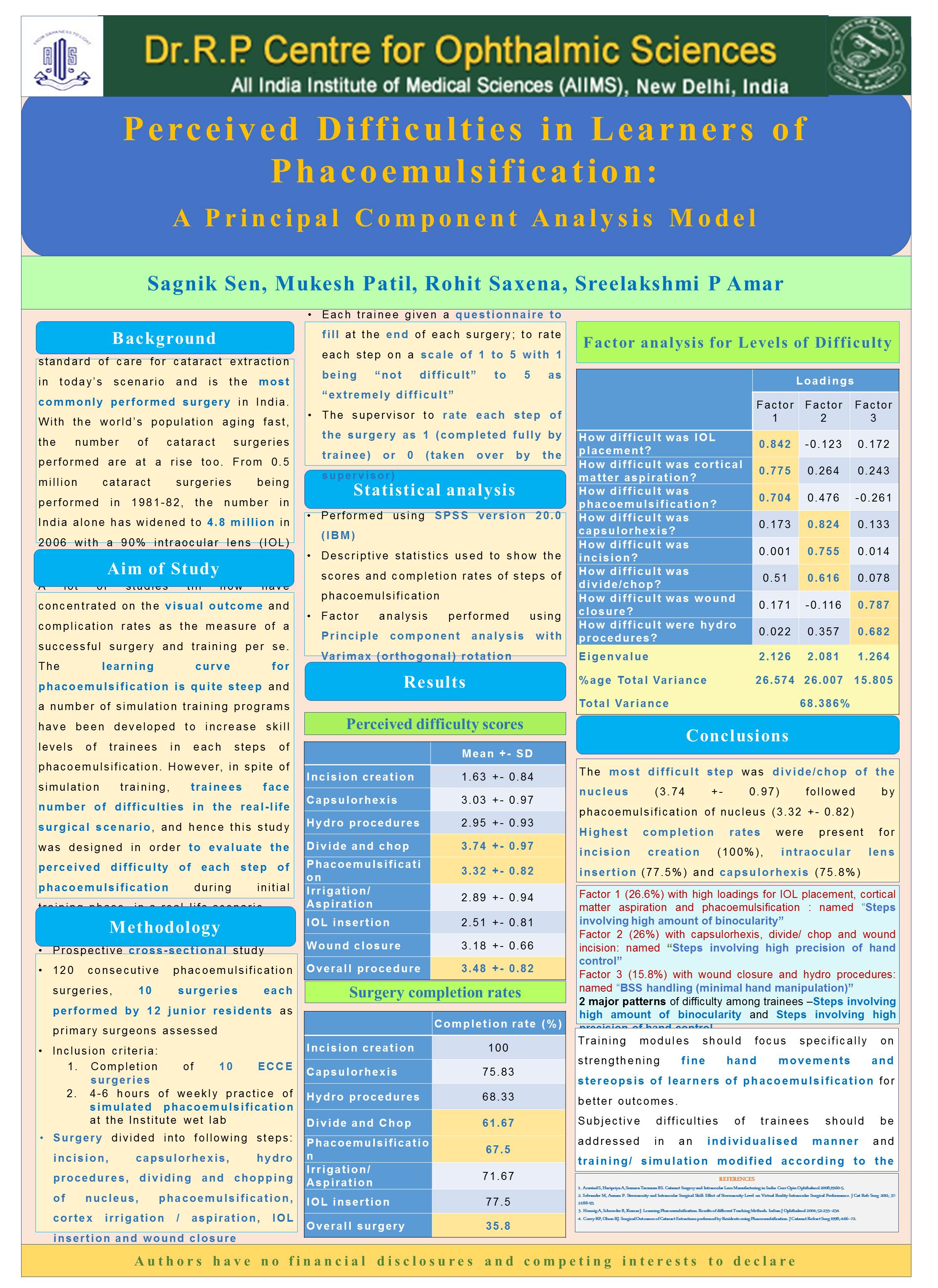
Trainee residents were allotted phacoemulsification cases and steps of each surgery were rated from very easy to very difficult with a questionnaire. The completion rates of steps and complications of each surgery were noted. Principal component analysis of the responses to the difficulty level questionnaire was conducted to obtain factors resulting in the perceived difficulty. The lowest difficulty scores were for initial step of incision creation followed by IOL insertion. The most difficult step was divide/chop of the nucleus followed by phacoemulsification. Highest completion rates were for initial steps of the surgery and the lowest for divide/chop. We identified two major patterns of difficulty among the trainees, one for steps involving high amount of binocularity and the other for steps involving high precision of hand control. Stereopsis and hand control training should form a major part of training modules of cataract surgery both on simulation and real-life scenarios.
Leave a Comment