

Dr. Neha Sandhu, Dr. Ritu Arora, Prof. Goyal J L
AIM:
To determine prevalence and spectrum of ocular manifestations in PLHIV on HAART and correlating them with WHO clinical staging, CD4 count, duration & type of HAART. METHOD: Ophthalmic evaluation of 350 PLHIV on HAART for atleast 6 months duration. Logistic regression used to correlate different variables with ocular findings.
RESULT:
Prevalence of ocular, anterior segment and posterior segment manifestations were 15.71%, 10.857% and 4% respectively, dry eye(8%) being most common. PLHIV with CD4 count ≤350(OR=3.1,p<0.001),WHO stage 3 (OR=26.9,p=0.004) & 4(OR=60.7,p<0.001),on 2nd line ART(OR=1.75,p=0.046) were at a significantly higher risk. Duration of treatment had a protective(p=0.014) effect on bilateral manifestations.
CONCLUSION:
HAART has reduced the prevalence of low CD4 count, posterior segment manifestations and has prolonged the survival, thus resulting in increased prevalence of anterior segment and extra-ocular disorders & highlighting the need for routine ophthalmic screening.
KEY WORDS : Highly active anti retroviral therapy, Posterior segment, anterior segment, CMV retinitis, dry eye.
HIV/AIDS has emerged as a global health problem, since its discovery in 1981. There are approximately 36.7 million people living with HIV (PLHIV) world wide[1] and around 2.117 million PLHIV in India.[2]
A number of ocular pathologies can occur in patients with HIV involving ocular adnexa, anterior segment and anterior segment. The lifetime cumulative risk of at least one ocular manifestation in PLHIV is upto 52-100%.[3] Widespread use of HAART (Highly active anti retroviral therapy) tends to increase the prevalence of HIV/AIDS as survival improves to a greater extent than decline in transmission of HIV infection.[4] It has also led to a change in the spectrum of ocular complications and to the emergence of newer ophthalmic manifestations. The ophthalmic features from Indian HIV population on HAART from across the country have been reported on a smaller cohort of 68-112 patients.[5-7]
Ocular manifestations in HAART era have been compared to those in pre HAART era with spectrum of ocular disease remaining largely unchanged in developing countries with CMV retinitis and HIV retinopathy to be the most common infectious and non-infectious cause of visual comorbidity. However, there is paucity of data on other ocular manifestations and on the ocular toxicity of long term HAART medications and correlation of these findings with the type of HAART medication. No correlation of ophthalmic findings with duration of HAART treatment have been presented.
In the present study, the ophthalmic manifestations of AIDS in post HAART era in a larger cohort of patients from a tertiary care referral institute from Northern India is being analyzed. The findings were correlated with the duration of HIV, duration and type of HAART medication, CD4 counts. To the best of our knowledge ocular manifestations in PLHIV on HAART as per newer WHO guidelines (2016) i.e. initiation of HAART irrespective of CD4 count donot exist.[8]
MATERIALS AND METHODS
This observational cross-sectional study was conducted at tertiary care referral institute. Patient with HIV on HAART medication for a minimum of 6 months duration of any age group attending the ART (Anti-retroviral therapy)centre were enrolled in the study from January 2017-Decemer 2017.The study was conducted after approval from the Institutional Ethics Committee and followed the tenets of Declaration of Helsinki. Written informed consent from PLHIV patients on HAART medication was taken before enrolment into the study. The diagnosis of HIV seropositivity was established at the VCTC(Voluntary Counselling and testing centre ) after adequate counselling and voluntary consent by the patient, as per NACO (National AIDS Control Organization). ELISA & EIA was performed for screening. Additional test- viral load, was performed and based on clinical staging of WHO, patients were classified in appropriate stage.[9] All the patients diagnosed as HIV were started on ART as per the WHO guideline 2016, recommending initiation of ART for all populations, including people from key population.[8]Details of HAART treatment beingZidovudine + Lamivudine + Nevirapine-(first line therapy), Tenofovir + Lamivudine + Atazanavir
(2nd line therapy ), Ritonavir + Darunavir + Raltegravir (Third-line regimens).[10]
Demographic details regarding age, gender were noted. Detailed clinical history and questions related to duration of HIV , details of HAART therapy-duration , type (first line/second line/third line/failed HAART),any systemic finding ,WHO clinical staging of HIV and Immune status assessments by CD4 count was noted. Ophthalmic evaluation included measurement of best corrected visual acuity (BCVA) using Snellens chart and Logarithm of the minimum angle of Resolution (LogMAR) visual acuity charts, Intraocular pressure by Goldmann applanation tonometer and pupillary reflexes. Slit lamp biomicroscopy for the evaluation of anterior segment and dilated indirect ophthalmoscopy for posterior segment evaluation was done. Tear film status was assessed using schirmer’s test, TFBUT( Tear film breakup time).
The study outcome included the prevalence of ocular manifestations in PLHIV on HAART,
spectrum of ocular disease, correlation of ocular manifestations with WHO clinical staging, CD4 counts, duration of HAART and type of HAART medications.
Descriptive statistics and mean SD was used for statistical analysis of different parameters. Logistic regression was used to correlate different variables with the ophthalmic findings.
P- value<0.05 was considered statistically significant. The sample size of 350 was calculated assuming the prevalence of HIV- associated ocular findings to be 38%[7] (HAART era) and confidence interval of 95% with 10% precision.
RESULTS
350 consecutive PLHIV subjects on HAART for at least 6 months duration were included in the study.The age group of the subjects ranged from 7 to 64 yrs, median being 35 years.Maximum number of subjects (162) belonged to the age group 31-40 years.214 (61.14 %) of the study distribution were male and 136 (38.86 %) were female.
Of the 350 PLHIV subjects, 67(19.14%) were symptomatic and rest of the 283(80.86%) subjects were asymptomatic. 333(95.14%) patients belonged to WHO clinical stage 1, 2 patients (0.57%) belonged to stage 2, 5 patients (1.43%) belonged to stage 3 and 10 patients (2.86%) belonged to stage 4. The demographic details of the patients are listed in table 1.
Maximum PLHIV subjects 304(86.86%) who were included in the study group were on first line therapy while 40(11.43%) were on second line of treatment and 6(1.71%) subjects were on third line of treatment.
The Mean CD4 Count was 431.06 ± 219 cells/µL. 306 (87.42 %) PLHIV subjects had CD4 count ³200 and 44 (12.57 %) PLHIV subjects had CD4 Count<200. A substantial number of PLHIV subjects 216 (61.71%) had CD4 Count > 350.The average duration of HAART was 5.05±3.6yrs.
BCVA was 6/6 in 603 eyes(86.14%), 6/9-6/24 in 25 eyes (3.57%), 6/36-6/60 in 33 eyes (4.71%),< 6/60 in 39 eyes (5.57%).
Spectrum of Ocular Manifestation:
All ocular surface, adnexal, corneal, uveal and scleral findings were grouped as anterior segment manifestations and retinal with neuro-ophthalmic as posterior segment manifestations. Positive ocular findings were noted in 55 patients (prevalence 15.71 % , SE 5%, CI 95 %). Of which 38(10.14%) patients had anterior segment manifestations, 14(4.0 %) had posterior segment involvement and3(0.857%) had both .Lesions were bilateral in 44 (12.57%) patients.
The most common ocular manifestation was dry eye observed in 56 eyes (prevalence 8 %, SE 5%, CI 95%).The second most common ocular manifestation was CMV retinitis[FIGURE 1] in 9 eyes of 5 patients (prevalence 1.43%, SE5% , CI 95%), details presented in table 2.
Ocular findings and CD4 count:
Overall ocular involvement was more in patients with CD4 COUNT ≤350 (8.57%) than in patients with CD4 counts >350 (7.14%). Overall anterior segment involvement was 10.857% and was same in patients with CD4 counts >350 (5.43%) or ≤350 (5.43%).Posterior segment involvement was more common in patients with CD4 counts ≤350 (3.14 %) as compared to patients with CD4 counts >350 (0.857%). This difference was statistically significant.(Table 3)
Anterior segment manifestations (10.14%) were more common than posterior segment manifestations(4%) in patients irrespective of CD4 count.
Bilateral ocular findings:
Bilateral manifestations were more common in patients with CD4 count≤350(Fisher’s exact p-value = 0.014).The probability of bilateral manifestation was higher for a given CD4 count when less than 350.(OR=2.48, p=0.007). Duration of treatment had a significant protective (p=0.014) effect on bilateral manifestations. Individuals who were longer on HAART had a 30% reduced chance of bilateral involvement.
Ocular findings and clinical staging of disease:
Of the 335 PLHIV subjects of clinical stage T1 and T2, 12.53%(42) had ocular manifestations, while 86.67%(13).PLHIV subjects of clinical stage T3 and T4, had ocular manifestations. PLHIV subjects in T1 stage had lesser chances of ocular manifestations and these chances increased with increasing stage of the disease.(Table 4)
Duration of ART and ocular findings:
Average duration of ART was 6 months- < 3 year in 98 PLHIV subjects, ≥3-<7 years in 119 subjects, ≥7-10 years in 85 subjects and >10 years in 48 subjects. Duration of therapy was not found to be a significant risk factor for developing ocular manifestations.
Ocular findings and line of HAART therapy:
There were 304, 40 & 6 PLHIV subjects on first, second and third line of therapy respectively. Of 6 PLHIV subjects on third line of therapy, 50% had ocular manifestation ( table 5).
Risk factor for ocular manifestations:
Low CD4 Count (≤350) (OR=3.1, p<0.001,WHO clinical stage 3 (OR=26.9, p=0.004) and stage 4 (OR=60.7,p<0.001) were extremely high and statistically significant risk groups for any kind of ocular manifestations.
Systemic findings in PLHIV subjects on HAART:
Systemic evaluation of the patient showed that pulmonary tuberculosis(3 subjects) was the most common association.Other systemic co-morbities were extrapulmonary tuberculosis (2 subjects), esophageal candidiasis in 2 subjects, pleural effusion in 2 subjects, cryptococcal meningitis in 1 subject and popular pruritic rash in 1 subject.
DISCUSSION
Prevalence of ocular manifestations has been reported to be between 40-100%.[7,11] from various studies conducted in India in pre- HAART era. The reports from Northern, Southern and Western India in post HAART era during different periods of time have reported the prevalence of ocular manifestations on HAART to be 38-45%,[7,5] 37.6%- 52.2%[12,6,13]and 8%[14] respectively. The criteria for enrolment has been widely variable especially with reference to CD4 count and number of patients enrolled.
A recent study conducted in Northern India[7] on cohort of 100 patients between October 2009- March 2010has reported the prevalence of ocular manifestation to be 38% in HIV patients on HAART. CMV retinitis and HIV retinopathy being the most common infectious and non infectious cause of visual comorbidity. The incidence of ocular disease was also high among patients on HAART who did not have any ocular symptoms (29.33%). The mean CD4 count was 405.23 ± 180.43 /µL. They concluded that with the introduction of HAART the spectrum of ocular disease has remained largely unchanged in developing countries such as India. However, the indication for initiation of HAART included presence of AIDS defining illness, CD4 count ≤ 350/µL, presence of concomitant tuberculosis, HIV associated nephropathy, malignancy or hepatitis B/C infection. 65% of patients in this study were stage 1 & 2 while 35% of patients in stage 3 & 4.
Another study from Northern India, Gharai et al. in his study including 100 patients with 68% on HAART has reported a prevalence of 8.5% of anterior segment manifestation and adnexal disorders.[5] The spectrum of anterior segment manifestation and adnexal disorders included complicated cataract(5.5%), Herpetic keratouveitis (0.5%), neurotrophic ulcer(0.5%), periorbital ecchymosis(1%), chronic dacrocystitis(1%).[5]
Sudharshan et al. in his study conducted in 1000 patients in Southern India with 52.2 % of patients on HAART reported prevalence of 15.04% anterior segment manifestation and adnexal disorders.[13]
Shah et al in 2009 reported the prevalence of ocular manifestations in PLHIV patients on HAART with CD4 count ≤ 200 cells /µL as 8%.[14] Patients were receiving HAART from the period ranging from 15 days- 5 years, median being 1 year. Average CD4 count being 121.66cells /µL.
In the present study, the prevalence of ocular manifestations was found to be 15.71% in PLHIV patients on HAART for minimum of 6 months under latest WHO guidelines , i.e., initiation of ART in all patients with HIV irrespective of CD4 count or stage of disease.[8] Our study highlights the significantly lower prevalence of ocular manifestations in patients on HAART as compare to the earlier studies from India especially Northern India because of initiation of HAART at an early stage and higher number of subjects on long term HAART. The results are being reported with much higher sample size of 350 HIV subjects .
Low CD4 counts and advanced WHO clinical stage are important determinants of ocular involvement in a PLHIV.[6,14,15]Recent studies have shown that prevalence of ocular manifestations is high in subjects with lower CD4 counts.[6,14-16] Our study has reported higher prevalence of ocular manifestations in patients with CD4 count≤350(8.57%) than patients with CD4 Count>350(7.14%). Posterior segment involvement (3.14 %) was more common in patients with CD4 counts ≤350 as compared to patients with CD4 counts >350 (0.86 %).There was significant relationship between CD4 count and probability of bilateral manifestations(p=0.14).
Advancing WHO clinical stage of HIV increases the chance of ocular disease. More ocular disease is seen in WHO clinical stage 3/4 than WHO clinical stage 1/2.[14,16]Studies from India have shown ocular manifestations to range between 63.2-93.2% in WHO clinical stage 3/4.[14,16] Of 55 subjects with ocular disease in the current study, 86.67% of subjects having WHO clinical stage 3/4 had ocular manifestations and 12.53% of stage 1/2 had ocular manifestations. The difference was statistically significant (p-value<0.001).WHO clinical stage 3 (OR=26.9, p=0.004) and stage 4 (OR=60.7,p<0.001) were found to have extremely high and statistically significant risk groups for any kind of manifestation. HAART offers protection to the development of ocular manifestation by reducing the viral load and elevating the immune status of HIV subject.
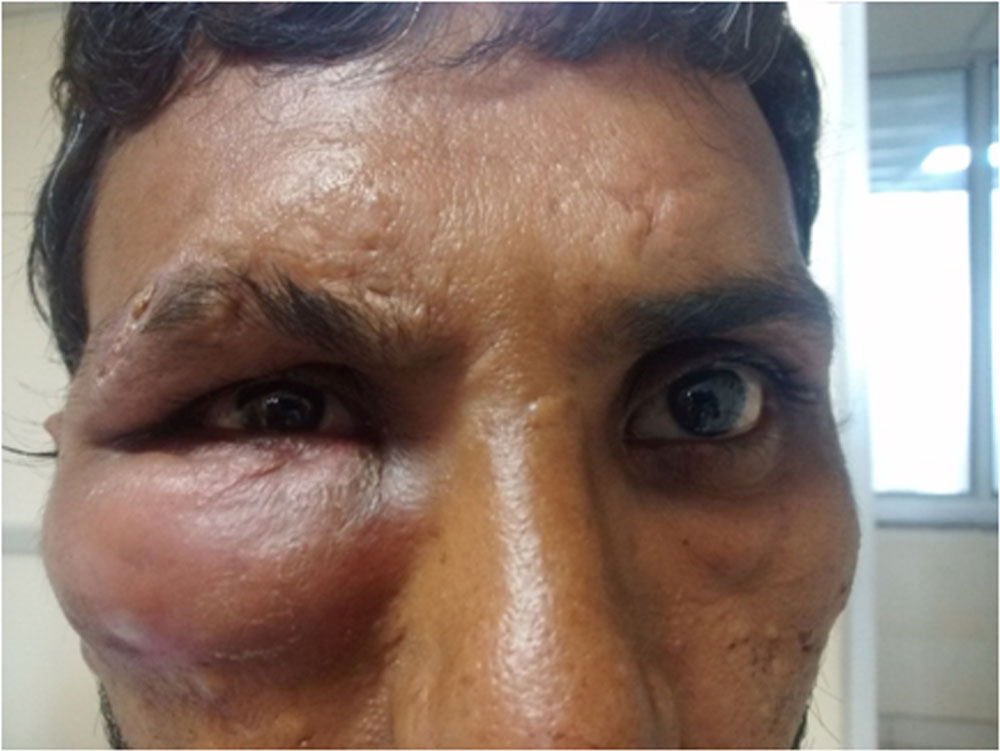
The spectrum of ocular disease in our study include dry eyes(8%), CMV retinitis (1.43%), anterior uveitis (1.14%), and other miscellaneous manifestations(9.1%).[ FIGURE 2,3]
The most common ocular manifestation in our study was dry eye (8 %). Geier et al. in 1996 showed that dry eye occurs in approximately 20% to 25% of patients with HIV infection without correlation with the CD4 count, or to the severity of HIV disease.[17] Similarly, Bekele et al. in 2013 did not find any correlation between dry eye and CD4 counts, although it was the most common anterior segment manifestation in their study.[15]
Of the various posterior segment manifestations reported, CMV retinitis was reported to be the commonest in some of the studies[5,13] whereas some of the other studies have reported HIV microangiopathy to be the commonest manifestation.[7,12,14] Studies conducted in HAART era from the Southern India have reported prevalence of CMV retinitis of 2.5-36.2%.[6,12,13] Studies from Western and Northern India have reported lower prevalence i.e. 2-20%.[14, 5,7] There was overall very low prevalence of 1.43% of CMV retinitis. 9 eyes of 10 patients had CMV retinitis in different stages in the current study. There were only 7 (2 %) cases with CD4 counts<50 cells/ microlitre. Overall higher CD4 Count status in PLHIV subjects on HAART atleast for 6 months relates directly to low prevalence of CMV retinitis.
Prevalence of posterior segment manifestations have been reported to be more common than the anterior segment manifestations worldwide in HAART era.[5-7,12-14]
Our study has reported higher prevalence of anterior segment and adnexal manifestations(10.857%) than posterior segment manifestations(4%).
The higher prevalence of dry eye over CMV retinitis & HIV microangiopathy in the present study of all the ocular involvement is due to early initiation of HAART irrespective of CD4 count or any other comorbidity as per WHO protocol for HAART initiation (2016) leading to better control of disease. Also, some of the HAART medications also have side effects of dry eye.[18]
Duration of therapy was not found to be a significant risk factor for developing ocular manifestations as all PLHIV subjects were initiated HAART early. This also had a significant protective (p=0.014) effect on bilateral manifestations. Further , individuals who are longer on HAART have a 30% reduced chance of bilateral involvement.
To the best of our knowledge no report exists correlating ophthalmic manifestation in PLHIV patient with line of ART management. Line of therapy and ocular manifestation had direct correlation indicating severity of disease.
CONCLUSIONS
With early initiation of HAART, there is a reduction in the overall prevalence of ocular findings, in the number of opportunistic ophthalmic infections and blinding disorders with improvement in the length and quality of life . Of all the reported ocular findings, anterior segment and external ocular disorder emerged more oftenly and were very mild in nature.
REFERENCES
- Global AIDS Update 2016[Internet]. 2016 May 31[cited 2018 Apr21]. Available from: https://www.unaids.org/en/resources/documents/2016/Global-AIDS-update-2016.
- National AIDS Control Organization, MoHFW, GoI. Annual Report NACO2016-17 [Internet]. 2017 Jul 4[cited 2018 Apr 21]. Available from: https://naco.gov.in/documents/annual-reports.
- Biswas J, Madhavan HN, George AE, Kumarasamy N, Solomon S.Ocular lesions associated with HIV infection in India: A series of 100 consecutive patients evaluated at a referral centre. Am J Ophthalmol. 2000; 129:9–15
- Venkatesh KK, Biswas J, Kumarasamy N. Impact of highly active antiretroviral therapy on ophthalmic manifestations in human immunodeficiency virus / acquired immune deficiency syndrome. Indian J Ophthalmol. 2008;56(5):391-3.
- Gharai S, Venkatesh P, Garg S, Sharma SK, Vohra R. Ophthalmic Manifestations of HIV Infections in India in the Era of HAART: Analysis of 100 Consecutive Patients Evaluated at a Tertiary Eye Care Center in India. Ophthalmic Epidemiol. 2008 ;15(4):264–71.
- Ganekal S, Jhanji V, Dorairaj S, Nagarajappa A. Evaluation of ocular manifestations and blindness in HIV/AIDS patients in a tertiary care hospital in South India. OculImmunolInflamm. 2012 Oct;20(5):336–41.
- Agarwal A, Singh R, Sharma A, Gupta V, Dogra MR. Ocular Manifestations in Patients with Human Immunodeficiency Virus Infection in the Pre-HAART Versus the HAART Era in the North Indian Population. Ocul Immunol Inflamm. 2017 Jun;25(3):396–404.
- World Health Organization. Consolidated guidelines on the use of antiretroviral drugs for treating and preventing HIV infection: recommendations for a public health approach. World Health Organization; 2016.
- World Health Organization. WHO case definitions of HIV for surveillance and revised clinical staging and immunological classification of HIV-related disease in adults and children [Internet]. 2006 Aug 7 [cited 2018 Apr 26]. Available from: https://www.who.int/hiv/pub/guidelines/HIVstaging150307.pdf
- World Health Organization. Consolidated ARV guidelines Chapter 7: Clinical guidance across the continuum of care: antiretroviral therapy; 2013June;7. [Internet] Available from: https://www.who.int/hiv/pub/guidelines/arv2013/art.
- Sahu DK, Namperumalsamy P, Walimbe P, Rajalakshmi C. Ocular manifestations of HIV infection/AIDS in South Indian patients. Indian J Ophthalmol. 1999 Apr 1;47(2):79-85.
- Acharya PK, Venugopal KC, Karimsab DP, Balasubramanya S. Ocular Manifestations in Patients with HIV Infection/AIDS who were Referred from the ART Centre, Hassan, Karnataka, India. J ClinDiagn Res JCDR. 2012 Dec;6(10):1756–60.
- Sudharshan S, Kaleemunnisha S, Banu AA, Shrikrishna S, George AE, Babu BR, et al. Ocular lesions in 1,000 consecutive HIV-positive patients in India: a long-term study. J Ophthalmic Inflamm Infect. 2013 Jan 3;3(1):2.
- Shah SU, Kerkar SP, Pazare AR. Evaluation of ocular manifestations and blindness in HIV/AIDS patients on HAART in a tertiary care hospital in western India. Br J Ophthalmol. 2009 Jan;93(1):88–90.
- Bekele S, Gelaw Y, Tessema F. Ocular manifestation of HIV/AIDS and correlation with CD4+ cells count among adult HIV/AIDS patients in Jimma town, Ethiopia: a cross sectional study. BMC Ophthalmol. 2013 May 27;13:20.
- Pathai S, Deshpande A, Gilbert C, Lawn SD. Prevalence of HIV-associated ophthalmic disease among patients enrolling for antiretroviral treatment in India: A cross-sectional study. BMC Infect Dis. 2009 Sep 23;9:158.
- Geier SA, Libera S, Klauss V, Goebel FD. Sicca syndrome in patients infected with the human immunodeficiency virus. Ophthalmology. 1995 Sep;102(9):1319–24.
- G K Namayanja, J M Nankya, J K Byamugisha, F N Ssali, C M Kityo, SD Rwambuya, et al. Stevens – Johnson syndrome due to nevirapine. Afr Health Sci. 2005 Dec; 5(4): 338–40.
Table 1: Demographic features of the patients with HIV included in the study.
| No. of PLHIV subjects ,n
(N=350) |
% of PLHIV subjects | |
| Age (years)
<10 10-20 21-30 31-40 41-50 51-60 >60 |
2 8 50 162 97 25 6 |
0.571% 2.285% 14.285% 46.285% 27.71% 7.14% 1.71% |
| Gender
Male Female |
214 136 |
61.14% 38.86% |
| Symptomatic | 67 | 19.14% |
| WHO clinical staging of HIV
T1 T2 T3 T4 |
333 2 5 10 |
95.14% 0.57% 1.43% 2.86% |
| CD4 counts (cells/µL)
<200 200-350 >350-500 >500
|
44 90 109 107
|
95.14% 0.57% 1.43% 2.86% |
| Line of therapy
1st 2nd 3rd |
304 40 6 |
86.86% 11.43% 1.71% |
TABLE 2: Spectrum of Ocular Manifestation
| Ocular manifestations | Number of patients(n) | Number of eyes(n) | Percentage(%)
n=55 |
Percentage(%)
N=350 |
| Dry eye | 28 | 56 | 50.91% | 8% |
| Lid abnormalities
Blepharitis Molluscum contagiosum Lid abscess |
2 1
1 |
4 2
1 |
3.63% 1.82%
1.82% |
0.571% 0.285% 0.285% |
| Episcleritis | 1 | 1 | 1.82% | 0.285% |
| Cornea
Corneal opacity Keratitis |
2 2 |
3 3 |
3.63% 3.63% |
0.571% 0.571% |
| Uveitis | 3 | 6 | 5.45% | 0.857% |
| HZO uveitis | 1 | 1 | 1.82% | 0.285% |
| CMV Retinitis | 5 | 9 | 9.10% | 1.43% |
| Optic atrophy | 1 | 2 | 1.82% | 0.285% |
| Choroiditis | 2 | 3 | 3.63% | 0.571% |
| Neuro-ophthalmic manifestation | 1 | 2 | 1.82% | 0.285% |
| Retinal Detachment | 2 | 3 | 3.63% | 0.571% |
| EpiRetinal Membrane | 3 | 3 | 5.45% | 0.857% |
| Total | 55 | 99 | 100% | 100% |
TABLE 3: Correlation of ocular manifestations with CD4 count
| CD4 Count(cells/µL) | No. of patients with Only Anterior segment involved n (%) | No. of patients with Only Posterior segment involved n(%) | No. of patients with both segments n(%) | Total No. of patients
n (%) |
| >350 | 19 (5.43%) | 3(0.857% ) | 3(0.857%) | 25(7.14%) |
| ≤350 | 19 (5.43%) | 11(3.143%) | 0 | 30(8.57%) |
| TOTAL | 38 (10.857%) | 14(4%) | 3(0.857%) | 55(15.71%) |
Fisher’s exact test, p-value=0.001
TABLE 4 : CORRELATION OF OCULAR MANIFESTATIONS WITH WHO CLINICAL STAGE
| OCULAR MANIFESTATIONS n(%) | ||||
| WHO clinical stage | Absent | Present | Total | Percentage(%) of subjects (N) with ocular manifestations |
| T1 | 293(87.99%) | 40(12.01%) | 333(100)% |
12.53 % |
| T2 | 0(0) | 2(100%) | 2(100%) | |
| T3 | 1(20%) | 4(80%) | 5(100%) |
86.67 % |
| T4 | 1(10%) | 9(90%) | 10(100%) | |
| Total | 295 | 55 | 350 | |
Table 5: Correlation of ocular manifestations with line of therapy
| Line of therapy | Ocular manifestation
Absent n(%) |
Ocular manifestation present n(%) | Total N (%) | Percentage(%) of patients (N) with ocular manifestations |
| First line | 264(89.49) | 40(72.73) | 304(86.86) | 13.1% |
| Second line | 28(9.49) | 12(21.82) | 40(11.43) | 30% |
| Third line | 3(1.02) | 3(5.45) | 6(1.71) | 50% |
| Total | 295(100) | 55(100) | 350(100) |
p-value=0.02 using Pearson chi square test
FIGURE 1: FUNDUS PHOTO OF THE PATIENT SHOWING FULMINANT HAEMMORHAGIC NECROSIS TYPE OF CMV RETINITIS
FIGURE 2: SLIT LAMP PHOTOGRAPH OF THE PATIENT (LEFT EYE) WITH NON HEALINGCORNEAL ULCER
FIGURE 3: EXTERNAL PHOTOGRAPH OF THE SUBJECT WITH RIGHT LOWER LID ABSCESS
FIGURE 1
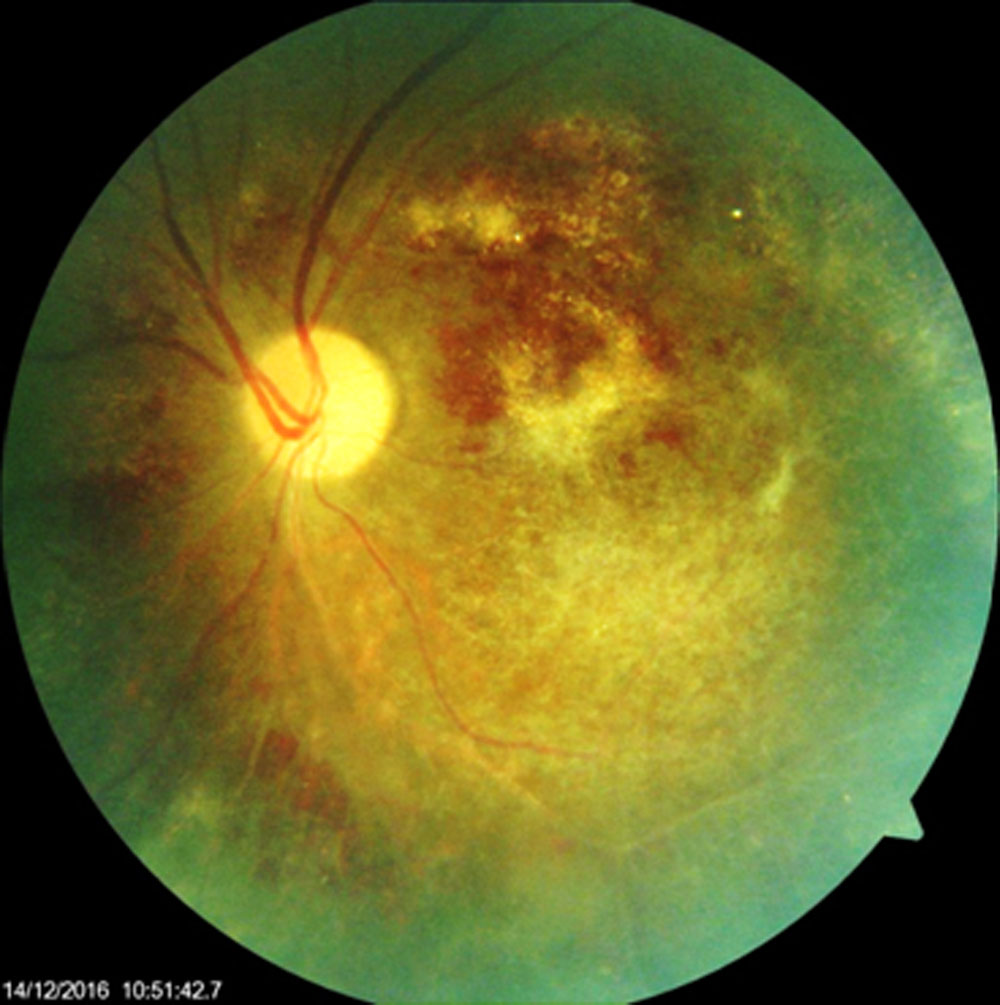
FIGURE 2
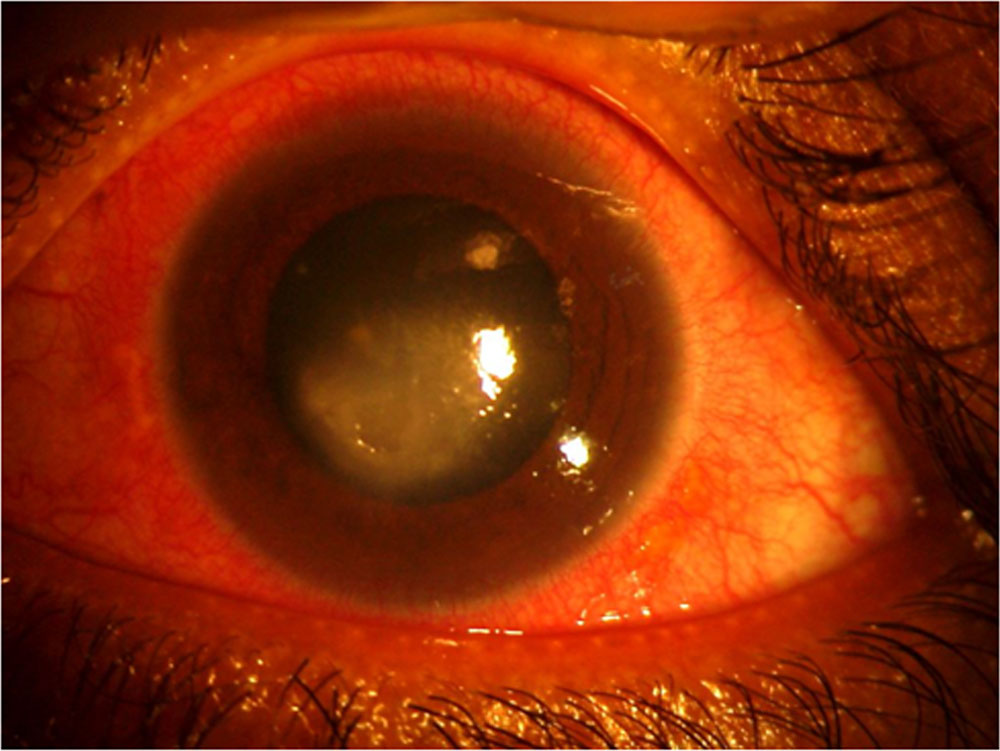
FIGURE 3
Leave a Comment