

Dr. Ajinkya Deshmukh, Dr. Gowri J Murthy, Dr. AYYAPPA REDDY MALLIDI, Dr. Praveen Ramachandra Murthy
Abstract:
Renewal of Driving License in India and Glaucoma: A Study of Prevalent Practice and its Lacunae
Introduction:
Glaucoma affects different aspects of vision including visual field. This prospective observational study aims to collect details of driving license (DL) renewal procedure, (in an urban metro in India) among patients with diagnosed Glaucoma, and method of reporting of the vision related requirements during renewal.
Methods:
One hundred patients with diagnosed Glaucoma above 40 years, having valid DL (with at least one renewal cycle) were included. Patients with other ocular co-morbidities were excluded. Driving Habits Questionnaire(DHQ) and a questionnaire about license renewal were administered. Driving eligibility was compared to International guidelines.
Results:
Study population included patients with 69% early, 29% moderate, 2% advanced glaucoma..Sixteen% of patients had stopped driving. Legal license renewal procedure was bypassed by 45%. Form-1 was not submitted by 43% and 49% did not submit Form-1A at the time of renewal. Only 7.01% mentioned about Glaucoma in the self-declaration form. None were asked about their visual field during renewal. Among 61 patients who submitted a medical certificate the undersigning doctor was an ophthalmologist in only six patients. Thirty percent patients with valid Indian DL would not have satisfied International College of Ophthalmologists guidelines. Driving difficulties were experienced by 44%, more so in advanced glaucoma (F(1, 82) =22.12, p<0.001).
Conclusions:
Vision related testing at time of renewal of DL is inadequate in India. Chronic eye diseases like Glaucoma are commonly not self-declared or detected at pre-renewal testing. Clear-cut guidelines about visual requirements, and implementation are required to prevent road traffic events due to vision related errors.
Key words:
Glaucoma, Driving, License, Renewal, Indian guidelines, International Council of Ophthalmology (ICO) guidelines.
Key Message:
Vision related testing at the time of driving license renewal in India is inadequate. Chronic eye diseases like Glaucoma are frequently not self-declared or detected. There is a need for clear cut guidelines and implementation of Vision related aspects during renewal of driving license.
Introduction:
Glaucoma affects the visual field, which is an important criterion for driving safety. Various studies have shown that drivers with Glaucoma perceive greater difficulty with driving and this difficulty increases with the severity of visual field loss.[2] Visual field loss severity is also associated with increased incidence of Motor vehicle accidents.[3,4,5]
The prevalence of disease which could affect either visual acuity or visual field increases above the age of 40 years.[6] The prevalence of POAG ( age 40+) is 3.5% and PACG 0.88% in the Urban population in south India[7,8] The age of incidence of glaucoma coincides with the time of renewal of the license (20 years after first issuance, approximately age 40-50 years).
Our study aims to collect the details of the driving license renewal procedure, (in an urban metro in India) among patients with diagnosed Glaucoma , and in specific, the method of reporting of the vision related requirements during renewal , to highlight the performance of the licensing process in the context of visual field loss in glaucoma.
Methods:
Patients with Glaucoma were recruited from out-patient department of the Glaucoma service in a tertiary care hospital situated in an urban metro. Patients were above 40 years of age with diagnosed Glaucoma and were on treatment. All patients were having valid driving license. Patients with best corrected visual acuity less than or equal to 6/24 in both eyes and those having primary eye disorder other than Glaucoma were excluded.All participants were given a full explanation of the nature of the study and written informed consent was obtained.
Clinical assessment:
Demographic data and detailed history of patients were noted and eye examination was done which included visual acuity by Snellen’s chart, refraction, slit lamp bio-microscopy, applanation tonometry by Perkin’s tonometer, Gonioscopy by Zeiss four mirror lens and dilated stereoscopic fundus examination and peripheral retinal examination.
Visual fields were assessed monocularly in each eye using the Swedish Interactive Threshold Algorithm(SITA)-Standard 24–2 threshold strategy on a Humphrey Field Analyzer(HFA) (model 750, Carl Zeiss-Meditec, Dublin, CA). The monocular Humphrey Visual Field test(HVF) gives more specific information about the location and depth of the defects, and therefore is the overwhelming method of choice for use in diagnostics. The binocular Humphrey Esterman Visual Field test(HEVF) seems not to be as efficient as the HVF in finding visual field defects in glaucoma patients, and is therefore said to be of doubtful efficacy in evaluating visual capabilities in traffic situations.[9]
Monocular visual fields of both eyes were integrated for binocular results. Visual fields of the right and left eye were superimposed and the best threshold at each point from either eye was considered.
The integrated thresholds for the entire grid were then graded as follows and the field results were graded as “pass” or “fail”.
The weakest stimulus which elicited a response at each test point, must be:
1) At least 20 dB within a radius of 10° from the center of the visual field
2) At least 10 dB within a radius of 20° from the center of the visual field
Assessment of results was constituted as either “pass” or “fail”, if any of the above two criteria are not met.[9]
The VFI values were considered as continuous variables while studying the relation between visual field loss and Driving difficulty scores, Score of driving space, and occurrence of self-reported crashes and citations.
Based on the better eye VFI, the severity of glaucoma was classified according to the Modified Glaucoma Staging System, based on the VFI. Stage 0 (No defect), Stage 1 (Early)-VFI<=82, Stage 2 (Moderate) 63<=VFI<=81, Stage 3 (Advanced) 43<=VFI<=62, Stage 4 (severe) 23 % <= VFI <= 42 % ,Stage 5 (end stage) VFI <= 22 %.[10]
Questionnaire:
A questionnaire regarding driving license renewal status was administered. The questionnaire included following questions:
- Do you have a valid driving license?
- Since when are you driving?
- Which type of vehicle do you drive?
- When did you get your driving license last renewed?
- Did you submit a self-declaration form (FORM 1) and medical certificate (FORM 1A) when you applied for the renewal?
- Was mention made about your visual problem (Glaucoma) in FORM 1?
- If you have got the medical certificate of fitness, who was the undersigning doctor, an ophthalmologist or any other registered medical practitioner?
- Have you been checked for visual functions viz. visual acuity or field or color vision by that doctor at that time?
- What other tests or examinations, if any, you had, to get the license issued?
- Did any Road TransportOffice(RTO) personnel help you in or offer you any bypass in the whole procedure?
Patients were also given the standard Driving Habits Questionnaire (DHQ).[11] DHQ included five different domains as follows: 1) Current driving status and miscellaneous issues 2) Driving exposure and dependence on other driver. 3) Driving difficulty 4) Driving space 5) Self-reported crashes and citations. Certain modifications were made to make it suitable for our context. Modifications were as follows: (1) ‘Miles’ changed to ‘kilometers’ (2) ‘Left handed turn’ changed to ‘Right handed turn’ (3) ‘Out of states’ changed to ‘Out of Karnataka’.
Statistical analysis:
Anticipating 5% drop out rate final sample size was determined to be 100. Statistical analysis was done using SPSS-20 and Fisher’s Exact test (Modification of Chi-square test). P value <0.05% was considered statistically significant. SAS version 9.2 (GLM procedure) was used in linear regression analysis between VFI and Driving difficulty, Score of driving space, and self-reported crashes and citations.
Results:
Our patients included 96% (n=96/100) males and 4% (n=4/100) Females. Age of patients ranged between 40 to 82 years, mean 65.16 years. Sixty seven % had POAG and 33% had PACG. The study population includedStage 0 (No defect stage): 0%, Stage 1 (Early) (VFI<=82): 69%,Stage 2 (Moderate) (63<=VFI<=81): 29%,Stage 3 (Advanced)(43<=VFI<=62): 2%,Stage 4 (severe) (23 % <= VFI <= 42 %): 0%,Stage 5 (end) (VFI <= 22 %): 0%. Thirty three patients had at least one previous glaucoma surgery, 14 patients had history of previous cataract surgery. 53 had no previous surgical intervention.
Thirty nine patients had no associated systemic illnesses, and 61 had associated systemic illnesses like Diabetes Mellitus, Bronchial Asthma, and Hypothyroidism and Systemic hypertension.
License renewal:
All 100 patients had a valid Indian driving license. Twenty six patients had a license to drive a two-wheeler, 25 had a license to drive a four-wheeler and 49 patients had both two and four wheeler license. The average duration of holding the driving license was 30.91 years (Range, 10 years to 52 years). All patients had at least one renewal of their license.
Medical certification during license renewal (Vision related) [Table 1]:
Forty three patients did not submit Form 1(self-declaration) during the renewal process. Sixty one patients submitted a medical certificate (Form 1A). The undersigning doctor in the medical certificate, when it was issued, was a registered general medical practitioner in 55 patients and an ophthalmologist in six patients. Only 18 patients had their visual acuity and color vision checked prior to certification. Four patients had further medical examinations related to general health; like systemic blood pressure and pulse, prior to certification.
Forty five patients bypassed parts of the renewal procedure and obtained the license with some help from the Regional Transport Office personnel.
Only four patients out of 100 declared that they had Glaucoma in Form 1/ Form 1A.
Eighty four patients were currently driving and 16% (n=16/100) of patients had stopped driving. Of the persons who had stopped driving, 31.25 %( n=5/16) were due to self-reported ocular causes. Nine patients had stopped due to non-ocular causes like old age, vertigo or orthopedic causes, and two had both self-reported ocular and non-ocular causes.
Patients who had stopped driving were shown to have higher relative probability (Relative probability= 1.12) of having failed on the visual field criteria (Odds ratio =1.73)
Of the 100 patients who had a valid license, only one would have failed the Indian criterion as he had visual acuity (corrected) < 6/12 in both eyes. If the International Council of Ophthalmology(ICO) guidelines for driving eligibility were applied, 70 patients would be eligible to drive, and 30 would not be eligible to drive. [Figure 1].
The 84 patients who were currently driving were administered the DHQ questionnaire. One patient who had recently stopped driving answered two domains of the DHQ pertaining to driving space and crashes and citations as he had driven for much of the last year.
DHQ Results:
The results of the DHQ questionnaire in the five domains are summarized in the Table 2 and Table 3.
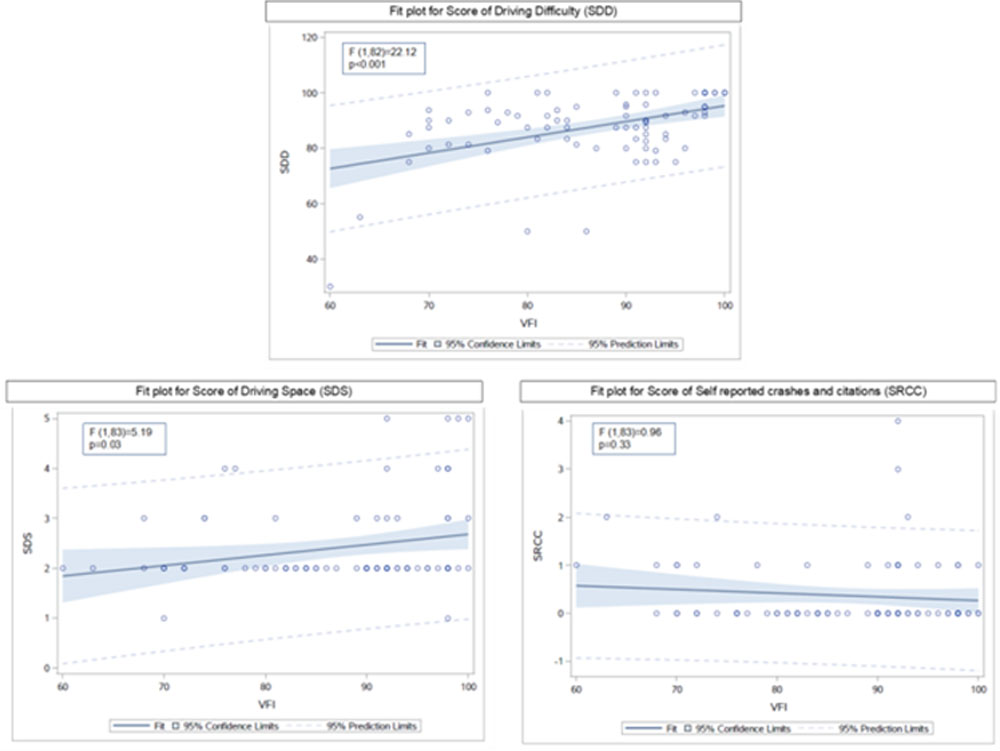
Seventy two percent (61/84) had restricted their driving to neighborhood and were not driving outstation. . However on Linear regression calculated to predict restriction of driving space based on VFI, a less significant regression equation was found. (F(1,83)=5.19, p=0.03).
Seven items in driving difficulty domain ask patients to rate the degree of visual difficulty experienced in specific driving situations. Ratings are made on a 5-point scale (5 = no difficulty, 4 = a little difficulty, 3 =moderate difficulty, 2 =extreme difficulty, 1=so difficult that I no longer drive in that situation). A composite score of driving difficulty was computed based on the responses to all the items in domain and scaled on a 100-point scale [(mean score – 1) X 25]. Lower composite scores indicate a greater degree of difficulty. Forty four percent(n= 37/84) of patients had composite score of < 90.
For the purposes of analysis, composite difficulty score that ranged from 0 (extreme difficulty) to 100 (no difficulty), was used. A simple linear regression was calculated to predict score of driving difficulty based on VFI. A significant regression equation was found. (F (1, 82) =22.12, p<0.001).
Eleven out of 85 (12.9 %) patients met with ≥ one crashes in one year. The composite score of crashes and citations in the past one year, which also includes number of accidents when police came to the scene, number of times pulled over by police and number of times received penalty slip was not significantly correlated with severity of glaucoma. (F (1,83)=0.96, p=0.33).
History of previous glaucoma surgery was not significantly correlated with poor performance on any of the domains of the DHQ.
Discussion:
Driving is one of the most important aspects of quality of life. It gives an individual a senseof independence and freedom to commute from one place to another. Legal driving license isthe primary requirement to lawfully exercise the right of driving. License issuing authoritiesand medical professionals have an important role to play in terms of screening the drivers fortheir cognitive, physical and visual fitness to drive. In India, all matters related to driving and licensing are presently regulated by the Motor Vehicle Act (1988) (IMV) and the Central Motor Vehicles Rule (1989). An amendment to the Motor Vehicle act was also passed in 2017. Issuing of driving license is a state matter in India, and the Regional Transport offices (RTOs) are the licensing Authority. The IMV act prescribes visual acuity criterion for eligibility to drive, but does not specify any visual field criterion. As per subsection (3) of section-8 of the Motor Vehicle act 1988, a self-declaration for non-transport vehicles and a medical certificate from a registered medical practitioner in case of transport vehicle, is sufficient for the grant of learner’s license in India. Ocular diseases like Glaucoma, which could affect the visual field should be either self-declared by the patient, or mentioned by the doctor in the medical certificate. The act also mandates that the driving license should be renewed after 20 years of the initial licensing, and at this renewal too, the same requirements for visual certification are followed. The amendment to the act (2017) does not change any of these visual requirements for licensing.
In 2006 the International Council of Ophthalmology issued a report discussing the individual assessment of visual functions and their relation to functional vision in the context of Vision requirements for driving safety.[12] The report was aimed at providing a set of considerations for use by any group/ country contemplating the development or refinement of driving license requirements. ICO mandates that three aspects of visual function should be tested, namely Visual Acuity, Contrast Sensitivity and Visual Field. Other functions which may also be tested include Glare sensitivity, useful field of view, color vision and night vision. Suggested criteria are:
- Visual acuity with both eyes open- 6/12 or better
- Binocular visual field should be at least 120 degree horizontal and 40 degree vertical, evenly divided on either side of fixation point.
- Contrast sensitivity is recommended but the current absence of a simple screening test which can be applied, makes it an important option for the future.
The comparison between Indian and ICO criteria are given in Table 4.
As per the Indian criteria, Registered Medical Practitioner (RMP) should declare if applicant can distinguish motor car plate in day light at a distance of 25 meters. He should also declare about night vision and color vision. All other aspects are either to be self-declared or attested by the registered medical practitioner. No cut off for visual acuity or visual field criteria are prescribed.
In our study, if the ICO recommended guidelines were applied, 30 patients would not have had the license. Also, if Indian criteria were correctly applied, four of our patients would not have been eligible to drive. This was because they bypassed the testing process before renewal. It is also seen that 45 patients had not gone through the prescribed process and bypassed the medical part of the renewal procedure. Our study clearly shows that the likelihood of patient self-declaring glaucoma is low, and most of the times a registered medical practitioner, rather than an ophthalmologist ends up certifying the patient.
The time of renewal of the license provides a golden opportunity to screen for many chronic age related disorders including Glaucoma. Visual field screening can detect many ocular diseases apart from Glaucoma. We agree that driving safety not only depends on what is seen, but also as to how quickly and adequately drivers respond. It should be stressed that driving is a privilege, not a right and the primary responsibility of those who assess potential drivers is to the public and not to the applicant.
In this respect, Indian criteria need to be well defined and need to be properly implemented.
It is also important to note that self-regulation by patients by either stopping to drive or by limiting their driving to neighborhoods occurs in the setting of visual morbidity due to Glaucoma, as shown in our study. Also incidence of crashes/citations, in our study, did not correlate with severity of Glaucoma. This is demonstrated in other studies as well.[13,14] This may be because Glaucoma patients are more aware and may be more careful while driving.
Limitations of the study: Our study was limited to an urban metro setting, cannot be generalized to all areas. All patients drove only non-transport vehicles. The implications of driving transport vehicles are not explored in our study. Our study has a male preponderance, due to the societal context in our country in the age group of 40-70yrs. This is likely to change in the coming years. We have not tested contrast sensitivity, and Glare sensitivity, as well as night vision which are also important aspects of visual requirements for driving safety. Lack of an easily available standardized test for these is a contributory reason. Esterman / binocular visual field testing was not done in our patients. This is due to published articles which recommend the superiority of threshold visual testing in this context.[15] A binocular test could further establish the extent of the visual field in the light of the ICO recommendations.
Conclusion:
Vision related testing at the time of renewal of driving license is inadequate in India. Chronic eye diseases such as Glaucoma are commonly not self- declared or detected at the time of pre renewal testing. Testing of persons aged 40+ for visual certification should preferable done by an Ophthalmologist. Clear cut guidelines about visual requirements, and proper implementation are required to prevent road traffic events due to vision related driving error, and could provide an opportunity to screen for Glaucoma.
References:
[1] Owsley C, McGwin Jr G. Vision and driving. Vision research. 2010 Nov 23;50(23):2348-2361
[2] Freeman EE, Muñoz B, West SK, Jampel HD, Friedman DS. Glaucoma and quality of life: the Salisbury Eye Evaluation. Ophthalmology. 2008 Feb 1;115(2):233-238
[3] Tanabe S, Yuki K, Ozeki N, Shiba D, Abe T, Kouyama K, Tsubota K. The association between primary open-angle glaucoma and motor vehicle collisions. Investigative Ophthalmology & Visual Science. 2011 Jun 1;52(7):4177-4181
[4] Rubin GS, Ng ES, Bandeen-Roche K, Keyl PM, Freeman EE, West SK. A prospective, population-based study of the role of visual impairment in motor vehicle crashes among older drivers: the SEE study. Investigative ophthalmology & visual science. 2007 Apr 1;48(4):1483-1491
[5] McGwin G, Xie A, Mays A, Joiner W, DeCarlo DK, Hall TA, Owsley C. Visual field defects and the risk of motor vehicle collisions among patients with glaucoma. Investigative ophthalmology & visual science. 2005 Dec 1;46(12):4437-4441
[6] Dandona R, Dandona L. Review of findings of the Andhra Pradesh Eye Disease Study: policy implications for eye-care services. Indian journal of ophthalmology. 2001 Dec 1;49(4):215
[7] Vijaya, Lingam et al. Prevalence of Primary Open-angle Glaucoma in an Urban South Indian Population and Comparison with a Rural Population, Ophthalmology. 2008 Apr; 115(4):648 – 654.e1
[8] Vijaya, Lingam et al. Prevalence of Primary Angle-Closure Disease in an Urban South Indian Population and Comparison with a Rural Population, Ophthalmology. 2008 Apr 115(4):655 – 660.e1
[9] Ayala M. Comparison of the monocular Humphrey visual field and the binocular Humphrey esterman visual field test for driver licensing in glaucoma subjects in Sweden. BMC ophthalmology. 2012 Dec;12(1):35
[10] Hirasawa K, Shoji N, Morita T, Shimizu K. A modified glaucoma staging system based on visual field index. Graefes Arch Clin Exp Ophthalmology. 2013;251:2747-2752.
[11] Owsley C, Stalvey B, Wells J, Sloane ME. Older drivers and cataract: driving habits and crash risk. Journals of Gerontology Series A: Biomedical Sciences and Medical Sciences. 1999 Apr 1;54(4):M203-11
[12] Colenbrander A, De Laey JJ. Vision Requirements for Driving Safety with Emphasis on Individual Assessment. Report prepared for the International Council of Ophthalmology at the 30th World Ophthalmology Congress. Sao Paulo, Brazil, February 2006. www.icoph.org/pdf/visionfordriving.pdf
[13] McGwin G, Mays A, Joiner W, DeCarlo DK, McNeal S, Owsley C. Is glaucoma associated with motor vehicle collision involvement and driving avoidance?. Investigative Ophthalmology & Visual Science. 2004 Nov 1;45(11):3934-3939
[14] Ramulu PY, West SK, Munoz B, Jampel HD, Friedman DS. Driving cessation and driving limitation in glaucoma: the Salisbury Eye Evaluation Project. Ophthalmology. 2009 Oct 1;116(10):1846-53
[15] Crabb DP, Viswanathan AC. Integrated visual fields: a new approach to measuring the binocular field of view and visual disability. Graefe’s Archive for Clinical and Experimental Ophthalmology. 2005 Mar 1;243(3):210-6
Table 1: Driving license renewal procedure related questionnaire results
| Driving license renewal procedure related questionnaire: Results | |
| Duration since driving | Average: 36.91
(Range: 10 to 60 years) |
| Which type of vehicle | 2 wheeler: 26%
4 wheeler: 25% Both : 49% |
| Duration since last renewal | Average: 3.8 years
(Range: 1 month to 17 years) |
| Submission of ‘Form 1’ | Yes: 57% (57/100)
No: 43% (43/100) |
| Declaration of Glaucoma in ‘Form 1’ | Yes: 04% (4/100)
No: 96% (96/100) |
| Submission of ‘Form 1 A’ | Yes: 61% (61/100)
No: 39% (39/100) |
| Undersigning doctor in ‘Form 1 A’ | Ophthalmologist: 9.83% (06/61)
Other RMP: 90.17% (55/61) |
| Visual functioning tests done | Yes: 12% (12/100)
No: 76% (76/100) In parts: 12% (12/100) |
| Other tests or physical examination done | Yes: 4% (4/100)
No: 96% (96/100) |
| Helped by RTO personnel to bypass legal procedure | Yes: 45% (45/100)
No: 55% (55/100) |
Table 2: DHQ Results: Current driving status & Driving difficulty
| Current Driving | |||
| Currently Driving | Yes: 84% (84/100) | No: 16% (16/100) | |
| Wear glasses while driving | Yes: 65.5% (55/84) | No: 35.5% (29/84) | |
| Wear seat belt while driving | Yes: 72/6% (61/84) | No: 2.4% (2/84) | NA: 25% (21/84) |
| Way you prefer to get around | Drive Yourself:
75% (63/84) |
Have someone else to drive:
25% (21/84) |
|
| How fast you drive | Same or faster:
67.9% (57/84) |
Slower:
32.1% (27/84) |
|
| Suggested to limit or stop driving | Yes: 13.1% (11/84) | No: 86.9% (73/84) | |
| Rate quality of driving | Above average:
86.9% (73/84) |
Average:
13.1% (11/84) |
|
| Not want to drive | Ask friend:
13.1% (11/84) |
Take taxi:
84.5% (73/84) |
Use public transport: 1.2% (1/84)
Postpone plans: 1.2% (1/84) |
| Driving Difficulty | |||
| Difficult | Not Difficult | Not applicable | |
| Driving in Rain | 44% (37/84) | 45.2% (38/84) | 10.7% (9/84) |
| Driving alone | 4.8% (4/84) | 92.9% (78/84) | 2.4% (2/84) |
| Parallel parking | 14.3% (12/84) | 44% (37/84) | 41.7% (35/84) |
| Right hand turns in
traffic |
3.6% (3/84) | 36.9% (31/84) | 59.5% (50/84) |
| Driving on highways | 15.5% (13/84) | 42.9% (36/84) | 41.7% (35/84) |
| Driving in rush hour | 31% (26/84) | 60.7% (51/84) | 8.3% (7/84) |
| Diving at night | 58.3% (49/84) | 36.9% (31/84) | 4.8% (4/84) |
Table 3: DHQ Results: Driving exposure and dependency, Self-reported crashes and citations & Driving space
| Driving Exposure and Dependency | ||
| Number of days per week | >=5: 53.6% (45/84) | <5: 46.4% (39/84) |
| Number of places per week | >=5: 82.1% (69/84) | <5: 17.9% (15/84) |
| Number of Km per week | <=150km: 89.3% (75/84) | >150km: 10.7% (9/84) |
| Number of people travelled with | >=4: 8.3% (7/84) | <4: 91.7% (77/84) |
| Driving dependency | Usually the driver:
56% (47/84) |
Have someone else to drive:
44% (37/84) |
| Self Reported Crashes and Citations | ||
| Number of accidents in past year | None: 87.1% (74/85) | >=1: 12.9% (11/85) |
| Number of accidents where police came to scene | None: 97.6% (83/85) | >=1: 2.4% (2/85) |
| Number of times pulled over by police | None: 92.9% (79/85) | >=1: 6.1% (6/85) |
| Number of times received penalty slip | None: 89.4% (76/85) | >=1: 10.6% (9/85) |
| Driving Space | ||
| Immediate neighbourhood | Yes: 95.3% (81/85) | No: 4.7% (4/85) |
| Beyond neighbourhood | Yes: 100% (85/85) | No: 0% (00/85) |
| Neighbouring towns | Yes: 27.1% (23/85) | No: 72.9% (62/85) |
| Distant towns | Yes: 12.9% (11/85) | No: 87.1% (74/85) |
| Outside Karnataka | Yes: 4.7% (4/85) | No: 95.3% (81/85) |
Table 4: A brief comparison of Indian vs ICO Criteria For License Renewal
(Recommendation for an unrestricted (non-commercial) license, with both eyes open)
| Parameter | Indian criteria | ICO criteria |
| Visual acuity | RMP should declare if applicantcan distinguish motor car plate in day light at a distance of 25 meters.
(No cut off value given) |
20/40 (0.5, 6/12) is accepted. |
| Visual field | No guidelines given in view of Visual field testing. | Binocular field of at least 120° horizontal and 40° vertical is suggested. |
| Contrast sensitivity | RMP should declare ifapplicant suffer from night blindness? | Screening is listed as desirable |
| The use of restricted licenses | is not clearly advocated. | is clearly advocated. |
| Periodic renewal | After 20 years of initial issuance. | is advocated, especially for older subjects. |
Figures:
Figure 1: Venn diagrams showing (A) Comparison of patients having valid DL in India vs Eligible as per Indian guidelines vs ICO guideline (B) Comparison of patients actually driving in Indian scenario vs Eligible as per Indian guidelines vs Eligible as per ICO guideline
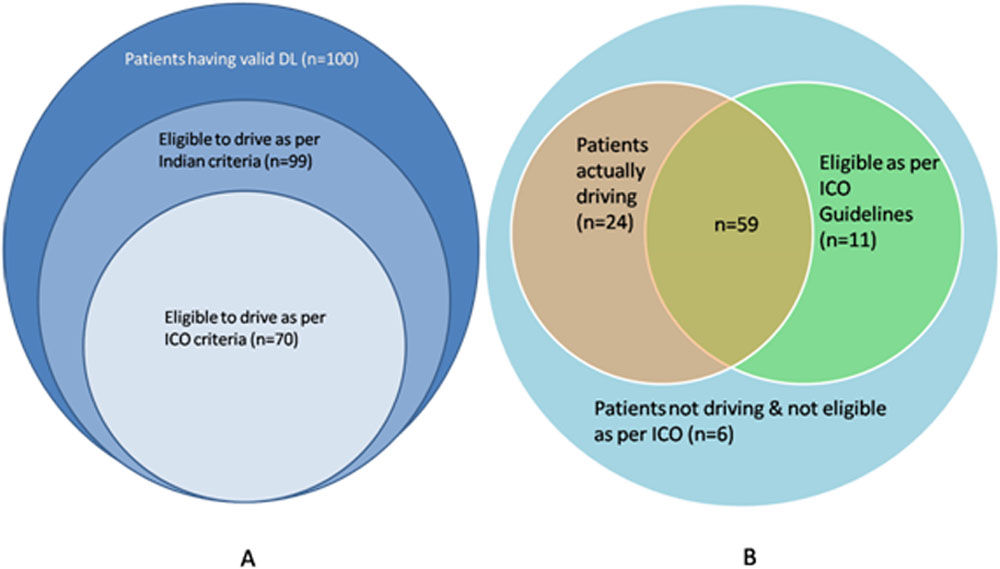
Figure 2: Linear regression graph showing relation between VFI and Score of Driving difficulty (SDD) (Top), Score of driving space (SDS) (Bottom Left), and Self- reported crashes and citations (SRCC) (Bottom Right).
Leave a Comment