

Dr.Pandey Suresh Kumar,Dr.Vidushi Sharma
We visual outcomes of IOL implantation of pediatrictraumatic cataracts done at our center during 10 years. Analysis of medical records of traumatic cataracts in the pediatric age group (4-14 years) operated for cataract surgery with posterior chamber IOL with or without primary posterior capsulotomy with anterior vitrectomy between 2006 and 2010. Intracameral preservative free triamcinolone (Aurocort 0.05 CC/2 mg) was used to decrease inflammation. A total of 102 children were undergone cataract surgery for traumatic cataract . Mean age was 8.69 ± 2.10 years (range, 4-14 years). Preoperative visual acuity ranged from 6/60 to Hand Movement. Visual acuity of 6/18 or better was achieved in 90 percent cases postoperatively. Phacoaspiration with IOL implantation along with primary posterior capsulotomy and anterior vitrectomy and intracameral injection of preservative free triamcinolone helped in gaining good visual outcome in pediatric traumatic cataract patients.
Ocular trauma is a common cause of unilateral cataract in adults and children (Figure 1).
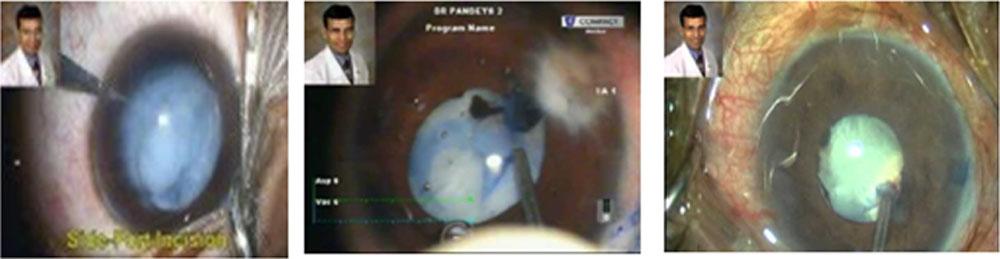
Figure 1.Photographs showing Traumatic Cataract Cases
At the time of presentation after the trauma to the eye, primary repair of a corneal or scleral wound may be needed along with a complete evaluation of damage to the intraocular structures (eg, posterior capsular rupture, vitreous hemorrhage, and retinal detachment). Most of the ophthalmic surgeons prefer to defer cataract surgery and IOL implantation in traumatic cataract patients, even when anterior lens capsule has been ruptured. A delay of 3 to 4 weeks may be helpful to allow corneal healing and to reduce the inflammatory response. Longer delays are avoided in children within the amblyopic age range.
IOL implantation is preferred in cases of traumatic cataracts with corneal injuries. Placement of the IOL in the capsular bag is preferred when capsular support is available. Ciliary sulcus fixation of the IOL can also be performed in the absence of adequate capsular support for in-the-bag placement, but it may be associated with a greater incidence of uveitis and pupillary capture. Suture-less scleral fixation of posterior chamber IOL or iris fixation IOL can be performed in absence of capsular support. Intracameral antibiotics (0.1 cc Vigamox, Alcon Laboratory) may be helpful to decrease risk of post operative endophthalmitis, and also use of preservative free triamcinolone acetonide (0.05 cc [2 mg] Aurocort- Aurolab, India) may help to stain the vitreous and also helpful to decrease post operative inflammation in traumatic cataract cases.
PATIENTS & METHODS
This was a retrospective study. The authors evaluated medical records of traumatic cataracts in the pediatric age group (4-14 years) operated for cataract surgery with posterior chamber IOL with or without primary posterior capsulotomy with anterior vitrectomy done at SuVi Eye Institute between 2006 and 2010 . Intracameral preservative free triamcinolone (Aurocort 0.05 CC/2 mg) was used to decrease inflammation.
REPORT OF SELECTIVE TRAUMATIC CATARACT CASES
CASE 1. A 14 year old case of traumatic cataract due to thorn injury to the right eye sustained five years ago. The surgeon faced several challenges while managing this case- small irregular pupil that failed to dilate (due to irido-lenticular adhesions), localized calcified cataract, and presence of posterior capsular plaque. The patient was counselled about the surgical procedure and visual outcome. Topical phacoemulsification (supplemented with preservative free intracameral lignocaine) and IOL implantation was performed. The corneal endothelium was coated using dispersive OVD (Viscoat, Alcon Laboratory).
Anterior capsular staining was done and irido-lenticular synechiae were released using blunt spatula. This was followed by anterior capsulorhexis. The soft lens matter was aspirated using low phaco power and fluidics parameters. The calcified capsule/lens matter was removed and posterior capsular plaque peeling was also done. A foldable hydrophobic IOL (Care Group, India) was implanted in the capsular bag. Preservative free triamcinolone acetonide (0.05 cc- Aurocort, Aurolab, India) and moxifloxacin (0.1 cc Vigamox, Alcon Laboratory) were used intracemerally. The best-corrected vision (BCVA) after 1 week postop was 6/9 (20/30) and N6.
CASE 2: Twelve year old child with traumatic cataract was referred to SuVi Eye Institute, Kota, India for management. This child had a history of injury to right eye (one month ago) by thorn of BaboolTrees (Acacia Nilotica ) while playing cricket. The child noticed gradual decrease in vision in the right eye. On examination there was corneal scar (infero-temporal region) and total traumatic white cataract with torn anterior capsule (horizontal anterior capsular split- 3 O’clock to 9 O’clock position). USG B scan revealed intact posterior capsule.
Pre-operative vision was hand movements close to face (accurate projection of rays in all quadrants) and IOP was 18 mm Hg. The parents of child were keen for implanting an IOL which can minimize dependency on glasses. The preoperative keratometry (K) reading showed corneal astigmatism of 0.5 Diopter. After a detailed counselling & explaining all relevant details of surgical technique and visual outcome, we selected Tecnis Multifocal IOL (Abbott Medical Optics, Santa Ana, CA) for implantation. We prefer to do pediatric cataract surgery in general anesthesia, however, this case was performed in topical anesthesia. After making side-port incision, anterior capsule was stained with trypan blue dye under an air bubble. The corneal endothelium was coated using dispersive OVD (Viscoat, Alcon Laboratory).
Anterior capsulorhexis was not attempted due to presence of horizontal anterior capsular split. Soft lens matter was carefully removed using bimanual irrigation and aspiration. The AMO Tecnis one-piece Multifocal IOL was loaded in the cartridge and the haptics of multifocal IOL were carefully positioned at 6 and 12 O’ Clock position of intact capsular fornices. The OVD was removed from behind the IOL. The clear corneal incisions (main and side-ports) were sealed. Intracameralself preservedmoxifloxacin (0.1 cc Vigamox- Alcon Laboratory) and preservative free triamcinolone acetonide (0.05 cc) was injected in the anterior chamber. Postoperatively (day 1) the multifocal IOL was well centered with minimal inflammation in the anterior chamber. The child regained 6/6 (20/20) and N6 vision (Unaided).
RESULTS:
A total of 102 children were undergone cataract surgery for traumatic cataract . Mean age was 8.69 ± 2.10 years (range, 4-14 years). Preoperative visual acuity ranged from 6/60 to Hand Movement. Visual acuity of 6/18 or better was achieved in 90 percent cases postoperatively.
DISCUSSION:
Management of traumatic cataracts can be challenging, but advanced phacoemulsification/vitrectomy machines with better fluidic parameters, refined surgical techniques and availability of various capsular dyes (e.g. trypan blue), anti-inflammatory/vitreous staining adjuncts (preservative free triamcinolone) and devices (OVDs, Iris hooks, Malyugin rings, Capsular Tension Rings, Capsular Tension Segments) and IOLs (Glued IOL/retro-iris fixated), augment the chances of a good outcome. An understanding and thorough evaluation (anterior and posterior segment examination and imaging studies to rule out intraocular foreign body) of the nature and extent of the ocular damage and careful planning & counselling prior to surgery are imperative to the proper management of these challenging cases of traumatic cataract.
REFERENCES
- Wilson ME, Trivedi RH, Pandey SK. Pediatric Cataract Surgery: Technique, Complications and Management. Philadelphia; Lippincott Williams & Wilkins; 2005.
- Pandey SK, Ram J, Werner L, et al. Visual results and postoperative complications of capsular bag versus sulcus fixation of posterior chamber intraocular lenses for traumatic cataract in children. J Cataract Refract Surg.1999;25:1576-1584.
- Pandey SK, Wilson ME, Trivedi RH, Izak AM, Macky TA, Werner L, Apple DJ. Pediatric cataract surgery and intraocular lens implantation: current techniques, complications, and management. IntOphthalmolClin. 2001;41(3):175-196.
- Pandey SK, Billson FA. Pediatric Cataract Surgery. Jaypee Brothers; New Delhi, India; 2005.
- Ram J, Pandey SK, Apple DJ, Werner L, Brar GS, Singh R, et al. Effect of in-the-bag intraocular lens fixation on the prevention of posterior capsule opacification. J Cataract Refract Surg.2001;27:1039-1046.
VIDEO LINK:
Leave a Comment