



Dr.Muna Bhende, Lakshmi Priyankka Alagappan,Suganya Kandeeban, Prof.Sinnakarupan Mathavan PhD
Abstract :
PCVhas a variable response to conventional therapy. The role of miRNA as a biomarker and regulator of disease causing genes has been shown in variousocular conditions like DME, AMD. The present study is to identify PCV specific miRNA and lncRNAs as potential biomarkers for anti-VEGF response. NGS(Next generation sequencing) based RNA sequencing was used to profile miRNA from blood samples of 1 control and 3 cases (treatment naive, on treatment with active PCV, and on maintenance treatment). We identified differentially expressed known miRNAs and novel miRNA specific to each group. We are the first to profile miRNA of PCV patients using RNA sequencing strategy to identify potential disease and drug response specific small RNA transcripts. We are expanding this to identify differentially expressing gene signatures as biomarkers.
None of the authors have any financial interest
Polypoidal choroidal vasculopathy (PCV) is considered a subset of neovascular age related macular degeneration (AMD) and classically presents with recurrent serosanguineous pigment epithelial detachments and orange nodules. The clinical picture however varies from that of chronic central serous chorioretinopathy( CSCR) to occult CNV to massive subretinalhemorrhage. The response to therapy too is often unpredictable. Various studies using genetic and imaging biomarkers have attempted to answer these issues.The role of miRNA as a biomarker and regulator of disease causing genes has been shown in various ocular conditions(1-7) .miRNA has gained light in present and future research as a prognostic and diagnostic medical application in health science
This study attempted to identify PCV specific miRNA and lncRNAs as potential biomarkers for anti-VEGF response.the questions we attempted to answer were: 1. Is it possible to identify PCV disease specific and drug (anti-VEGF) responder and non-responder specific miRNAs and LncRNAs in cases ? 2. Could these non-coding RNAs(miRNAs and LncRNA) be used as biomarkers for screening and eventually 3. Whether we could identify targets to enhancethe drug response in PCV
Methodology:
Informed consent was taken from all patients. IRB approval was obtained for the study. 4 ml blood was collected from three different cohorts of PCV cases, treatment naive, active PCV on treatment( non responder) and PCV on maintainancetreatment (responder). Onenormal control (non diabetic with no systemic diseases) was included . The procedure is described in Fig 1.
Total RNA Extraction:
Total RNA Extraction:
Total RNA was extracted from blood using the trizol chloroform method with a final ethanol wash step to avoid air dry contamination. Compared to DNA, RNA is fragile; hence it is performed in sterile condition. The protocol was carried out in sterile conditions at 4 deg C to maintain RNA integrrity and RNA was stored at – 80 deg C to remain stabilized.
Library preparation kit:
NEBNext® Multiplex Small RNA Library Prep kit was used to prepare the libraries for miRNA sequencing, libraries were sequenced on Illumina HiSeq2500 (outsourced). The final indexed libraries were size selected on a gel to yield a size specific (140bp to 160bp) small RNA library.
Data Analysis:
- Adapter trimming was performed using cutadapt version 1.8dev.
- Contamination removal was done using Bowtie2 .
- The pre-processed reads were aligned to the reference human genome (hg19 version) and miRBase version 21. The known and novel miRNA prediction and their abundance was estimated using miRCat UEA Small RNA Workbench v3.2.
- The aligned reads were used for estimating expression of the miRNA genes using Samtoolsidxstats. Depth of read coverage was assessed based on known miRNA gene loci. The locus specific read counts were normalized to total mapped reads.
- The Differential expression analysis was performed DESeq2.If DESeq failed to identify any differentially expressed genes (due to high levels of noise and lack of replicates), we performed a test to identify the possible differentially expressed genes. Normalized value of the read count with threshold greater than 1 was taken for differential expression analysis, by calculating the ratios of normalized read counts for each gene (Test / Control ratio), and Log conversion to the base 2.
- The target genes for differentially expressed miRNA transcripts were taken to mirWalk 2.0 tool to pick out the experimentally validated miRNA – target interaction.
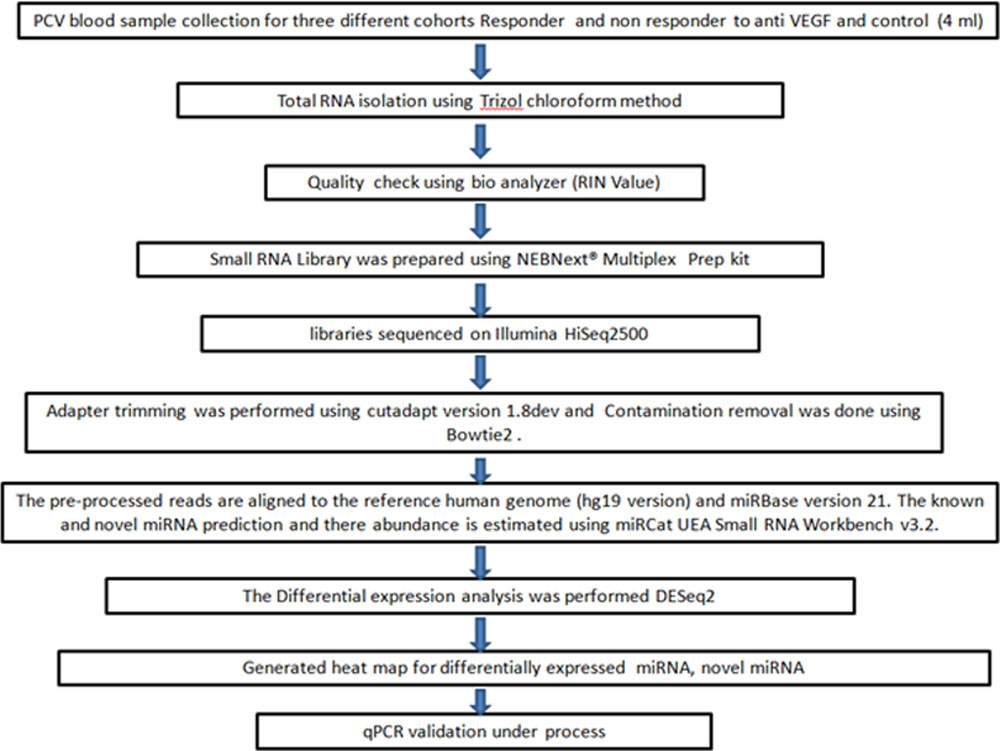
Fig 1
Results:
MicroRNA sequencing technology was used to identify miRNA in 1 of each of the 4 categories- control, treatment naive, active PCV on treatment( non responder) and PCV on maintenance treatment( responder). We identified significantly expressing known miRNAs specific to each group and housekeeping miRNA. Novel miRNAswerealso identified in on and off treatment groupsfor the first time in PCV patient drug responders and non-responders(Fig.2).
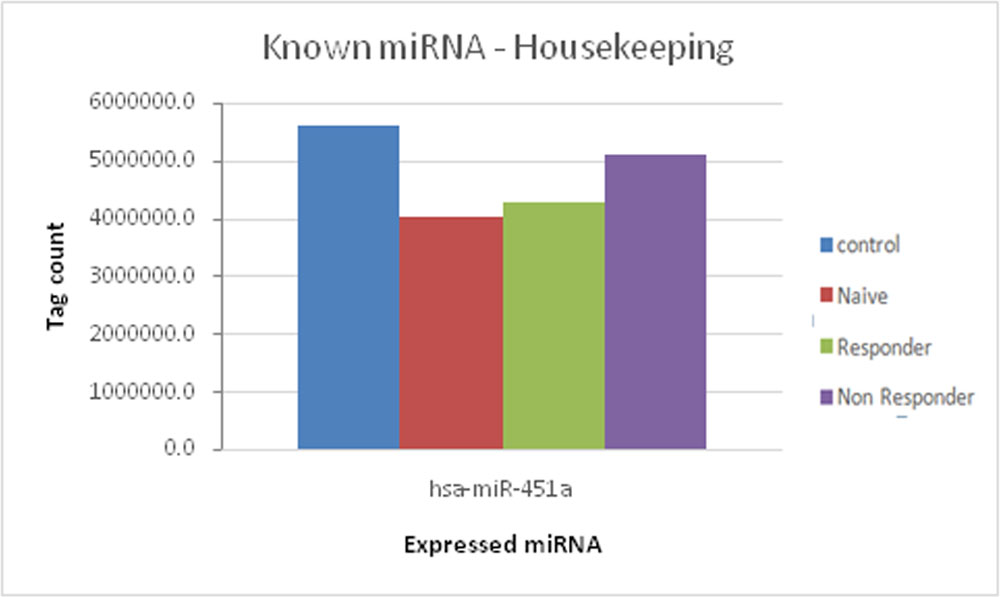
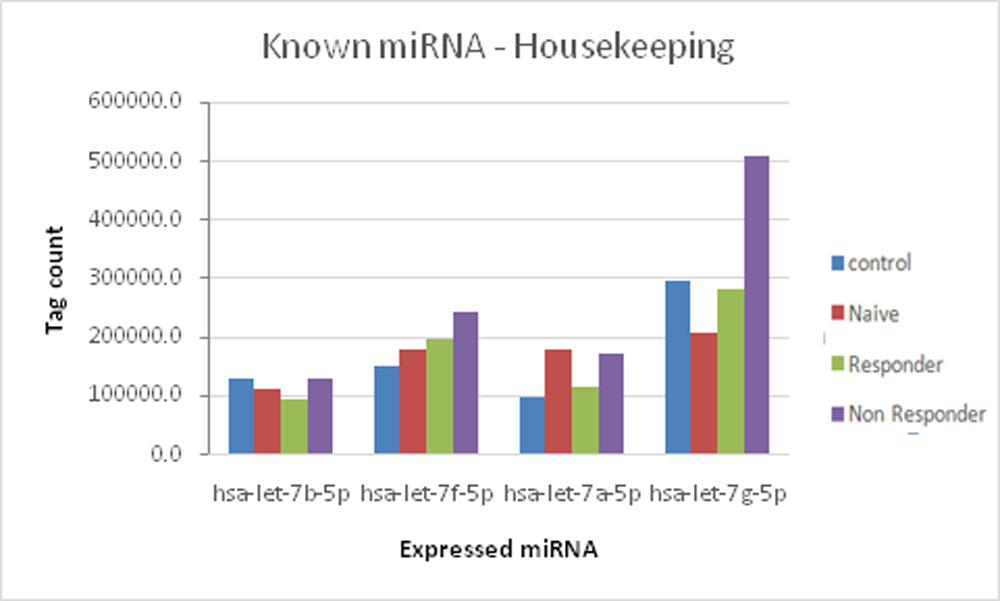
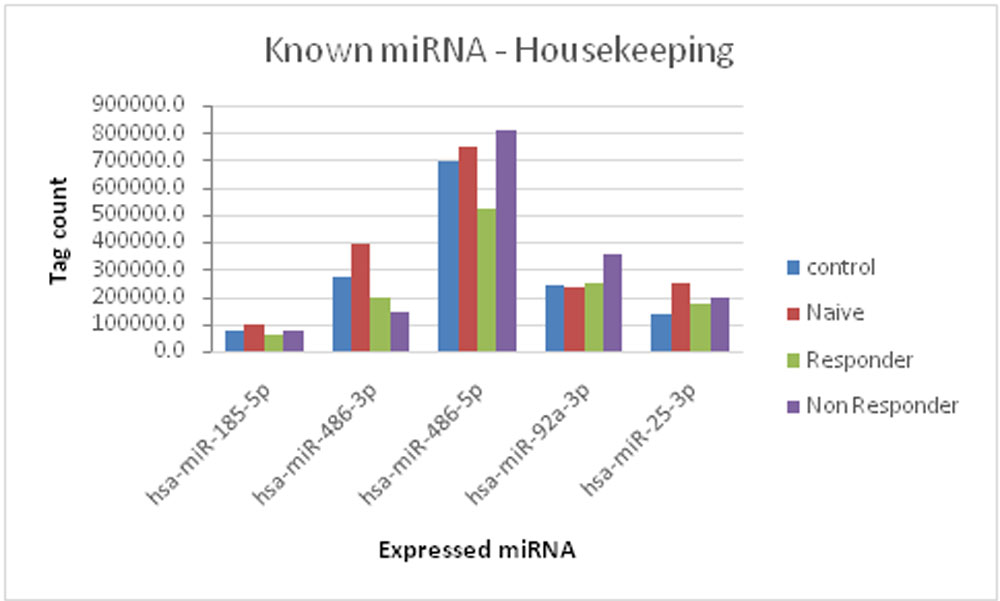
Fig 2a, 2b, 2c
Housekeeping miRNA are the most predominant miRNAs which are expressed in all homosapiens as a regulating factor for the major genes involved in cell development. miRNA let 7 which is a common housekeeping gene expressed in all homosapiens. Significantly expressed miRNA 451a has a higher tag count which is quite surprising as it is been determined as a potential biomarker in colorectal cancer.
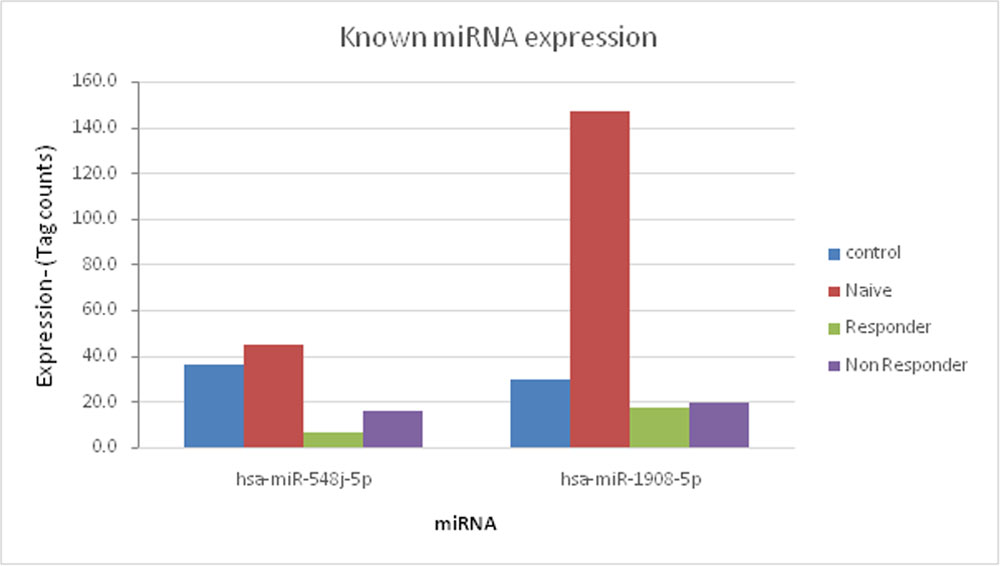
Fig 3
In fig 3 we can see that miRNA 548j-5p and miRNA 1908 5p are highly expressed in naive cases. From this we can infer that fresh PCV cases have a higher expression of these two regulating factors which are involved in cell migration and prolifereation. These can be called upregulated biomarkers in normal non drug induced naive cases.
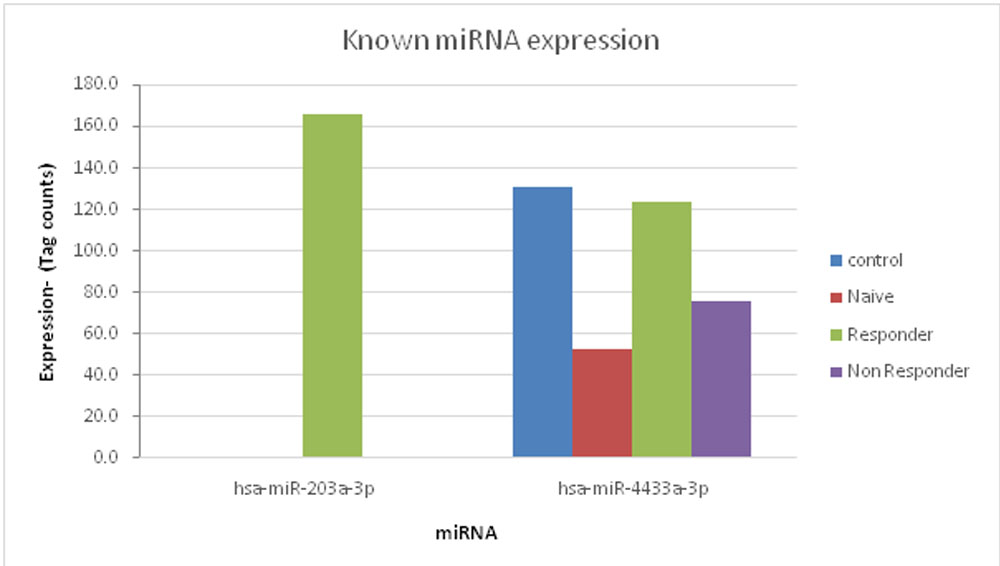
Fig 4
In fig 4 miRNA 203a 3p and miRNA 4433a 3p are seen to be highly expressed in the treated inactive case, this suggests that as in tumors it acts as a downregulator which indirectly controls interleukins , this elevation in a treated eye suggests that it may control the abnormal angiogenesis as well. (8).
Discussion:
The clinical presentation in PCV ranges from that of chronic central serous chorioretinopathy ( CSCR) to occult CNV to massive subretinal hemorrhage . Genetic associations in PCV are notable for ARMS2, HTRA1 and CFH which have commonalities with AMD and CSCR. Indocyanine green angiography (ICGA) is the current recommended gold standard for diagnosis though with recent advances in OCT and OCT angiography, it is likely that this may change in future. Recommended treatment modalities include focal laser, photodynamic therapy and intravitreal anti VEGF injections either alone or in combination. However treatment response to these agents is quite unpredictable and often frustrating. Associations with response to treatment have been found based on genetic profile, choroidal morphology and vascularity however these are inconsistent and the search for reliable biomarkers continues.
(miRNAs), a class of non-coding RNAs are important in controlling gene expression via regulation of protein coding genes . Alterations in miRNAs may represent changes in host gene expression and promote understanding of an altered response to treatment. MicroRNA (miRNA), were originally discovered in Caenorhabditis elegans, and have been found in most eukaryotes, including humans [1]. It is predicted that miRNA accounts for about 1-5% of the human genome and it regulate at least 30% of protein-coding genes [2]. The degree and nature of the complimentarity between the microRNA and target determines the gene silencing mechanism; (i). mRNA degradation and (ii). Translation inhibition [3]. Long non coding RNA (LncRNAs) have been shown to regulate disease in number of tissue malignancy related diseases.
It has been shown in AMD and many other diseases that miRNA plays a major role as biomarkers and also in regulation of disease causing genes. Similarly, Long non-coding RNA its role on disease regulation has also been established. To the best of our knowledge, a systematic approach to discover miRNAs and LncRNAs in disease regulation and drug responsiveness in PCV has not been reported.
Our pilot study included RNA samples from 4 patients – control, treatment naive PCV, active PCV on treatment and PCV on maintenance treatment. All 4 samples were from females, with no major systemic co morbidities and no possibly confounding ocular lesions. We found that known miRNAs were expressed differently in each of the patients. In addition we noted novel miRNAs not noted previously in the human miRNA database. However to establish the significance of our finding and validate the results , more numbers in each category will be studied. Our final aim is to lead to discovery of miRNA signatures and novel miRNAs as biomarkers for PCV (specific for the disease as well as drug response ) and also the identification of LncRNA biosensors for a similar purpose .
References
- Lee, R.C., R.L. Feinbaum, and V. Ambros, The C. elegans heterochronic gene lin-4 encodes small RNAs with antisense complementarity to lin-14. Cell, 1993. 75(5): p. 843-54.
- Stanczyk, J., et al., Altered expression of MicroRNA in synovial fibroblasts and synovial tissue in rheumatoid arthritis. Arthritis Rheum, 2008. 58(4): p. 1001-9.
- Perron, M.P. and P. Provost, Protein interactions and complexes in human microRNA biogenesis and function. Front Biosci, 2008. 13: p. 2537-47.
- Raghunath, A. and E. Perumal, Micro-RNAs and their roles in eye disorders. Ophthalmic Res, 2015. 53(4): p. 169-86.
- Ren, C., et al., Circulating miRNAs as Potential Biomarkers of Age-Related Macular Degeneration. Cell Physiol Biochem, 2017. 41(4): p. 1413-1423.
- Ertekin, S., et al., Evaluation of circulating miRNAs in wet age-related macular degeneration. Mol Vis, 2014. 20: p. 1057-66.
- Chi-Hsiu Liu et. al., Endothelian microRNA150 is an intrinsic supressor of pathologic ocular neovascularization. PNAS, 2017, 112:12163-12168.
- Zhenshen Wang et al. MiR-99b-5p and miR-203a-3p function as tumorsuppressors by targeting IGF-1R in gastric cancer. Scientific Reportsvolume8, Article number: 10119 (2018)
Leave a Comment