

Dr.M AZHAR MOHD. YUSUF SHEIKH, Dr.Shukla A K,Dr.Smita Singh,Dr.GIRDHARI GUPTA
ABSTRACT
Purpose :
The present study highlight the important role of Accredited Social Health Activists (ASHA) workers in Diabetic Retinopathy screening in rural population in India. There is no study till now where screening for diabetic retinopathy have been done with help of ASHA in India.
Study Design :
A prospective interventional study. Screening for Diabetic retinopathy was done in known diabetic registered in the NCD clinics of the Government facilities with help of trained ASHA workers.
Results:
Over period of 1 year, 5004 known diabetic patients registered in the NCD clinics were screened for DR in 5 Government Health facilities (CHC’s). In initial 8 months screening of 2794 ( approx. 20 %) known diabetic patients which were regularly attending NCD clinics , was done at the CHC’s in 5 block of the District with the help of Non-mydriatic fundus camera by trained Ophthalmic assistants , out of registered 13890 Diabetic patients on treatment in NCD clinics. For the next 4 months , 590 ASHA’s of 4 blocks were trained and oriented with health education regarding diabetes and diabetic retinopathy with help of IEC materials , posters , leaflets , focus group discussion (FGD). 2210 ( approx. 16%) new diabetics patients which were not attending CHC’s , were screened after the intervention over the 4 months at PHC level with the help of ASHA’s.
Their was drastic rise in the annual screrening of known diabetics with the intervention. Total 375 patients were diagnosed for diabetic retinopathy out of 5004 known diabetics with prevalence of 7.49 % in the study group. The Mean of age of the study population was 58.48 ± 11.95 .Out of 5004 patients 2622 (52.40 %) were males and 2382 (47.60%) were females. The study shows significant co-relation between duration of diabetes , blood sugar status with development of Diabetic retinopathy.
Conclusion :
Trained ASHA’s can play a major role in the annual diabetic retinopathy screening and referral of patients with DR for further management in the rural population in India.
INTRODUCTION
The prevalence of diabetes for all age-groups worldwide was estimated to be 2.8% in 2000 and 4.4% in 2030(1).World Health Organization (WHO) has predicted that in India, the number of adults with diabetes will be the highest in the world: From 19 million in 1995 to 80 million in 2030, making India a capital of eyes affected with diabetes(1).Number of diabetic patients in India at present is around 62 million out of total population of 1.2 Billion with prevalence of around 4.9 %.The overall worldwide prevalence of diabetic retinopathy among diabetics is 34.6% and prevalence of DR in India is around 18 % in Urban population and 10.3 % in rural population(2).Due to lack of proper screening and treatment facilities mainly at primary and secondary care level, many of the undiagnosed and uncontrolled diabetic patients become blind. The major risk factors for developing DR are duration of diabetes and severity of hyperglycemia(2)(3).
The diagnostic and treatment facilities are limited to urban tertiary care centers which are inadequate to cater the needs of entire population. Over the last 20 years, Diabetic Retinopathy has emerged as a common cause of ocular morbidity and blindness in India, moving up from number 17 (1986-1989 WHO-NPCB Survey, Government of India) to number 6 (2001–2002 NPCB national survey)(4) in the list of causes of blindness. Half of the people with diabetes are unaware that they have the disease and a third of diabetics, unfortunately, never undergo eye examination.(5) .About one-fifth of known diabetics are projected to have DR(6). The National Program for Control of Blindness of India recommends opportunistic screening for identification of diabetic retinopathy. A person with diabetes is 25 times more likely to go blind than any other person in general population (7).
One of biggest challenge in screening of diabetic patients among rural population is lack of health awareness among the patients regarding diabetic retinopathy and even diabetes. Low health education about diabetes and diabetic retinopathy among the NCD staffs and Village Health Workers (ASHA, ANM). Due to this approximately 70-80 % of diagnosed diabetics in the rural area do not come to Non -Communicable Disease Clinics (NCD) at District & Sub-District Hospital,
And many of them do not take Anti-Diabetic treatment due to several reasons which include unawareness about complications of diabetes, about the systemic and ocular complication of Diabetes mellitus, unavailability of Health facilities and medications at village level, unavailability of proper transport facilities. Article by Vashist et al mentioned the inclusion of Village Health Worker in making DR screening at rural population more effective (4). Study by Balagopal et al highlights the community-based participatory diabetes prevention and management intervention in rural India using community health workers in Gujarat (7). Another article by Bhatt (8) have mentioned ASHA as ray of hope in diabetes care and also mentioned the following role ASHA can play for making DR screening robust. ASHA can play an important role in the below mentioned areas of diabetes care(8)
- Conducting awareness-raising campaigns on diabetes, generally to prevent the onset of diabetes and its complications.
- Identifying cases of diabetes within the community and referring them to diabetes care facilities (targeted screening).
- Blood glucose monitoring. Point-of-care testing that generates a diagnosis in real time without the need for a laboratory is a particularly exciting approach in detecting asymptomatic diseases early and monitoring for complications.
- Motivating expectant mothers for blood glucose testing as a part of their antenatal care.
- Diet and exercise counselling for people with diabetes (PWD).
- Checking on compliance with diet, exercise, medication and blood glucose monitoring and thereby motivating and supporting PWD to achieve better glycemic control.
- Allaying fears and misconceptions in PWD requiring insulin injections.
- Educating on proper storage conditions for insulin vials.
- Encouraging regular follow-ups to clinics.
- Early detection of PWD with complications and their referrals – like PWD with foot ulcers/ blurred vision/tingling of nerves etc.
- Providing simple tips for foot care in PWD.
- Identifying symptoms of hypoglycaemia and management of mild hypoglycaemia.
- Conducting self- help groups for PWD which fosters better psycho-social network.
- Identifying herself as a key person in the team providing diabetes care.(8)
The present study highlights the role of ASHAs in the screening for diabetic retinopathy among the known diabetics registered at NCD clinics. Many studies have mentioned their roles but this study practically intervened with the help of ASHAs for the effective screening of DR. Screening was done with Non-mydriatic fundus camera with the help of trained Ophthalmic assistant and fundus photographs were uploaded on cloud based online software , which were further graded by Ophthalmic surgeon at the base hospital based on ETDRS clasiification. Patients who need further management and treatment were referred to Base Hospital.
METHODS
This study is a prospective interventional study conducted at the 5 Government Health facilities of the 5 blocks of the District which included Community health Centers (CHCs) for initial 8 months followed by 4 months screening at the respective PHCs and Sub-centers of 4 block out of the 5 blocks where initial screening was done. In second phase screening was done with the help of intervention by training and orienting the ASHA worker in these blocks for DM and DR. Study was carried out from January 2017 to December 2017.
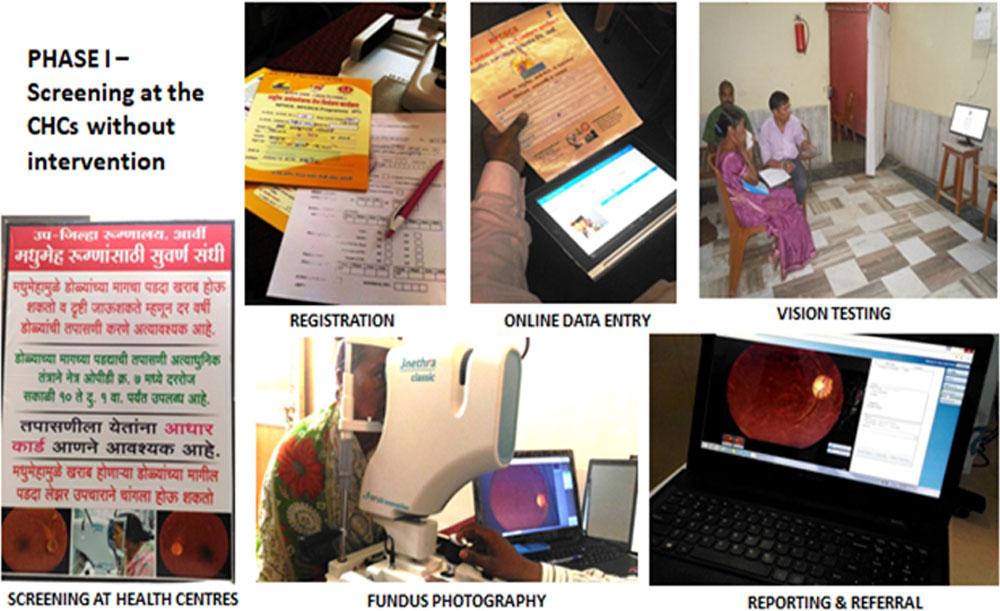
PHASE I – All the known diabetic patients coming to NCD clinics at SDH or RH (CHC’s) in the five study area were the study population. The patients were informed that participation in the study was voluntary. Consents were taken from the patient willing to participate in the study.
All patient were registered with their identity card number e.gAadhar card number , Election card number , Ration card Number , Pan card number , Passport or Driving Licence number. Structured Clinical Diabetic Retinopathy Proforma were made which included registration number of each patient as the ID card number, complete name , demographic details , contact number, duration of Diabetes, type of DM , nature of treatment , Blood sugar level, any other systemic complications , history of ocular trauma , history of ocular surgery , History of treatment taken for diabetic retinopathy. Patients not willing to give consent or not co-operative were excluded from the study. With permission and consent from patients , all the basic information , demographic information , Non Communicable Disease (NCD) clinic data were uploaded online on a Diabetic Retinopathy Patients data android application on a tablet along with patients photograph.
The presenting visual acuity of the patients were measured separately for each eye using ETDRS chart cut out with “E” optotypes at a distance of 4 meters and improvement with pinhole was noted. Retinal photographs of each eye were taken with Forus 3nethra Non-mydriatic Digital fundus camera without dilating the pupils of patient . Fundus photographs were uploaded on the Forus Care DR online software and transferred to Ophthalmic Surgeon for the diagnosis. All the fundus photographs were graded according to Early Treatment Diabetic Retinopathy Study Research Group ( ETDRS ) classification of Diabetic Retinopathy. Reports were sent to respective Government Health facilities from where the fundus photographs were uploaded.
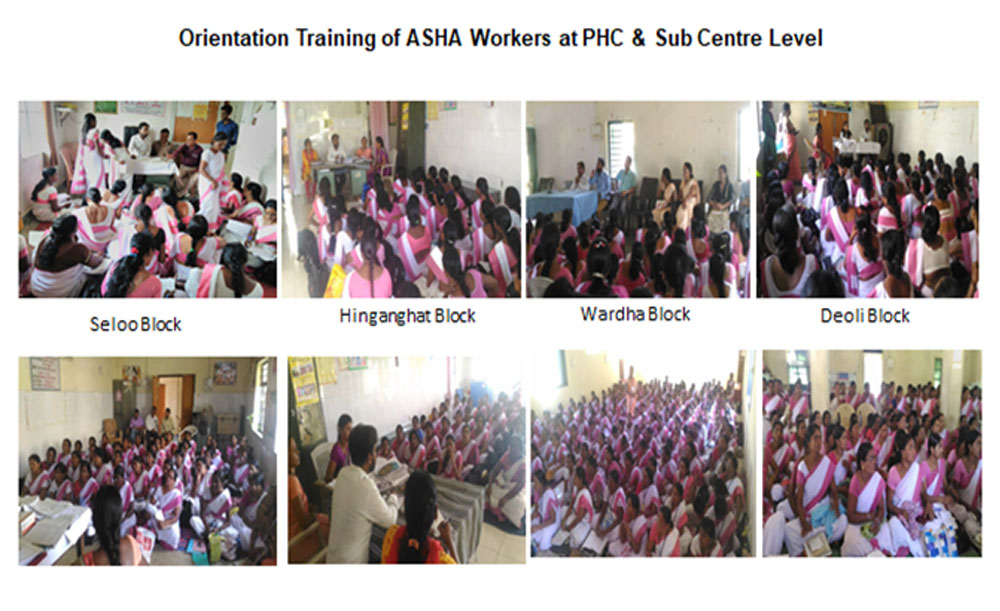
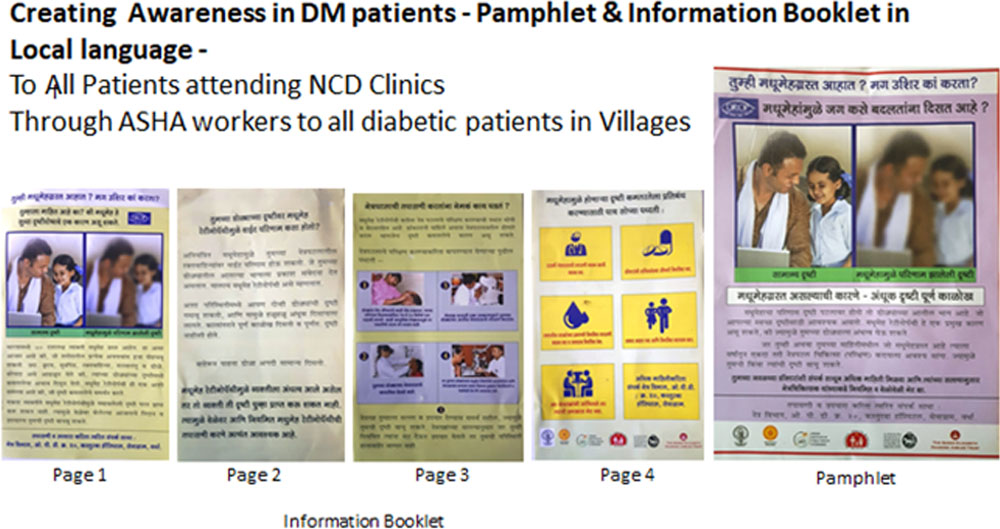
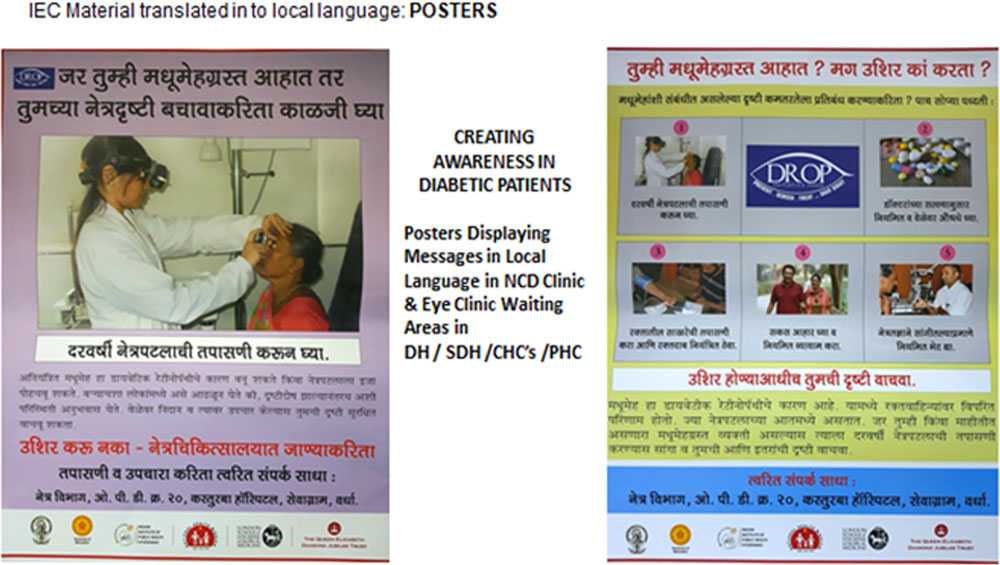
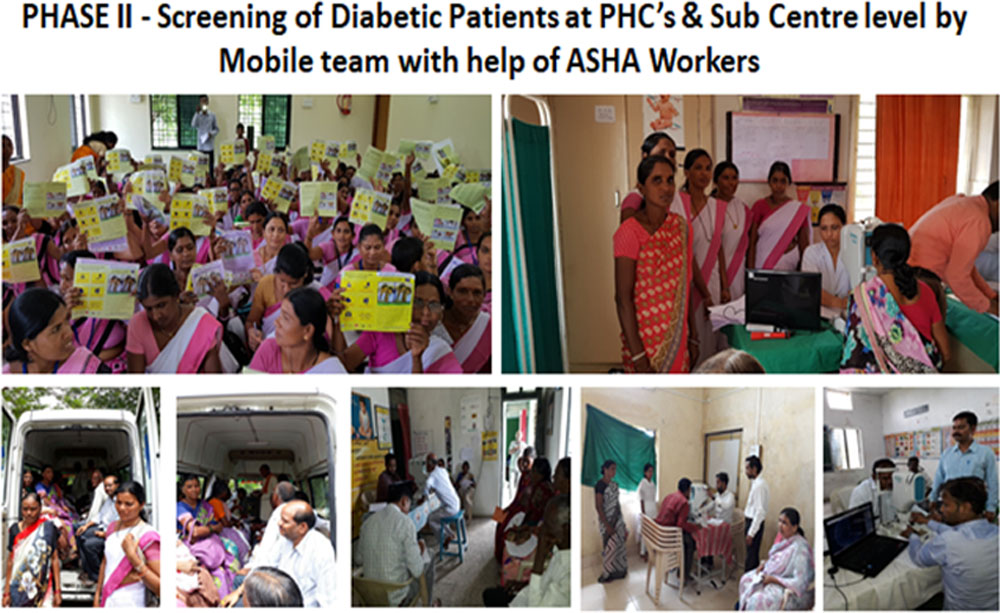
PHASE –II – All the known diabetic patients line listed by the ASHA workers at PHC and Sub-centrelevel registered at the NCD clinics and screening was done over period of 4 months with intervention by training of ASHAs. -Training and orientation was done with the help of structured IEC material in local language (Marathi and Hindi), Audio-visual, Posters , leaflets . focus group discussion (FGD) . Monthly meetings of Primary Health Care (PHC) Medical Officers and Accredited Social Health activists (ASHA) for proper planning for creating awareness regarding Diabetes , its systemic complications & DR amongst the diabetics as well as general population of village was done to boost the screening at ground level . Similar procedure of consent , registration , demographic details , fundus photography and diagnosis with teleophthalmology and referral was followed as in Phase I.
DATA MANAGEMENT & ANALYSIS –
Data was collected in Diabetic Retinopathy Screening Clinical proforma and in Diabetic retinopathy Android application in a tablet. Collected data was in coded form and it was entered and managed in Epi Info 7 Database. Statistical analysis was done by using descriptive and inferential statistics using chisquare test and software used in the analysis were SPSS 22.0 version and GraphPad Prism 6.0 version and p<0.05 is considered as level of significance.
ETHICAL CONSIDERATION –
Ethical approval was sought from the Ethical committee of the Institute and Department of Ophthalmology, MGIMS , Sewagram. The participants were informed about the study and were requested for participation.
RESULTS
Over a period of 1 year study was carried out in two phases.Total study population was of 5004 known diabetic patients registered at NCD clinics of five Government health facilities and diabetics line listed at respective PHC and Sub-Centres
AGE AND GENDER DISTRIBUTION :
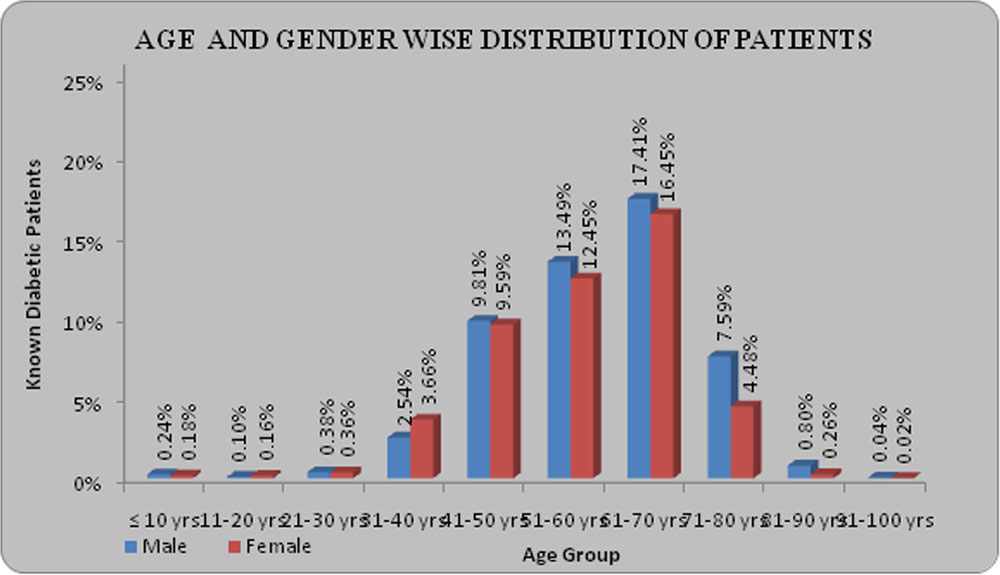
The Mean of age of the study population was 58.48 ± 11.95 ( range 4 to 99 years.) Out of 5004 patients 2622 (52.40 %) were males and 2382 (47.60%) were females . Mean age for males was 59.26 ± 12.09 (range 4 to 99 years ) and mean age for females was 57.62 ± 11.74 ( range 7 to 94 years).Majority of study population were in age age group 41 -80 years with 4567 ( 91.26 % ) patients .(Table 1 ; Figure 1 )
TABLE 1: AGE AND GENDER WISE DISTRIBUTION OF PATIENTS
| Age Group( years ) | Male(%) | Female(%) | Total(%) |
| ≤10 | 12 (0.24) | 9 (0.18) | 21 (0.43) |
| 11-20 | 5 (0.10) | 8 (0.16) | 13 (0.26) |
| 21-30 | 19 (0.38) | 18 (0.36) | 37 (0.74) |
| 31-40 | 127 (2.54) | 183 (3.66) | 310 (6.20) |
| 41-50 | 491 (9.81) | 480 (9.59) | 971 (19.40) |
| 51-60 | 675 (13.49) | 623 (12.45) | 1298 (25.94) |
| 61-70 | 871 (17.41) | 823(16.45) | 1694 (33.85) |
| 71-80 | 380 (7.59) | 224(4.48) | 604 (12.07) |
| 81-90 | 40 (0.80) | 13(0.26) | 53 (1.06) |
| ≥91 | 2 (0.04) | 1(0.02) | 3 (0.06) |
| Total | 2622 (52.40) | 2382(47.60) | 5004(100) |
DURATION OF DIABETES MELLITUS IN STUDY POPULATION:
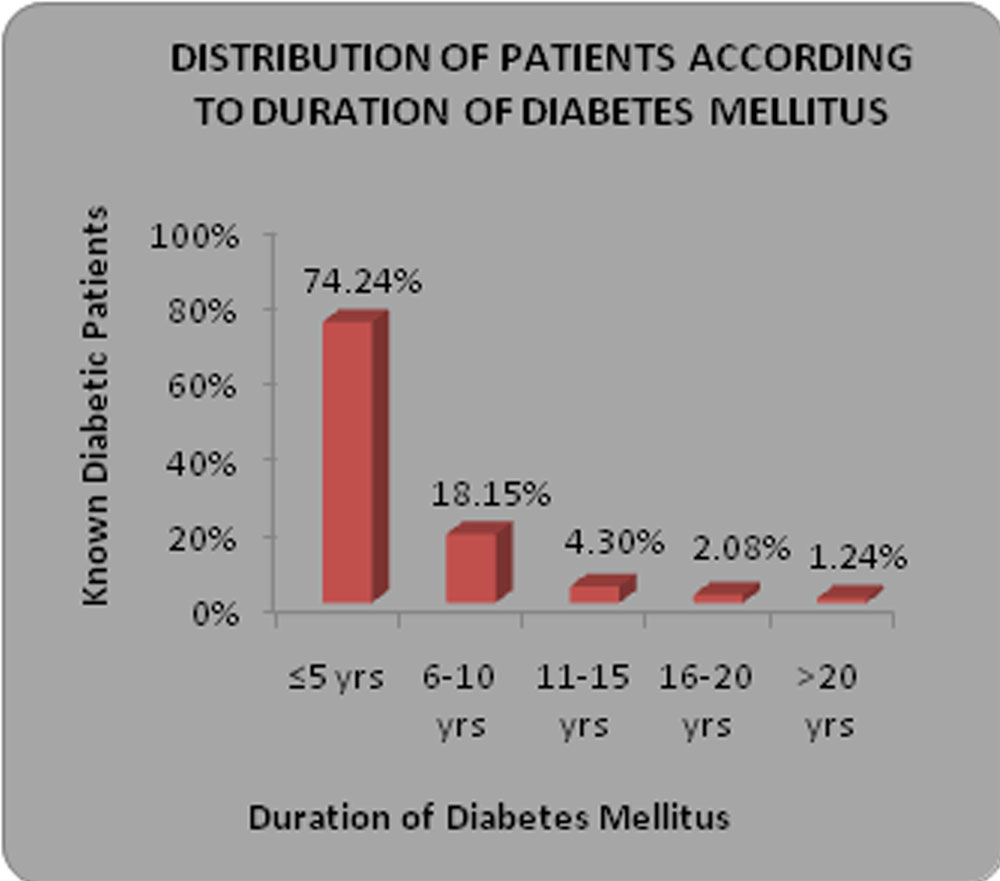
Majority of study population , 3715 ( 74.24 % ) patients were having duration of Diabetes ≤5 years . 908 ( 18.15 % ) patients were having duration 6 to 10 years and remaining 381 (7.62 % ) were having duration more than 10 years. The Mean duration of DM was 4.61 ± 4.56 years with range from newly diagnosed diabetics to 39 years of duration of disease.( Table 2 ; Figure 2)
TABLE 2 :DISTRIBUTION OF PATIENTS ACCORDING TO DURATION OF DIABETES MELLITUS
| Duration of DM
(Years) |
Number of patients (%) |
| ≤5 | 3715 (74.24) |
| 6-10 | 908 (18.15) |
| 11-15 | 215 (4.30) |
| 16-20 | 104 (2.08) |
| >20 | 62 (1.24) |
| Total | 50040) |
- VISUAL STATUS OF STUDY POPULATION :
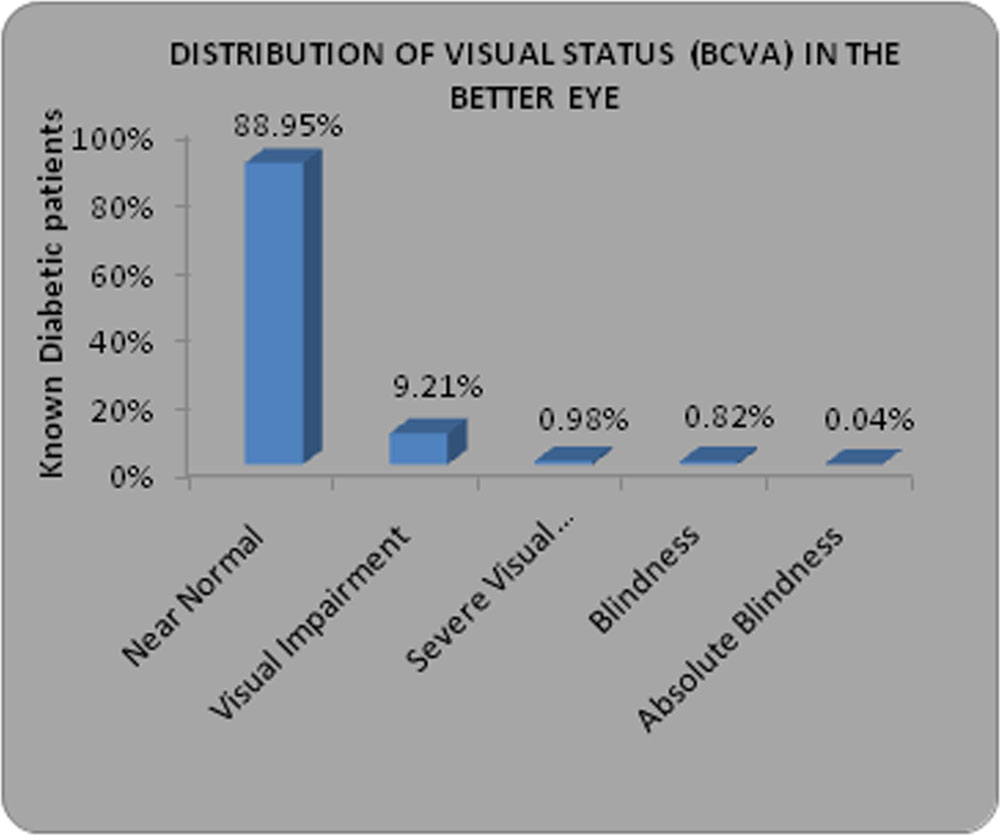
Visual acuity of the patients was recorded on ETDRS chart . Best corrected visual acuity (BCVA) was recorded with help of pin hole. VA was graded according to WHO criteria of blindness. 6/6 to 6/18 = Near normal ,<6/18 to 6/60 = Visual Impairment , <6/60 to 3/60 = Severe visual impairment , <3/60 to PL+ = Blindness and No PL as Absolute Blindness. Out of 10,008 eyes of 5004 known diabetic patients , visual status of 20 eyes could not be examined in the study as those were having phthisis or atrophic bulbi , theie VA was considered NPL .
Out of 10008 eyes , 8313 ( 83.06 % ) eyes had near normal vision ( 6/6 to 6/18 ) , 1180 ( 11.79 %) eyes had visual impairment (<6/18 to 6/60 ) , 164 (1.64 %) eyes were suffering from severe visual impairment ( <6/60 to 3/60 ) , Blindness (<3/60 to PL+ ) was seen in 298 ( 3 %) eyes and absolute blindness (NPL) was present in 53 ( 0.53 % ) eyes , considering the BCVA. From 5004 study population , According to WHO classification , considering the BCVA in better eye of patient , 4451 ( 88.95 % ) patients had near normal vision ( 6/6 to 6/18 ) , 461 ( 9.21 %) patients had visual impairment (<6/18 to 6/60 ) , 49 ( 0.98 % ) patients were having severe visual impairment ( <6/60 to 3/60 ) , 41 ( 0.82 %) patients were having blindness (<3/60 to PL+ ) , none of the patient was having absolute blindness (NPL) in both eyes.( Table 3 A , 3 B ; Figure 3)
TABLE 3 A: COMPARISON OF VISUAL STATUS OF DIABETIC PATIENTS :
| Visual Acuity LE↓ | Visual Acuity RE | ||||||
| 6/6 to 6/18 | <6/18 to 6/60 | <6/60 to 3/60 | <3/60 to 1/60 | <1/60-PL+ | NPL | Total | |
| 6/6 to 6/18 | 3862 | 163 | 26 | 23 | 45 | 18 | 4137 |
| <6/18 to 6/60 | 193 | 363 | 12 | 10 | 19 | 4 | 601 |
| <6/60 to 3/60 | 25 | 25 | 27 | 3 | 5 | 1 | 86 |
| <3/60 to 1/60 | 19 | 8 | 5 | 10 | 2 | 1 | 45 |
| <1/60-PL+ | 60 | 15 | 7 | 8 | 18 | 0 | 108 |
| NPL | 17 | 5 | 1 | 0 | 2 | 2 | 27 |
| Total | 4176 | 579 | 78 | 54 | 91 | 26 | 5004 |
| Visual Acuity (BCVA) in the Better Eye | Number of Patients (%) |
| Near Normal | 4451 (88.95) |
| Visual Impairment | 461(9.21) |
| Severe Visual Impairment | 49 (0.98) |
| Blindness | 41 (0.82) |
| Absolute Blindness | 2(0.04) |
| Total | 5004(100) |
PREVALENCE OF DIABETIC RETINOPATHY IN NUMBER OF EYES OF KNOWN DIABETIC PATIENTS :
The study population of 5004 known diabetic patients were screened for Diabetic retinopathy . Fundus photographs of both eyes of the patients were taken using a Non-mydriatic fundus camera and were uploaded on a DR software . Ophthalmic surgeons at base hospital assessed the photographs and graded them according to ETDRS classification of Diabetic retinopathy.
Out of total 10008 eyes ,fundus photographs of 8776 ( 87.68 % ) eyes were gradable andin 1232 ( 12.31 % ) eyes fundus photographs were not gradable . Out of these 1232 eyes , in 1212 eyes had media hazy due to corneal opacity , lenticular opacity, posterior capsular opacification etc. , and in 20 eyes fundus photographs could not be taken as they were having phthisis or atrophic bulbi .
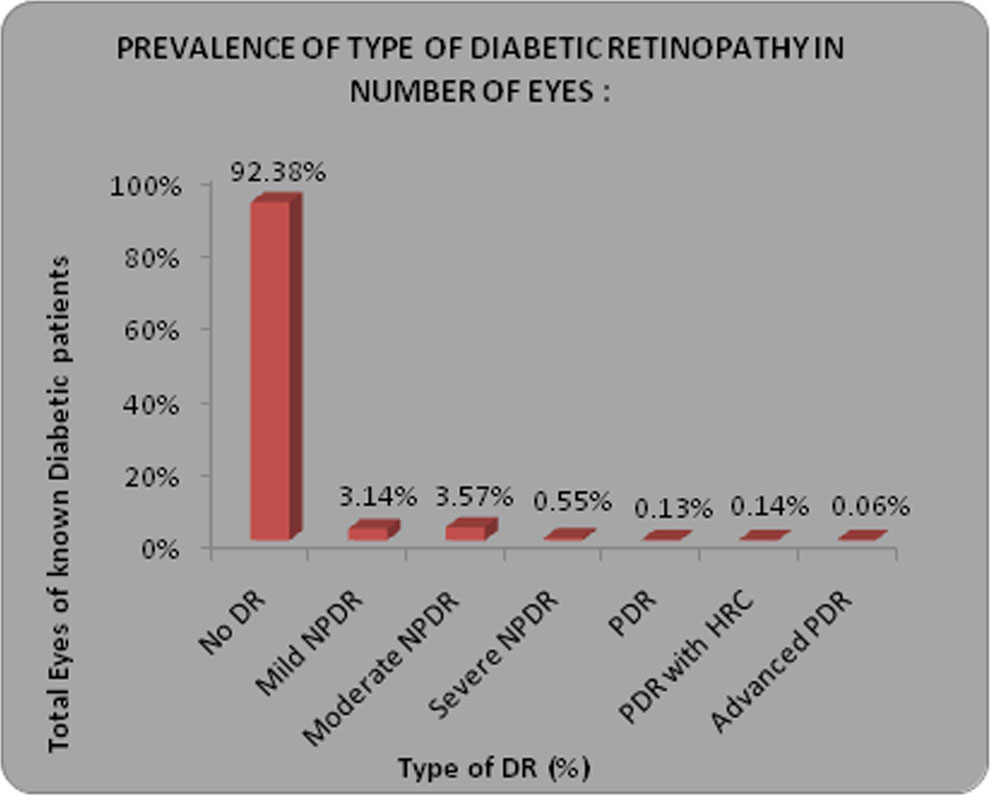
Out of 8776 eyes in which fundus photographs were gradable , 8108 ( 92.38 % ) eyes do not showed any changes of Diabetic retinopathy on fundus photography. In 274 ( 3.14 %) eyes , Mild Non-Proliferative Diabetic Retinopathy was seen , 314 (3.57% ) eye showed Moderate Non-Proliferative Diabetic Retinopathy changes , 49 (0.55%) eyes showed Severe Non-Proliferative Retinopathy changes , 12 (0.13 %) eyes showed Proliferative Diabetic Retinopathy changes , 13 ( 0.14 %) eyes showed Proliferative Diabetic Retinopathy with High risk characteristic changes and 6 ( 0.06%) eyes showed advanced proliferative diabetic retinopathy.
A total of 668 eyes showed diabetic retinopathy changes on fundus photography with a Non-mydriatic fundus camera , out of 8776 eyes in which fundus photographs were gradable ,showing a prevalence of 7.61 %.( Table 4 ; Figure 4)
TABLE 4 : PREVALENCE OF DIABETIC RETINOPATHY IN NUMBER OF EYES WITH GRADABLE FUNDUS PHOTOGRAPHS :
| Type of DR | Number of Eyes | Prevalence (%) |
| No DR | 8108 | 92.38 |
| Mild NPDR | 274 | 3.14 |
| Moderate NPDR | 314 | 3.57 |
| Severe NPDR | 49 | 0.55 |
| PDR | 12 | 0.13 |
| PDR with HRC | 13 | 0.14 |
| Advanced PDR | 6 | 0.06 |
| Total | 8776 | 100.0
|
PREVALENCE OF DIABETIC RETINOPATHY WITH RESPECT TO BLOOD SUGAR LEVEL :
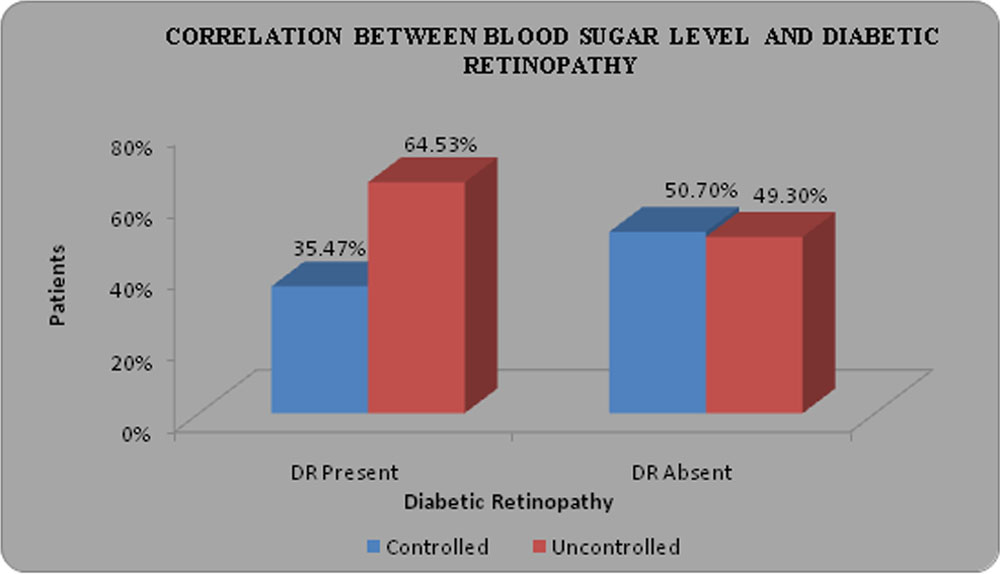
Among the total study population of 5004 known diabetic patients , 375 patients were diagnosed with Diabetic Retinopathy . Out of 375 diagnosed patients with DR , 242 ( 64.53 %) patients were having uncontrolled blood sugar level and 133 ( 35.47 %) patients were having controlled blood sugar level.
Among the 4629 known diabetic patients which were not having DR , 2347 ( 50.70%) were having controlled blood sugar level while , 2282 ( 49.30 %) were having uncontrolled blood sugar.
With increase in blood sugar level prevalence of DR was also found high. Co-relation between blood sugar level and presence and absence of diabetic retinopathy is very significant in the study with χ2-value 32.21,p-value=0.0001, Significant.( Table 5 , Figure 5 )
TABLE 5: CORRELATION BETWEEN BLOOD SUGAR LEVEL AND DIABETIC RETINOPATHY
| DR changes | Blood Sugar | χ2-value | |
| Controlled (%) | Uncontrolled (%) | ||
| DR Present | 133
(35.47%) |
242
(64.53%) |
375
(7.49%) |
| DR Absent | 2347
(50.70%) |
2282
(49.30%) |
4629
(92.51%) |
| Total | 2480
(49.59%) |
2524
(50.44%) |
5004
(100%) |
| χ2-value | 32.21,p-value=0.0001, Significant | ||
PREVALENCE OF DIABETIC RETINOPATHY IN NUMBER OF EYES WITH RESPECT TO DURATION OF DIABETES MELLITUS :
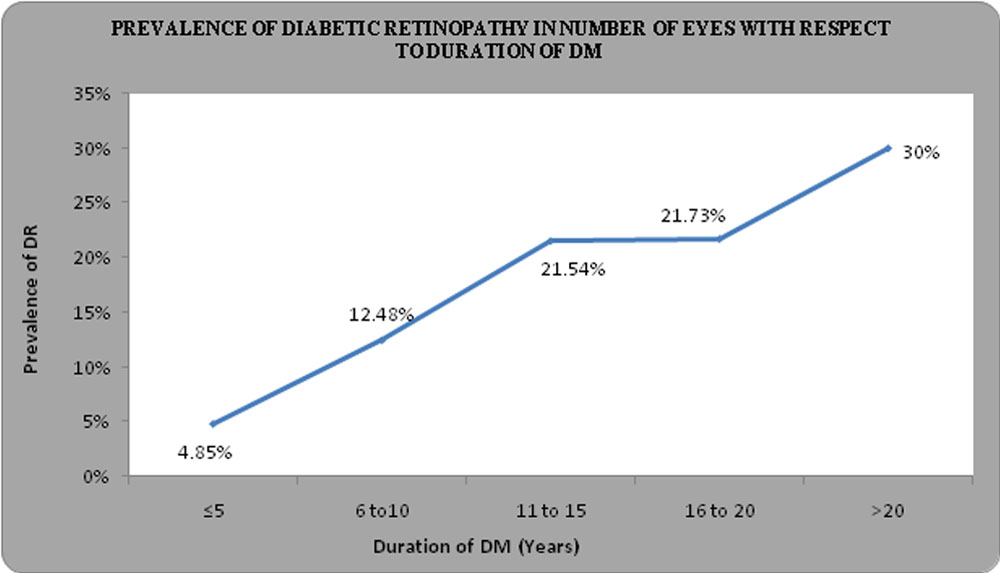
In the study population of 5004 with 10008 eyes , in patients with duration of diabetes mellitus ≤5 , 7430 eyes were examined , a total 6528 eyes fundus photographs were gradable , out of which 6209 eyes did not showed DR changes , while 317 (4.88%) eyes showed diabetic retinopathy changes on fundus photography . Mild NPDR in 134 (2.06%) eyes , Moderate NPDR in 143 eyes ( 2.19%) , Severe NPDR in 24 eyes (0.36%) ,PDR in 17 eyes (0.26%).
In patients with duration of DM 6 to 10 years ,1816 eyes were examined ,1578 eyes fundus photographs were gradable a total 197 eyes showed DR changes with prevalence of 12.48% .Mild NPDR in 78 eyes (4.94%) ,Moderate NPDR in 98 eyes (6.21%) , Severe NPDR in 16 eyes (1.01%) and PDR in 4 eyes (0.25 %). Among patients with duration of DM , 11 to 15 years , 430 eyes were examined , out which 376 were gradable fundus photographs and 81 eyes showed DR changes with prevalence of 21.54% . Mild NPDR in 33 eyes ( 8.77%) , Moderate NPDR in 40 eyes (10.63%) , Severe NPDR in 4 eyes (1.06 %) and PDR in 4 eyes (1.06%). Among patients with duration of DM 16 to 20 years , 208 eyes were examined , 184 fundus photographs were gradable and fundus photographs of 40 eye show DR changes with prevalence of 21.73 % . Mild NPDR in 17eyes (9.23%) , Moderate NPDR in 15 eyes (8.15%) , Severe NPDR in 3 eyes ( 1.63%) and PDR in 4 eyes (2.17%) .And among the patients with duration of DM more than 20 years , 124 eyes examined , 110 fundus photographs were gradable and 33 eyes showed DR changes with prevalence of 30%.Mild NPDR in 11 eyes (10 %) , Moderate NPDR in 18 eyes ( 16.36%) , Severe NPDR in 2 eyes (1.81%) and PDR in 2 eyes (1.81 %).
With increase in duration of Diabetes , prevalence as well as severity of Diabetic retinopathy increased significantly in the study population , with χ2-value , 401.10, p value=0.0001, Significant.( Prevalence of DR was calculated after excluding the 1232 eyes in which grade of DR could not elicited due Media haze ). (Table 6; Figure 6 )
| Duration of DM (Yrs) | Number of Eyes with DR changes on Fundus photograph | Number of Eyes with with gradable fundus photographs | Prevalence of DR (%) |
| ≤5 | 317 | 6528 | 4.85 % |
| 6-10 | 197 | 1578 | 12.48 % |
| 11-15 | 81 | 376 | 21.54 % |
| 16-20 | 40 | 184 | 21.73 % |
| >20 | 33 | 110 | 30 % |
Table 6 :PREVALENCE OF DIABETIC RETINOPATHY IN NUMBER OF EYES WITH RESPECT TO DURATION OF DM
SCREENING OF KNOWN DIABETIC PATIENTS WITH NON-MYDRIATIC FUNDUS CAMERA :
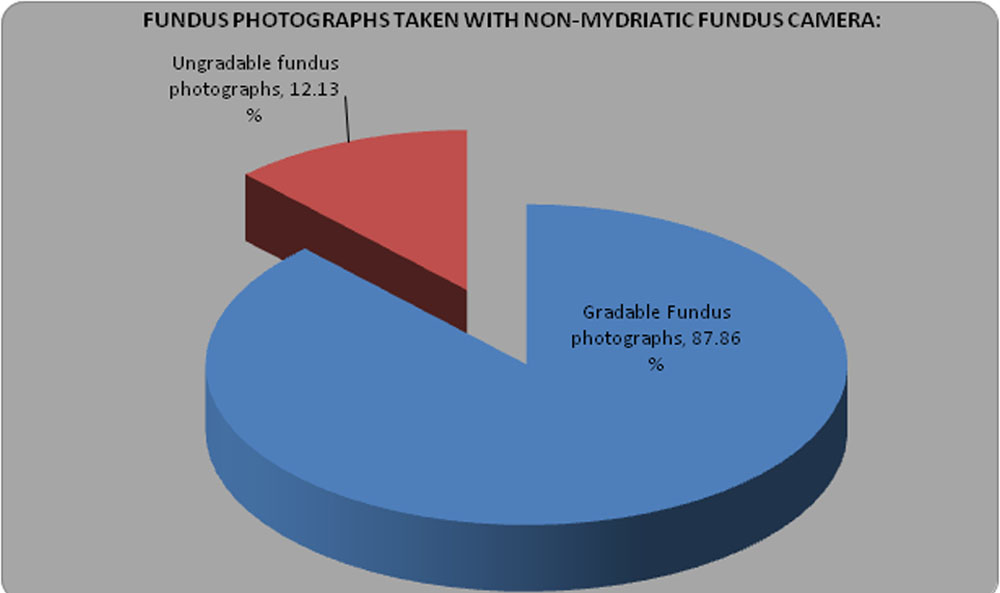
In the present study , a total of 5004 known Diabetics patients were screened for Diabetic retinopathy at Government Health facilities with the help of Non-mydriatic digital fundus camera (Forus 3nethra Classic ). Out of 10008 eyes , total 9988 fundus photographs could be taken as 20 eyes were phthsical or atrophied. 1212 (12.13 ) eyes were not gradable due causes which were divided as Corneal Opacities and irregularity , Anterior chamber opacities , Lenticular Opacitiy , Posterior Capsular Opacification and Vitreous Opacities or Preretinal Opacities.
Total 8776 (87.86% )eyes fundus photographs were gradable on fundus photographs taken with Non mydriatic camera. (Table 7 ; Figure 7 )
TABLE 7 : FUNDUS PHOTOGRAPHS TAKEN WITH NON-MYDRIATIC FUNDUS CAMERA:
| Type of Fundus Photographs | Number of Fundus Photographs ( %) |
| Gradable fundus Photographs | 8776 (87.86) |
| Ungradable fundus photographs | 1212 (12.13) |
| Total Fundus photograph taken* | 9988 (100) |
*20 eyes fundus photographs could not be taken as they were phthsical or atrophied
H .TRAINING OF ASHAs & OPHTHALMIC ASSISTANT :
| Staff Trained in BLOCKS | Ophthalmic Assistants | ASHAs |
| WARDHA | 4 | 236 |
| HINGANGHAT | 1 | 115 |
| PULGAON | 1 | 102 |
| SELOO | 1 | 137 |
| ARVI | 2 | – |
| TOTAL | 4 | 590 |
RESULTS OF INTERVENTION–
After daily screening at CHCs over a period of 8 months , 2794 known diabetic patients were screened , which is approx. 20 % of the total 13890 registered diabetic patients in the 5 block where study was conducted. In next 4 months , 590 ASHAs of 4 block were trained and oriented using IEC materials – posters , pamplets , leaflet and taking monthly meetings along with the respective Medical Officer of the PHCs. 2210 new diabetics i.e 16% of total registered Diabetic patients (13890) were screened in this phase with help of intervention , these were registered in NCD clinics but were not attending the CHCs because of low awareness about the diabetes and its systemic complications. But with the help of trained ASHAs , rate of annual screening almost doubled. In one Block out of 5 in the study population , no intervention was done , ASHAs were not trained and the screening in that block did not showed any improvement.
TREND – NUMBER OF DIABETIC PATIENTS SCREENED IN DIFFERENT BLOCK BEFORE AND AFTER THE INTERVENTION –FIRST 8 MONTHS – SCREENING AT CHC , NO INTERVENTIONLAST 4 MONTHS – SCREENING AT RESPECTIVE PHC’s WITH HELP OF ASHA
| Block | Jan to Aug | Sept to Dec | Total |
| Wardha | 793 | 885 | 1678 |
| Hinganghat | 627 | 406 | 1033 |
| Deoli | 408 | 439 | 847 |
| Seloo | 404 | 299 | 703 |
| Arvi | 562 | 181 | 743 |
| Total | 2794 | 2210 | 5004 |
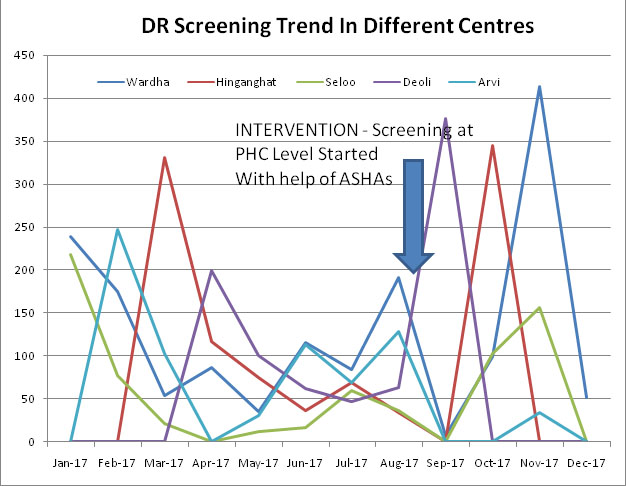
MONTH WISE & GENDER WISE TREND OF SCREENING OF DIABETIC PATIENTS IN DIFFERENT BLOCKS
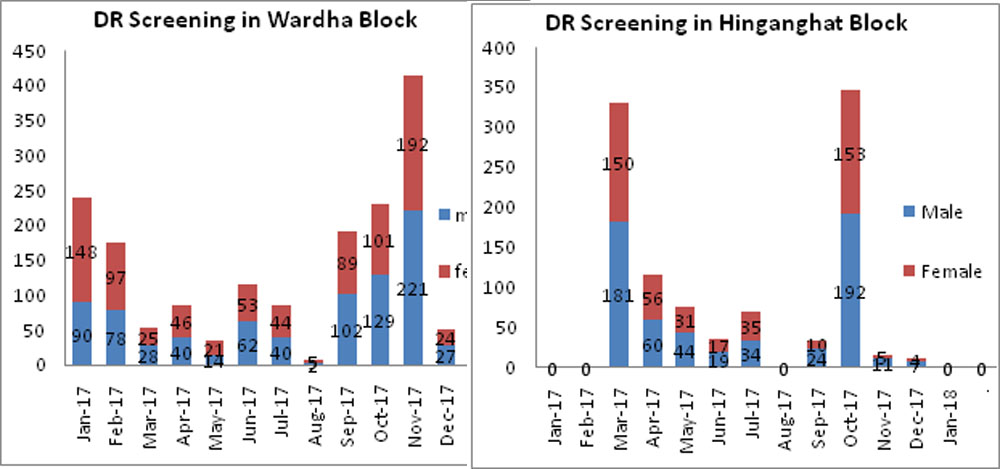
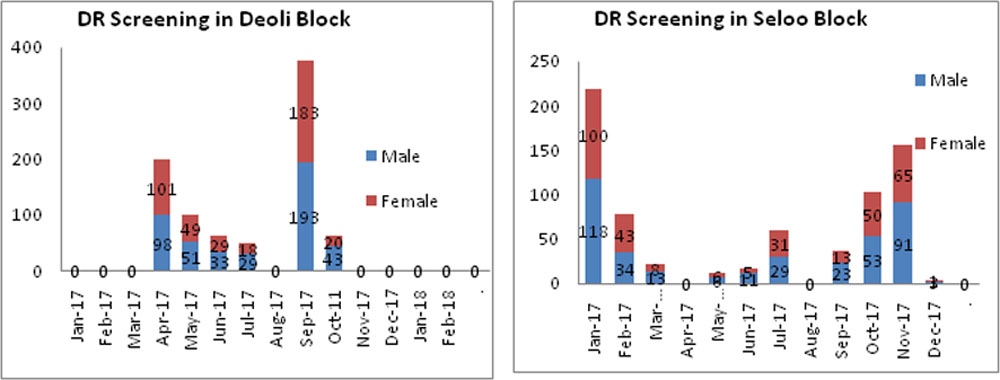
NO INTERVENTION – ARVI BLOCK
DISCUSSION
Present study was done in association with the Government Health Facilities (CHCs and the respective PHCs ; Sub-Centers ) in rural population of Wardha District for screening of known diabetic patients registered at NCD clinics for Diabetic retinopathy by taking annual fundus photographs with a non-mydriatic fundus camera by trained Ophthalmic Assistants. Intervention of training and orienting ASHAs using IEC material in local language and monthly meeting , which lead to awareness among the diabetic patients at ground level i.e village level regarding diabetes and its systemic , ocular complication is very important highlighting point of the study , which can make annual diabetic retinopathy screening effective on long term in rural population.
With screening at NCD clinics in CHCs over period of 8 month , almost all patient who were attending the NCD clinic were screened , of which proportion was only 20 % i.e 2794 out of 13890 total diabetic registered in the respective blocks . With intervention of health education among the ASHAs , the screening rate increased by almost 16 % , i.e 2210 new diabetic patients were screened. These were those patients who were registered at NCD clinics but were not attending the CHCs , and with the intervention we were able to screen these patients too. Almost the screening proportion doubled with the intervention. If combined approach with screening at CHCs and PHCs along with health education of ASHAs and other village health workers is done annual screening can increase drastically , with more of those diabetics from the rural areas who do not attend the NCDs due to lack of health education and awareness.
Total study population was of 5004 known diabetic patients. The Mean of age of the study population was 58.48 ± 11.95. (Table 1 ; Figure 1). Majority of patients , 74.24 % were having duration of Diabetes ≤5 years . 18.15 % patients were having duration 6 to 10 years and remaining 7.62 % were having duration more than 10 years. (Table 2 ; Figure 2) VA was recorded on ETDRS chart and was graded according to WHO criteria of blindness. Out of 5004 diabetic patients , 4451 (88.95 %) patients had near normal vision , 461 (9.21 %) patients had visual impairment, 49(0.98 %) patients were suffering from severe visual impairment , Blindness was seen in 41 (0.82 %) patients and absolute blindness (NPL) was present in 2(0.04 %) , considering the BCVA. Out of 10008 eyes of 5004 patients , 8313 (83.06 % ) eyes had near normal vision ( 6/6 to 6/18 ) , 1180 ( 11.79 %) eyes had visual impairment (<6/18 to 6/60 ) , 164 (1.64 %) eyes were suffering from severe visual impairment ( <6/60 to 3/60 ) , Blindness (<3/60 to PL+ ) was seen in 298 ( 3 %) eyes and absolute blindness (NPL) was present in 53 ( 0.53 % ) eyes , considering the BCVA.( Table 3 ; Figure 3 ). In the present study , total of 668 eyes showed diabetic retinopathy changes on fundus photography with a Non-mydriatic fundus camera , out of 8776 eyes in which fundus photographs were gradable , showing a prevalence of 7.61 %. ( Table 4 ; Figure 4 ). 92.38 % eyes do not showed any changes of Diabetic retinopathy.With increase in duration of Diabetes , prevalence as well as severity of Diabetic retinopathy increased significantly in the study population , with χ2-value , 401.10, p value=0.0001, Significant.(Table 6 ; Figure 6 ).
Out of total patients showing diabetic retinopathy changes, 64.53 % were having uncontrolled blood sugar level . 35.47 % of patients with DR were having their blood sugar controlled .With increase in blood sugar level prevalence of DR was also found high. Co-relation between blood sugar level and presence and absence of diabetic retinopathy is very significant in the study with χ2-value 32.21,p-value=0.0001, Significant.( Table 5 , Figure 5 ).
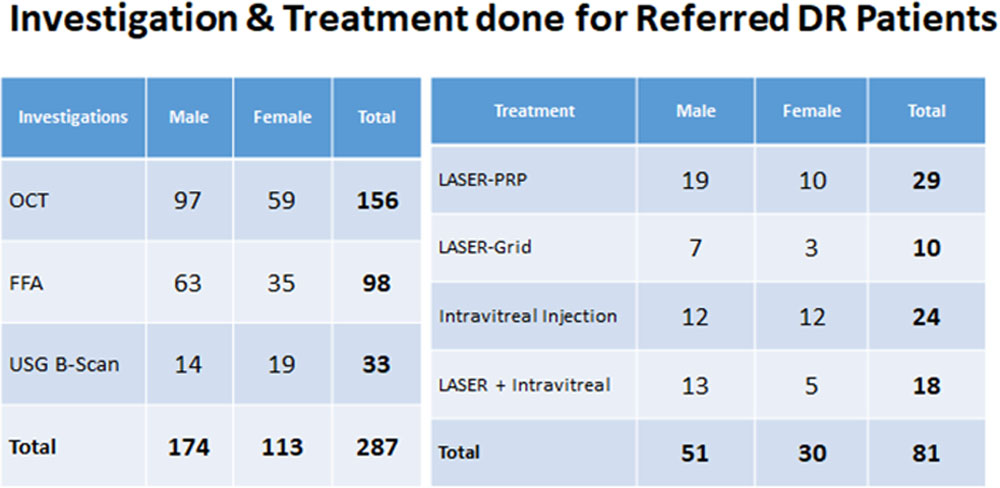
Out of 5004 diabetic patients screened with non-mydriatic fundus camera , 375 were diagnosed with DR and grading was done on basis of ETDRS classification for the severity of Diabetic Retinopathy. Investigation of 287 patients was done which included OCTs, FFA , USG-B scan. Treatment of 81 patients was done with various modality viz. Laser photocoagulation -Pan,Focal, Grid ; Intravitreal Anti VEGF injections.
CONCLUSION
The present study highlights the important role of trained ASHAs in making the annual screening of known diabetic patients for Diabetic Retinopathy more effective and robust in rural population of India. Study emphazised the importance of early screening of Diabetic patients for Diabetic Retinopathy for preventing avoidable blindness due to DR. The study shows in detail, visual status of all diabetic study population , prevalence of DR, severity of DR.
Screening at the Government Health facility at all levels , training of Ophthalmic assistant in taking fundus photographs using Non-mydriatic fundus camera , use of tele-ophthalmology , use of online software & android applications for data entry , storage , processing , proper referral system and awareness about Diabetes Mellitus and Diabetic Retinopathy among the known Diabetics , their family and community with the help of trained ASHA , will make the screening for DR robust and effective in the rural population.
In order to tackle the rising problem of avoidable blindness due to Diabetic Retinopathy in developing country like India such methodology can be streamlined.
BIBLIOGRAPHY
- Global prevalence of diabetes: Estimates for the year 2000 and projections for 2030. Wild S, Roglic G, Green A, Sicree R, King H. Diabetes Care 2004;27:1047-53.
- Prevalence and risk factors for diabetic retinopathy in rural India. SankaraNethralaya Diabetic Retinopathy Epidemiology and Molecular Genetic Study III (SN-DREAMS III), report no 2. Rajiv Raman, SuganeswariGanesan, SwakshyarSaumyaPal, VaitheeswaranKulothungan,Tarun Sharma, BMJ Open Diab Res Care 2014;2:e000005 doi:10.1136/bmjdrc-2013-000005
- DCCT Research Group. The relationship of glycemic exposure (HbA1c) to the risk of development and progression of retinopathy in the diabetes control and complications trial. Diabetes. 1995;44:968–83.[PubMed]
- Role of Early Screening for Diabetic Retinopathy in Patients with Diabetes Mellitus: An Overview. Praveen Vashist, Sameeksha Singh, Noopur Gupta, and RohitSaxena. Indian J Community Med. 2011 Oct-Dec; 36(4): 247–252.
- ETDRS Research Group. ETDRS report number 9. Early Treatment Diabetic Retinopathy Study Research Group. 1991;98(5 Suppl):766–85. [PubMed]
- Mohan D, Raj D, Shanthirani CS, Datta M, Unwin NC, Kapur A, et al. Awareness and knowledge of diabetes in Chennai–the Chennai Urban Rural Epidemiology Study [CURES-9] J Assoc Physicians India.2005;53:283–7. [PubMed]
- PadminiBalagopal, PhD, CDE, RD, N. Kamalamma, PhD, Thakor G. Patel, MD, MACP, and RanjitaMisra, PhD, CHES FASHA.A Community-Based Participatory Diabetes Prevention and Management Intervention in Rural India Using Community Health Workers .The Diabetes EducatorVol 38, Issue 6, pp. 822 – 834 .First Published October 2, 2012
- Bhatt BR. ASHAs in rural India , the ray of hope for diabetes care. J Soc Health Diabetes 2014 ;2:18-24
Leave a Comment