

Dr.Lional Raj D
A Patented property of Lional Raj Daniel Ponniah, Dr.Agarwal’s Eye Hospital, Tirunelveli, India
ABSTRACT
Purpose:
To demonstrate the efficacy of implantable intra corneal sustained release antimicrobials in posterior corneal infections
Methods:
Posterior corneal infections were subjected to intra stromal sustained release implantable antimicrobials in a deeper corneal plane created manually or by Femto lasers.& removed in 3-5 days and re-implanted if required. Implants were used in the interface during therapeutic lamellar keratoplasties also.
Results
10 cases enrolled, 7 primary deep corneal infections, and 2 were therapeutic DALK interfaces,1 segmental infection in a Post DALK. 4 were fungal, 5 bacterial, 1 nocardial. Healing started in 1-3 days, In 2 cases re-implantation was required & healed. All cases required reduced/no topical antimicrobials. No surface toxicities were seen.
Conclusions:
Intrastromal corneal sustained release antimicrobial implants have a promise in deep corneal infections in terms of effective drug penetration and reduced surface toxicities
BACKGROUND
- Avascularity of cornea & poor penetration of drug are barriers for its bioavailability in posterior corneal 1
- Subconjunctival antibiotics fail to provide enhanced corneal levels of antibiotics compared to eye 1
- Exposure to excessive topical antibacterials and antifungals are proven to be toxic to ocular surfaces. 2
- Intrasromal injection of antimicrobials has lesser side effects on ocular surfaces and are more effective. 3
- Intrastromal injection, is not a sustained drug delivery system. 4
- A single injection has a short half life and is rapidly eliminated before complete resolution of infection – that justifies a need for a sustained release intrastromal antimicrobial Corneal implant
AIM
To demonstrate the efficacy of implantable intra corneal sustained release antimicrobials in posterior corneal infections
MATERIALS AND METHODS
Setting:
Prospective interventional non comparative clinical trial at Department of Cornea, Dr.Agarwal’s Eye Hospitals, Tirunelveli, South India
Methods:
=10, Cases with posterior corneal infections, documented clinically and by AS OCT were enrolled. A deeper corneal plane was fashioned either manually or by Femtosecond lasers with 1-2 incisions, through which antimicrobial implants were positioned. Results analyzed using AS OCT and slit lamp photography everyday. Implants were removed in 3-5 days and re- implanted if required. Implantable antimicrobials were used in the interface during therapeutic lamellar keratoplasties also.
Preparation of Anti microbial Disc:
- Whatman 3 filter paper was used (6mm diameter )
- To facilitate the identification of the discs, code names and the concentration of the drug in each disc were printed on the reverse of the
- The discs were then autoclaved at 15lbs pressure for 30
- The stock solution was diluted at the time of disc preparation to obtain the working solution.
- In sterile environment, using a micro pipette, a fixed volume of 20μl was loaded on the implantable disc.
- The discs were allowed to dry in a clean incubator at 37°C for 4 hours and
RESULTS
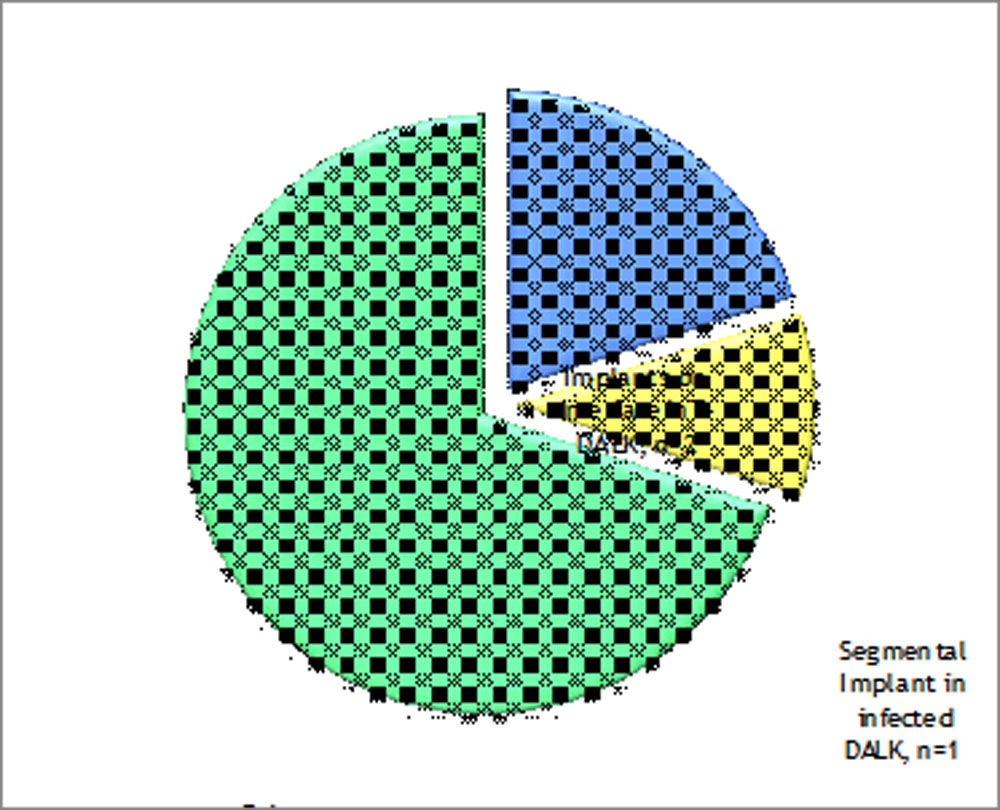
Figure 1 Clinical Indications
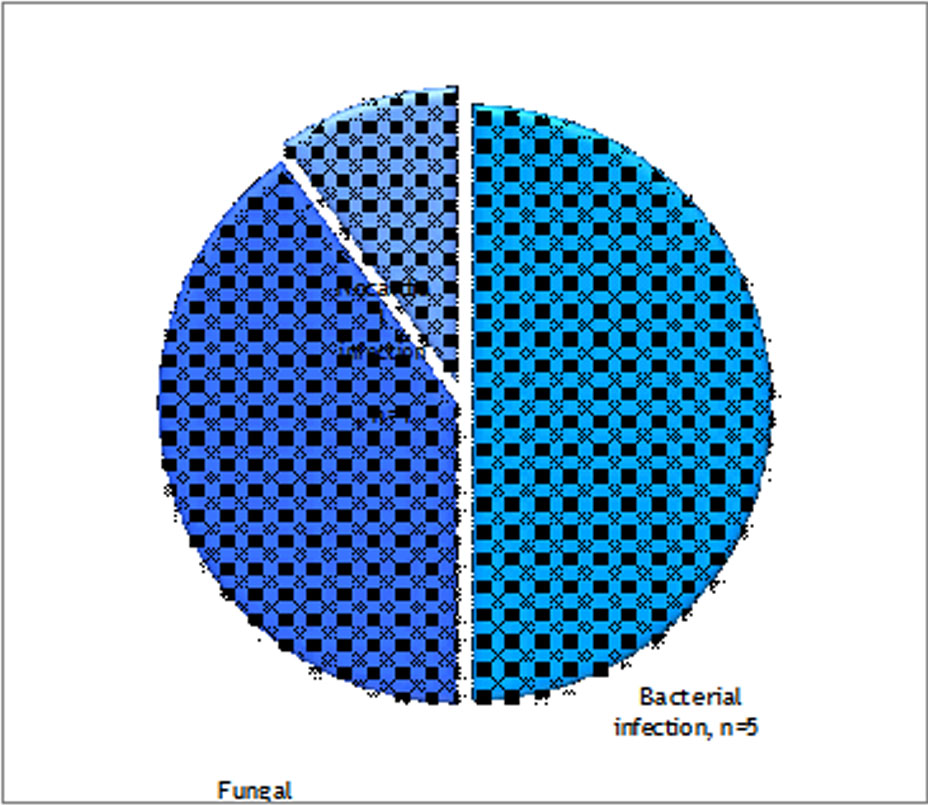
Figure 2 Aetiological Classification
- Implants were removed in 3-5 days, reimplanted if required
- All cases were subjected reduced/ No topical anti-microbials
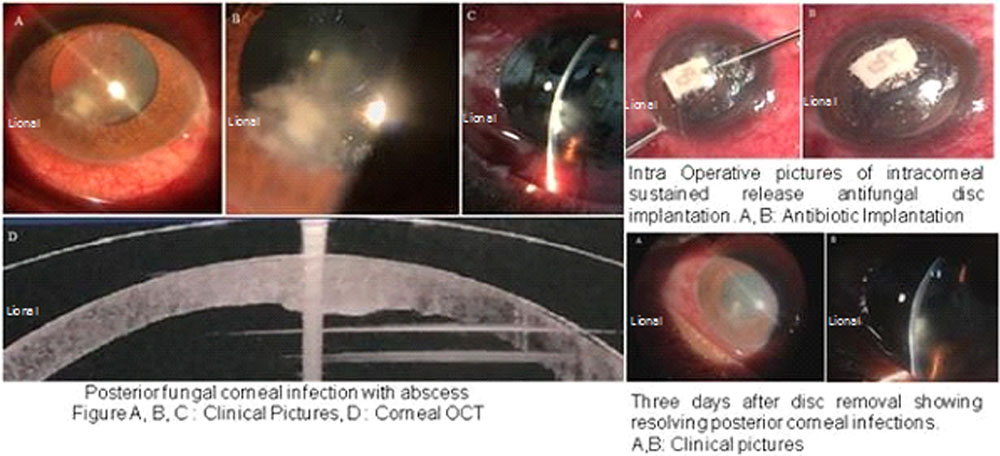
Figure 3 Posterior Fungal Corneal Infection with abscess; Pre-OP and Intra-OP
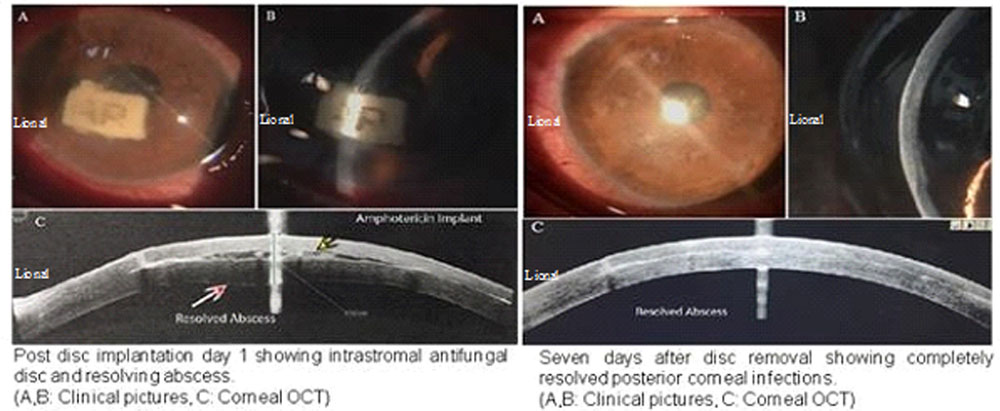
Figure 4 Posterior Fungal Corneal Infection with abscess; Immediate Post-OP and End results
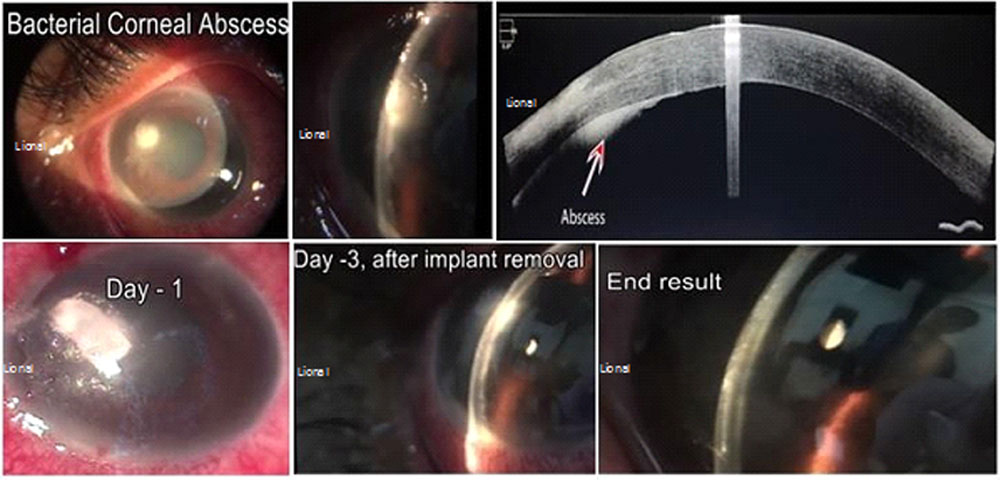
Figure 5 Bacterial corneal abscess – Resolved with Amikacin implant
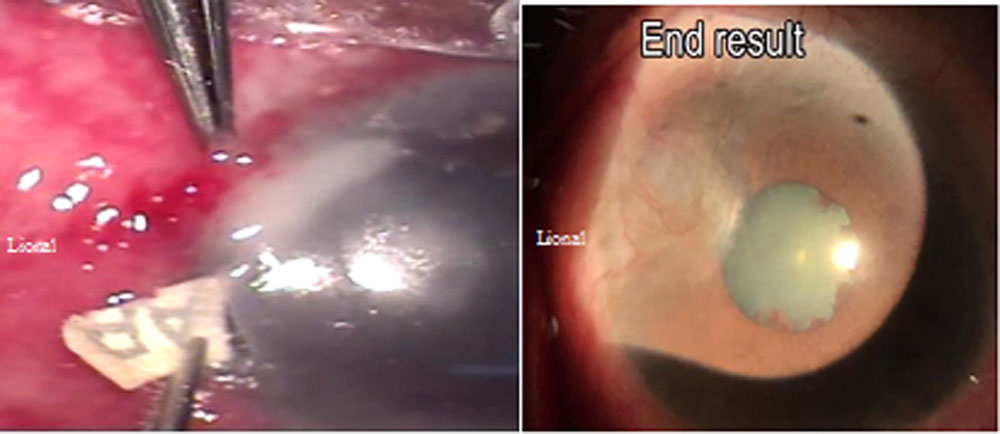
Figure 6 Nocardial Keratitis
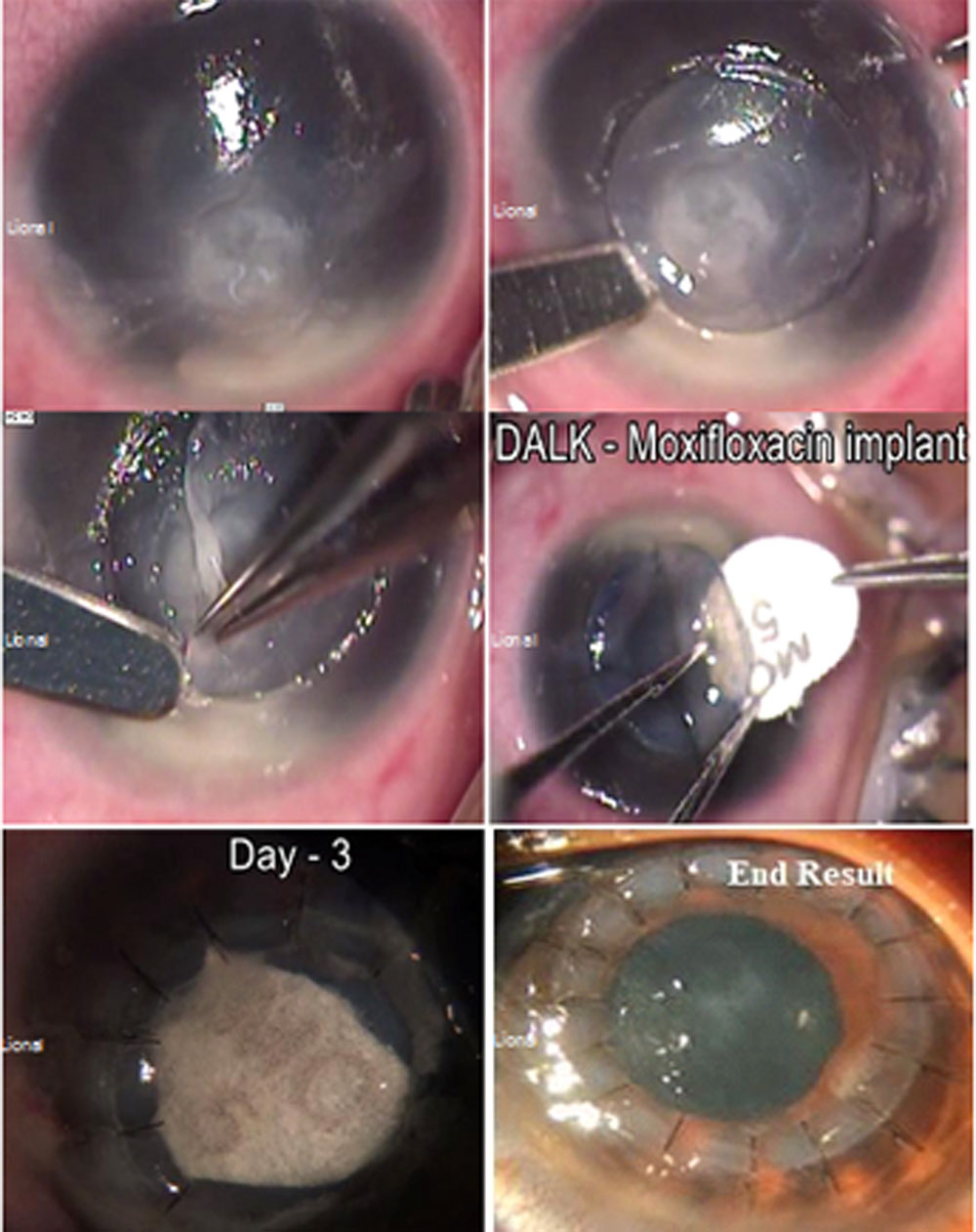
Figure 7 Moxifloxacin implant was placed in the interface in Therapeutic-DALK
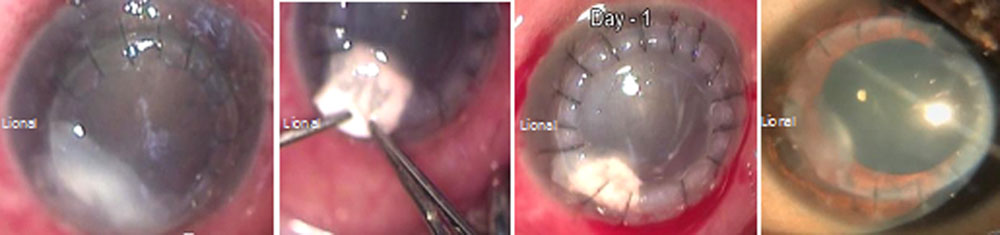
Figure 8 Segmental Corneal Amikacin implant was placed in an infected DALK; A Case infected with Gram negative bacillus
FUTURE ASPECTS
- Implantable corneal drug delivery system requires further evaluation
- Biodegradable implantable antimicrobial discs are been formulated by author’s team using polymer in diffusion systems like Reservoir devices or Matrix
- Indications may also be extended to chronic corneal disorders
CONSLUSION
Intrastromal corneal sustained release antimicrobial implants have a promise in deep corneal infections in terms of effective drug penetration and reduced surface toxicities.
REFERENCES
- Gokhale NS. Medical management approach to infectious keratitis. Indian Journal of 2008;56(3):215-220.
- Berry M, Gurung A, Easty DL. Toxicity of antibiotics and antifungals on cultured human corneal cells: effect of mixing, exposure and concentration. Eye (Lond) 1995;9 ( Pt 1):110–115.
- Nada WM, Bor’i Different Modalities of Antifungal Agents in the Treatment of Fungal Keratitis: A Retrospective Study. J Clin Exp Ophthalmol 8:631.
- Liang SY, Lee GA. Intrastromal injection of antibiotic agent in the management of recalcitrant bacterial keratitis. JCRS 2011 May; 37(5):960-2
Leave a Comment