

Dr. Sneha Batra, Dr. PREEYAM BISWAS, Dr. ANIKET GINODIA, Dr. Partha Biswas
Introduction:
A recent study estimates that there are more than 5.1 million cases of cataract surgery performed in India annually. Cataract removal is a common and safe procedure, usually performed as a daycare procedure, and is followed by the insertion of an artificial intraocular lens (IOL) to replace the extracted natural lens. These IOLs are generally very successful in restoring vision post-operatively. However, severe post-operative infection (endophthalmitis) following cataract surgery and IOL implantation is always a concern, even with topical antibiotic coverage. Endophthalmitis is most often caused by bacteria adhering to the surface of the IOL.
Presence of blepharitis or other ocular surface disorders, sterilization conditions, operative environment, length of surgery, size and location of incision, presence of suture, type of IOL, and postoperative care are some of the potential risk factors associated with this disease. Most of the research related to endophthalmitis is retrospective or laboratory based studies, allowing only indirect conclusions.
The concept of biodegradable polymers combined with antibiotics in a nanoparticulate form for the release of the drug in a very precise and controlled manner has recently emerged as a superior option to the conventional eye drops. Although easy to use, eye drops have two main disadvantages: (i) limited amount of the drug entering the area of the eye most requiring it and (ii) the need to administer the drug regularly. Another advantage of having polymer encapsulated nanoparticles is that the cost of the drug is significantly reduced.
Antibiotic of choice
We developed, for the first time, biodegradable polymer encapsulated Besifloxacin nanoparticulate complex which may open up a new path for efficient treatment of post-cataract infection. Following development, these nanoparticles will be characterized by various high-end techniques to determine the particle size, surface charge, drug encapsulation efficiency etc. The IOL to be implanted usually consists of a small plastic lens with plastic side struts, called haptics, to hold the lens in place within the capsular bag inside the eye. In the final part of the study, for treatment of endophthalmitis, the nano-antibiotic prepared will be used to (i) develop nano eye-drops which is expected to be more effective than conventional Besifloxacin eye-drops and also (ii) develop a sustained drug delivery implant by providing a coating of the nano-antibiotic on to the haptics of the IOLs.
Objectives:
- Synthesis and characterization of biopolymer encapsulated Besifloxacin nanoparticles (nano-antibiotic)
- Investigation of the efficacy of the synthesized nanoparticles on various bacterial cultures in vitro
- Formulation of nano-antibiotic eye drops
- Coating of haptics with nanoantibiotics
- Testing the anti-bacterial activity of (i) nano-eye drops and (ii) IOL haptics coated with nano-antibiotics in vitro
International status and national status
There are numerous patents on vancomycin nanoparticles . However, application of this product in endopthalmitis is lacking both in US and Indian patent sites and also in publication sites such as Pubmed and Sciencedirect.
Importance of the proposed project in the context of current status
The proposed project has the following importance and potential:
The rate of endophthalmitis occurrence associated with cataract removal and IOL insertion in India is estimated to be 0.04% to 0.41%. Antibiotic eye drops are an integral part of the treatment. However, problems often encountered are non- specific targeting abilities for the delivery of the antibiotic and repeated use requirement. Moreover, recent broad spectrum antibiotics are considerably expensive. These limitations maybe overcome by using nanoparticles based eye drops/hapic coated IOLs where controlled drug release can be achieved. Further, the nano-eye drop is expected to be low-cost and needs to be used lesser number of times as compared to conventional eye drops. IOLs with nano-antibiotic coated haptics would in fact, be more advantageous as there would be no need to deliver eye drops.
Once the two products are designed successfully, clinical trials need to be done in small animals and subsequently humans.
Methodology:
(1) Preparation of PLGA based nano-antibiotic particles
PLGA based nano-antibiotic particles was prepared using emulsification and solvent evaporation procedure. Briefly, PLGA and antibiotic powder were dissolved in acetone. After that the solution was sonicated for 30 min and the resulting colloid evaporated to remove acetone. The nanoparticles obtained were then filtered and solvent removed by lyophilisation. The PLGA based nano-antibiotic powder obtained was vacuum-dried and stored at 4°C.
(2) Determination of particle size and charge
The size, size distribution and charge of polymeric antibiotic nanoparticles were measured by means of dynamic light scattering (DLS). The zeta potential was measured by laser Doppler velocimetry (Zetasizer 3000, Malvern Instruments, Malvern, UK) at 25 ◦C.
(3) FTIR analysis
FT-IR spectra were recorded by a Perkin- Elmer 2000 spectrophotometer (Perkin-Elmer, Norwalk, CT). Potassium bromide (KBr) was mixed with each sample, ground by an agate mortar and finally compressed into a thin tablet. The study was done in triplicate, and the scanning range was set between 400 and 4000 cm-1.
(4) Surface morphology of nanoparticles
A concentrated aqueous suspension was spread over a slab and dried under vacuum. The coating was done with platinum. The diameters of all the particles in each field were calculated using JEOL JSM-6700F scanning electron microscope. (Tokyo, Japan) operated at 5.0 kV.
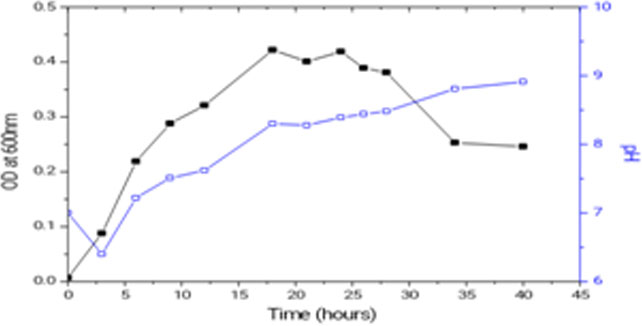
(5) Growth kinetics and pH curve
1ml of isolated bacterial culture was inoculated into fresh nutrient broth medium. The pH and the growth of the bacterial culture were monitored at an interval of 4 hours. Bacterial growth kinetics was investigated spectrophotometrically by measuring the O.D of the culture medium 600 nm.
(6) Antimicrobial sensitivity testing
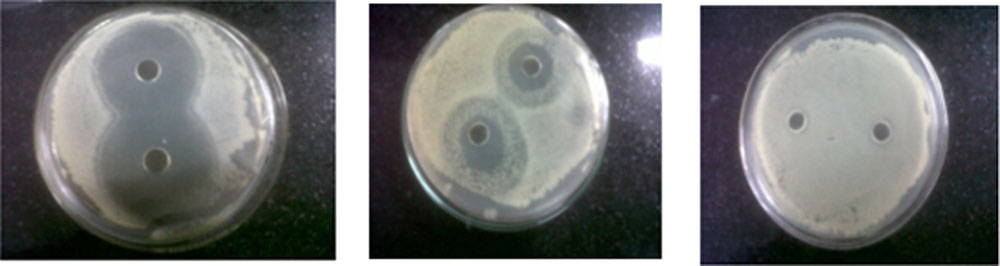
Antimicrobial sensitivity of PLGA-encapsulate nano antibiotic will be determined using microbial cup disk method. Nutrient agar plate will be prepared from nutrient broth with agar. After solidify bacterial culture will be spread on the agar plate using spread plate method. 5mm deep wells were punched in some plate containing the agar with the aid of a sterile 6 mm cork borer. Five hundred micro liters of the PLGA-encapsulate nano antibiotic drop that was dispensed into each holes bored from the agar. Agar plate was incubated in an incubator at 37°C for 18 h. Antimicrobial sensitivity assay was analyzed after measurement of zone of inhibition.
(7) Nano-antibiotic coated haptics:
Microscopy analysis shown that nano-antibiotic has been coated on the surface of haptics.
Results
- Surface image of synthesized nano-antibiotic nanoparticles
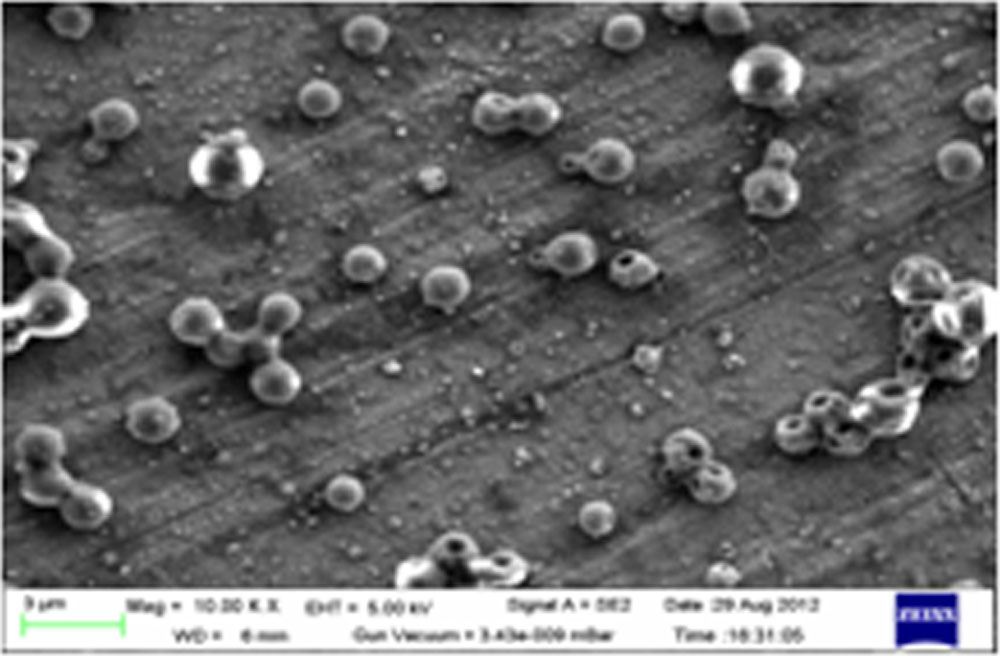
SEM image of nano-antibiotic particles seen at a magnification of 10,000 X
- Size and charge of nanoparticles
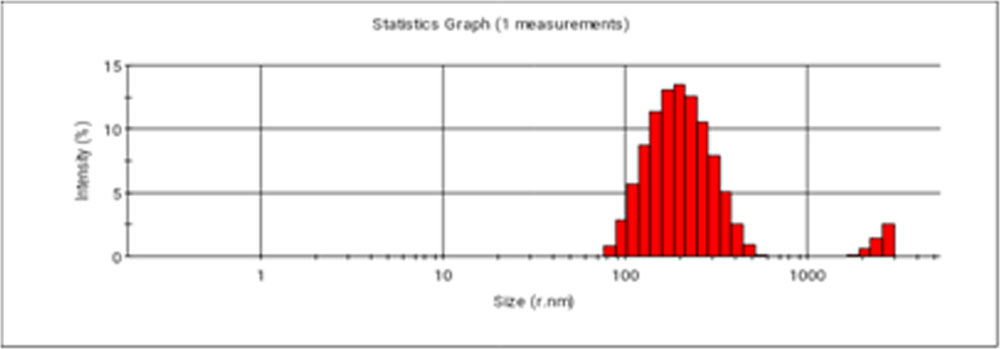
Size: 205.7nm Charge (Zeta potential): -24mV
Achievement: Particle size is in the 200 nm range and charge indicates that particles are stable
FTIR analysis
Polymer (PLGA) – antibiotic interaction spectrum
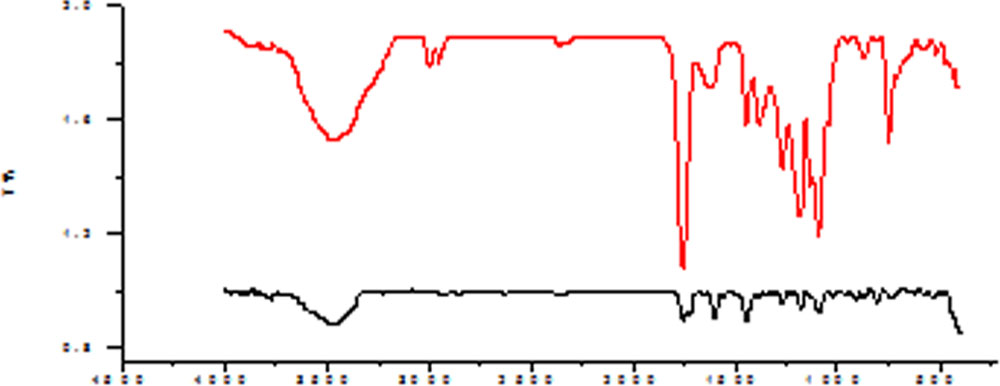
only antibiotic spectrum
Infrared spectra of drug and polymer interaction: Red line indicates drug-polymer interaction and black line represents only drug
Achievement: Drug is encapsulated inside the polymer
(4) Growth Kinetics
(5) Antimicrobial sensitivity testing
Treatment with antibiotic NPs – Average zone of inhibition is 30.25 mm using antibiotic NPs
Treatment with bare antibiotic compound – Average zone of inhibition is 16.5 mm using bare drug NPs
Treatment with PLGA NPs – No zone of inhibition using PLGA NPs
(6) Nano-antibiotic coated haptics:
BEORE NANO-ANTIBIOTIC COATING OF HAPTICS
AFTER NANO-ANTIBIOTIC COATING OF HAPTICS

Conclusion :
The concept of biodegradable polymers combined with antibiotics in a nanoparticulate form for the release of the drug in a very precise and controlled manner is an exciting prospect for treatment of multiple ocular infections otherwise difficult to treat. In our study, biodegradable polymer coated besifloxacin in a nanoparticulate form was shown to have superior zone of inhibition in vitro compared to bare particles. This may be further tested in vivo in the form of eye drops for treatment of ocular infections, particularly endophthalmitis.
References:
- Vol 70. New Delhi: National program for control of blindness Ministry of Health, Government of India; 2002. National Survey on Blindness and Visual Outcome after Cataract Surgery 2001-2002.
- Kodjikian, Laurent; ; ; | Burillon, C.; | Roques, C. | Pellon, G. | Renaud, F.N.R.; | Hartmann, D. | Freney, J.;Intraocular lenses, bacterial adhesion and endophthalmitis prevention: A review. Bio-Medical Materials and Engineering, vol. 14, no. 4, pp. 395-409, 2004
- Schauersberger J, Amon M, Aichinger D, Georgopoulos A. Bacterial adhesion to rigid and foldable posterior chamber intraocular lenses: in vitro study. J Cataract Refract Surg. 2003
Leave a Comment