

Dr.ANSHUL SINGH,Dr.Harsha Bhattacharjee,Dr.Kalyan Das
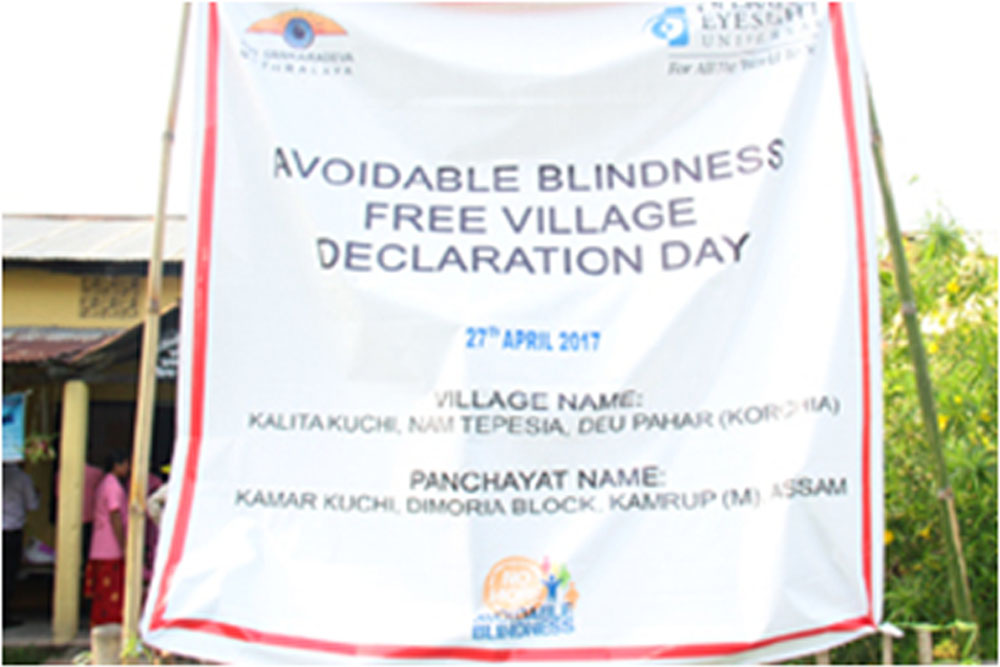
Introduction:
Rapid assessment of cataract blindness has been accepted as arobust tool to help planners in developing countries includingIndia (1-4). Initially, these techniques were limited to ascertainingcataract blindness, visual outcomes after cataract surgery, cataractsurgical coverage and barriers to cataract surgery (5-9).This was immensely important as cataract has been recognized as thecommonest cause of blindness and severe visual impairment inIndia.With the launch of Vision 2020 global initiative the focus hasshifted to all causes of avoidable blindness rather than beinglimited to cataract and rapid assessments have been expanded toinclude all causes of avoidable blindness.
Hence this project was taken up in collaboration with Operation Eyesight Universal, a Canadian based INGO.
Aim:
To evaluate the process of elimination of avoidable blindness from 20 villages of Dimoria Development Block under Hospital Based Community Eye Health Programme.
Methods:
HBCEHP is an ongoing project under the department of Community Ophthalmology of Sri Sankaradeva Nethralaya. This project is for 4 years (2014-2018).
The evaluation involves a quantitative and qualitative analysis of the process involved in declaring avoidable blindness free village from the tribal community. This project is a joint venture between Sri Sankaradeva Nethralaya, Guwahati, Assam and Operation Eyesight Universal, a Canadian based INGO.
The process includes seven crucial steps:
- Prioritisation of the village
- Community mobilisation
- Re-survey and validation
- Screening by an ophthalmologist
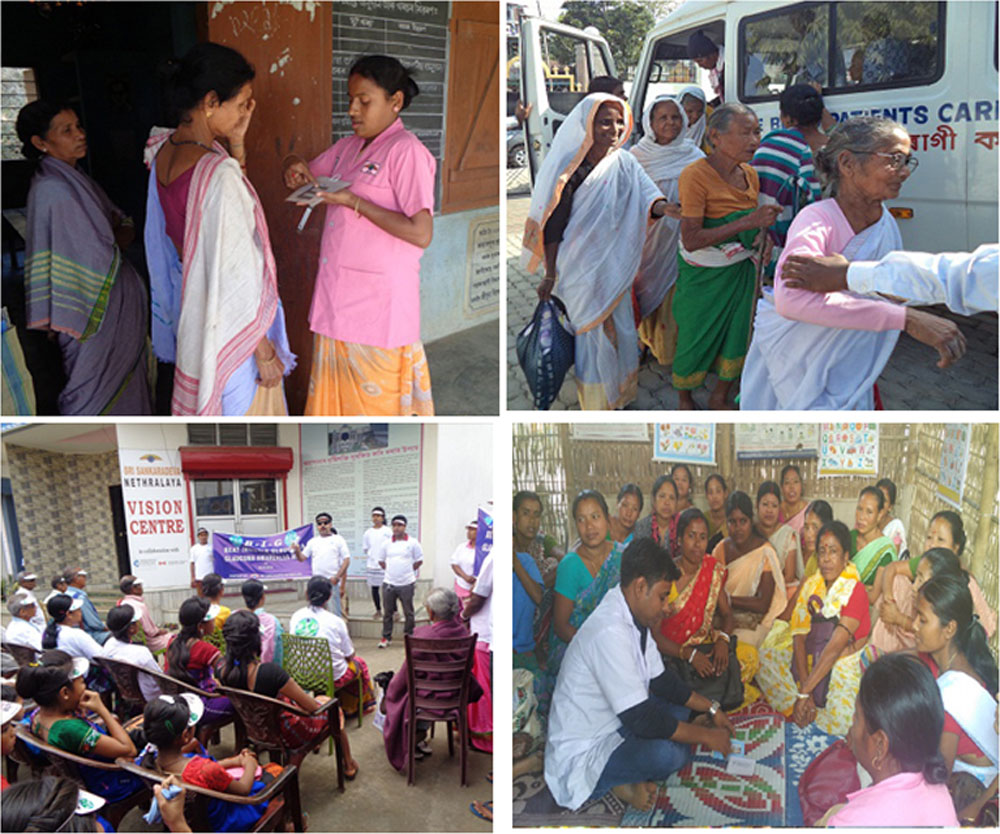
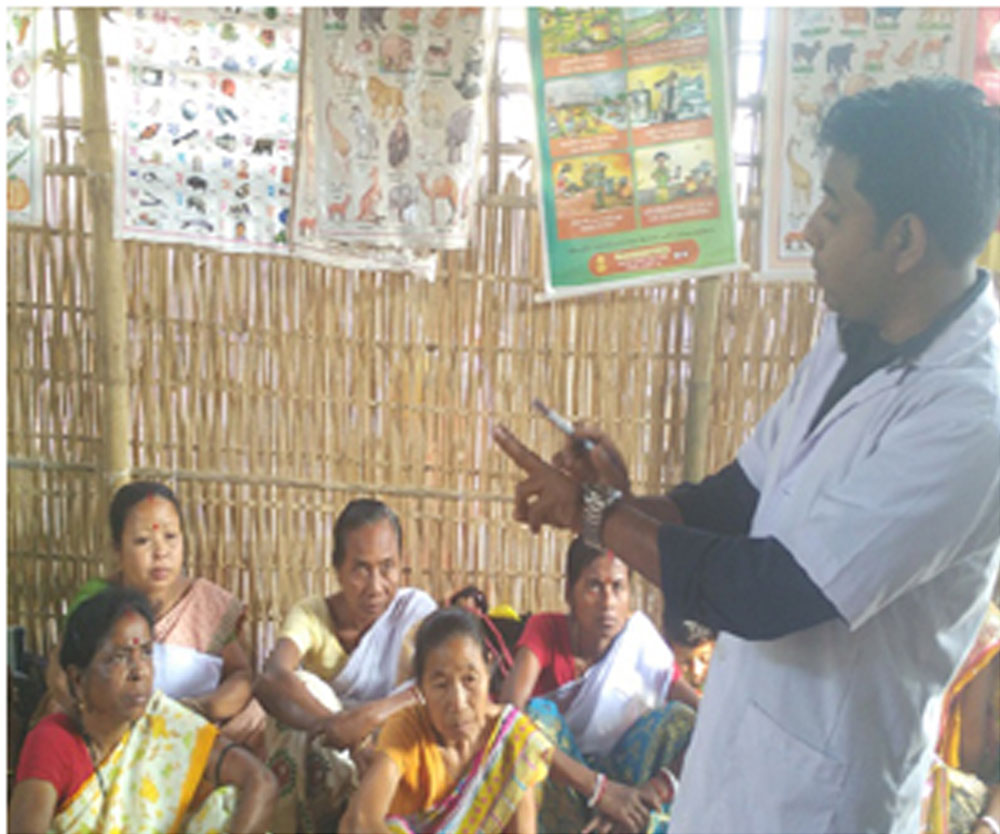
5.Behaviour change communication
6.Documentation
7.Declaration.
These processes are carried out under the direct supervision of project co-ordinator HBCEHP. Each of these steps is further assessed by trained personnel from the base Institute.
A thorough participatory approach in community eye health is developed and documented meticulously.
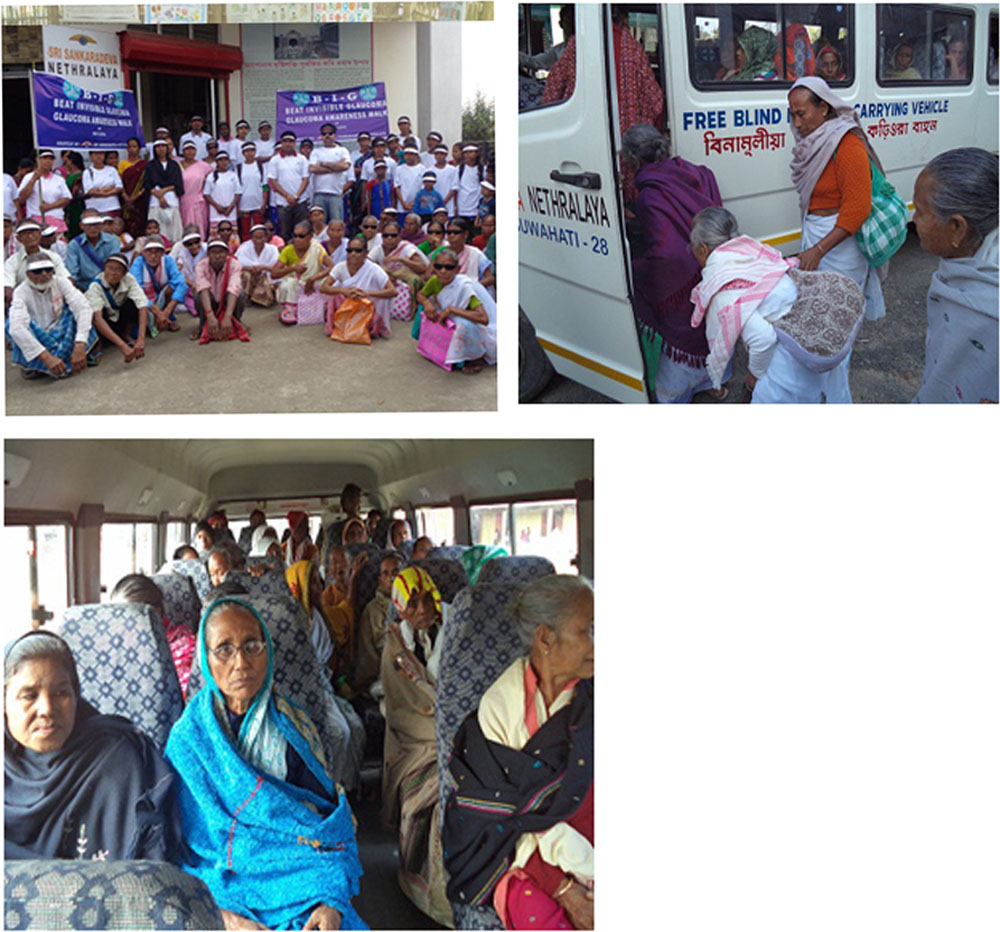
Community Health Workers (CHW) ensures that the patients already diagnosed to have avoidable blindness during the project implementation phase (door to door survey) are getting the desired treatment including surgery. This implies CHWs re-visit to the household along with an optometrist where patients identified with avoidable blindness.
Results:
Out of the total villages included in the project 20 (n=142) accounting to 14% were declared as avoidable blindness free.
Also, these have resulted further in providing surgical interventions to more than 32% of identified blind people primarily due to cataract received good quality surgical interventions and more than 1,500 patients underwent surgeries that belong to poor socio economic communities during this period. Also, more than 1,200 people received spectacles and more than 5,000 people underwent various health education events resulting in more than 3,800 people underwent eye screening.
Conclusion:
In eye health sector, many organisations aim to eliminate avoidable blindness from their intervention areas and very few actually achieve it. Sri Sankaradeva Nethralaya and Operation Eyesight Universal have developed this model where it is not only achieved the objective but successfully demonstrating it in the field. The learning will help other NGOs/ INGOs to benefit through this project in future.
References:
(1).Limburg H, Kumar R, Indrayan A, Sundaram KR (1997) Rapid assessment of prevalence of cataract blindness at district level. Int J Epidemiol 26: 1049–1054.
(2).Limburg H, Kumar R (1998) Follow up study of blindness attributed to cataract in Karnataka State, India. OphthlamicEpidemiol 5: 211–23.
(3) Limburg H, Kumar R, Bachani D (1996) Monitoring and evaluating cataract intervention in India. Br J Ophthalmol 80: 951–5.
(4). Dineen B, Foster A, Faal H (2006) A proposed rapid methodology to assess the prevalence and causes of blindness and visual impairment. Ophthalmic Epidemiology 13: 31–4.
(5)Duerksen R, Limburg H, Carron JE, Foster A (2003) Cataract blindness inParaguay–results of a national survey. Ophthalmic Epidemiol 10: 349–57.
(6)Amansakhatov S, Volokhovskaya ZP, Afanasyeva AN, Limburg H (2002)Cataract blindness in Turkmenistan: results of a national survey. Br J Ophthalmol 86: 1207–10.
(7). Limburg H, Barria von Bischhoffshausen F, Gomez P, Silvia JC, Foster A (2008) Review of recent surveys on blindness and visual impairment in Latin America.Br J Ophthalmol 92: 315–9.
(8). Beltranena F, Casasola K, Silvia JC, Limburg H (2007) Cataract blindness in 4 regions of Guatemala: results of a population based survey. Ophthalmology 114:1558–63.
(9).Bachani D, Murthy GV, Gupta SK (2000) Rapid assessment of cataractblindness in India. Indian J Public Health 44: 82–9.
Leave a Comment