

Dr. Rishi Swarup, Dr. Swarup Pradeep
Abstract:
Aims:
To study the efficacy and safety of chemical corneal tattooing for unsightly corneal scars.
Settings and Design:Prospective, interventional, consecutive, non-randomised, non-comparative series of cases of corneal tattooing conducted at the cornea department of tertiary eye care centre, Bangalore
Methods and Material:
11 consecutive cases of adult and 4 paediatric cases were enrolled for the study .All patients desired a cosmetic treatment for their corneal scars in blind eye. Complete ophthalmic examination including B scan and photographs of the patients eyes done .Chemical corneal tattooing was performed using Indian Ink Powder. Patients underwenteither inlay, onlayor mixed tattooing and were followed up at the first, third and fifth post-operative day, at 3rd month, 6th month and 1st year post-operatively.
Statistical analysis used:
Descriptive statistics and percentage method was used as and where required.
Results:
Among the 11 adult cases and 4 paediatric cases, 7 (46%) patients underwent intralamellartattooing, 3(20%) onlay tattooand 5 (33% combined procedure (onlay + inlay). One year postoperatively, overall satisfactory cosmesis was noted in 12 (80%)cases whereas 3 onlay patients noted fading of tattoo. At the end of one year patients were comfortable and asymptomatic with no evidence of any major ocular complications.
Conclusions:
Chemical corneal tattooing is a simple, safe and an efficient technique yielding acceptable cosmetic results. It does not require expensive materials and offers a viable option in comparison to contact lens, keratoplasty or reconstructive procedures for cosmesis.Chemicalcorneal tattoo by using Indian ink as an alternative proves to give almost equivalent stable, satisfactory cosmetic result with high patient satisfaction in all cases and an improved quality of life.
Key-words: corneal opacity, corneal tattooing, inlay tattoo, India ink
Key Messages:
Corneal tattooing with India ink especially intra lamellar is cost effective ,durable and cosmetically satisfactory in patients with corneal scars with nil visual prognosis in comparison to recurrent costs ,special care with contact lens use or other invasive ocular surgeries for Cosmesis
Introduction:
Using pigment to mask unsightly corneal scars has been known for more than 2000 years.It was first introduced in 160 AD by a Greek physician – Galen, however, the procedure was used infrequently for centuries thereafter1The process was not readily adopted until the early 20th century, whenFrederick H. Verhoe reported the safe and effective use of India ink to darken corneal scars.2
The most frequent indication for corneal tattooing over the years has been cosmetic—patients who present with a leucomatouscornea or cornealscar may have these aesthetically unpleasing conditions masked by the procedure.More recent being sectoral tattoo for iris defects , diplopia ,intractable glare etc.3-5Alternative methods to improve the aesthetic appearance of disfigured corneas are cosmetic contact lenses, keratoplasty , wearing ocular prosthesis with or without an enucleation or evisceration.6
In view of nil visual prognosis doing an optical keratoplasty could be a burden in our country in view of shortage of donor tissues. Moreover keratoplasties are known to go for rejection or whitening of graft if proper care not taken. With contact lenses, intolerance frequently develops after prolonged use while wearing an ocular prosthesis over a scarred cornea often causes inflammation, infection and corneal erosion.
Hence tattooing of corneal opacities still has a role for the cosmetic improvement of unsightly corneal scars. 7-10
Classic corneal tattooing uses dyes that are applied to the anterior stroma following epithelial debridement or Trans epithelial needle puncture .11 Theother method is wherein the dye is injected in a lamellar channel 12-13
Our study is aimed to assess the efficacy of chemical corneal tattooing to improve the ocular cosmetic appearance, to demonstrate its safety anddurability as an alternative to invasive reconstructive surgery for the cosmetic correction of disfigured corneas.
Subjects and Methods:
Non randomised prospective study of efficacy of chemical tattoo in 11 adult cases and 4 paediatric casesconducted at the Cornea department of tertiary eye care centre, Bangalore.
All patients had corneal scar or retro corneal opacity and had no visual potential. Complete ophthalmic examination was performed including B scan ultrasound to exclude intraocular tumours. The depth of corneal opacity, corneal thickness, the presence and extent of band keratopathy and corneal vascularization was carefully assessed byappropriate investigations
Study inclusion criteria were superficial or deep corneal opacities, band keratopathy, and retro corneal opacities. Patients with phthisical eyes, thin corneas, corneal oedema (bullous keratopathy), anterior staphyloma and glaucoma were excluded from the study.
After fully explaining to the patients and their parents that this procedure was not meant to restore sight but only their cosmetic appearance and they may need a repeat procedure, an informed consent was obtained and preoperative photographs of the patients’ eyes were taken. Corneal tattooing was performed under general anaesthesia in children and local anaesthesia (retro bulbar) in adults.
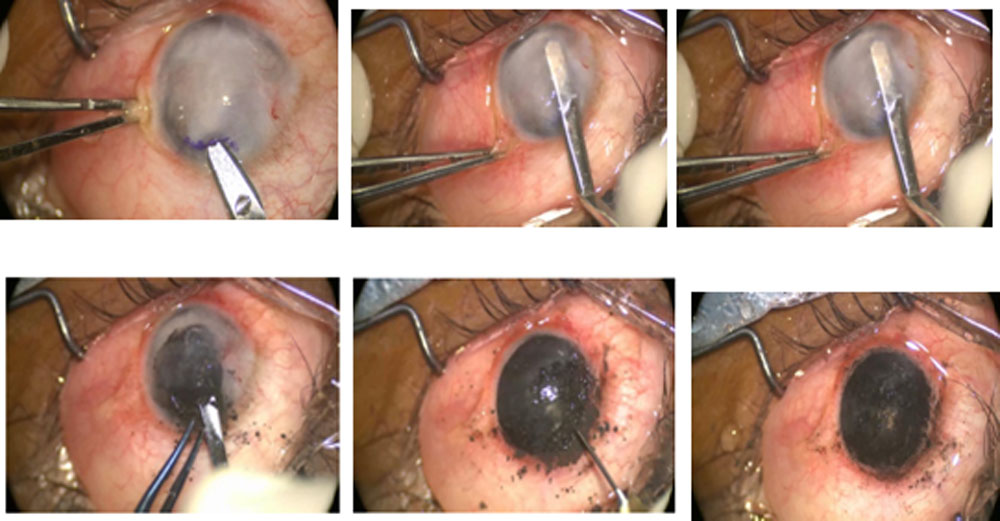
Chemical corneal tattooing was performed using Indian Ink Powder. Surgical techniques used were either Onlaytattooing, intra lamellar or combined. Onlay tattooing done using a 30 g needle, bevel down, to imbibe the ink into the anterior stroma. Inlay tattooing was done by creating the lamellar pocket with predepth 300/350 micron knife followed by lamellardissector. The tattoo material was inserted in two or three layers in the interface, incision closed with suture(Figure 1).
Postoperatively, patients were prescribed steroid antibiotics and lubricants with cyloplegic eye drops
Patients were followed up at the first, third and fifth post-operative day, at 3rd month, 6th month and 1st year post-operatively.
Results:
Among 11 eyes of adults and 4 paediatric cases who met the criteria for inclusion in the study 7 (46%) patients underwent intralamellartattooing, 3(20%) patients had onlay tattoo done and 5 (33%) patients underwent onlay with inlay tattoo. Patients who underwent onlay tattoo had thinner and irregular cornea hence inlay not attempted. (Table 1). Age of the patients ranged from 5 to 30 years.
3 cases (2%) had superficial corneal opacities, 7 cases (46%) had deep corneal opacities,1 case congenital cataract with closed funnel RDand an associated failed graft was present in 4 cases (26%). (Table 2)
On the first postoperative day, 8 (53%) patients complained of a moderate foreign body sensation and exhibited a conjunctival injection which corresponded to the surgically induced corneal epithelial defect and chemical reaction. Corneal infection / corneal erosion were not noted in any case. Corneal melt was noted in one patient (secondary to trauma) who had undergone inlay tattoo with epikeratoplasty. Minimal pigment loss was observed in 4 cases (26%) that underwent onlay after 3months( figure 2-4). The pigment density after an initial loss was nearly stabilized, the pigmentation was uniform and no patchy loss of pigment was seen even at the end of one year. Majority of the cases 13(86%) did not require tattooing more than once, if the initial tattooing was satisfactory.
One year postoperatively, the 12 cases (80%) especiallythe inlaytattoo caseswere more satisfied compared to onlay tattoo.(Chart 2) All patients were asymptomatic with no evidence of major ocular complications at the end of one year.
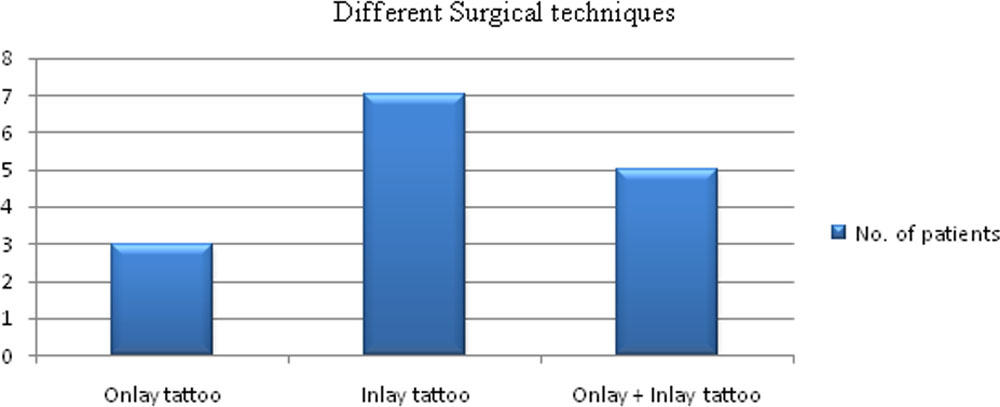
Chart 1: Cosmetic corneal tattoo: surgical technique
| Sl No. | Diagnosis | Eyes |
| 1 | Post trauma | 2 |
| 2 | Congenital opacity | 2 |
| 3 | Post corneal ulcer | 3 |
| 4 | Post failed graft | 4 |
| 5 | Congenital cataract with RD | 1 |
| 6 | Corneal opacity with Anterior staphyloma | 3 |
Table 1: Diagnosis inrecruited patients for Corneal Tattooing
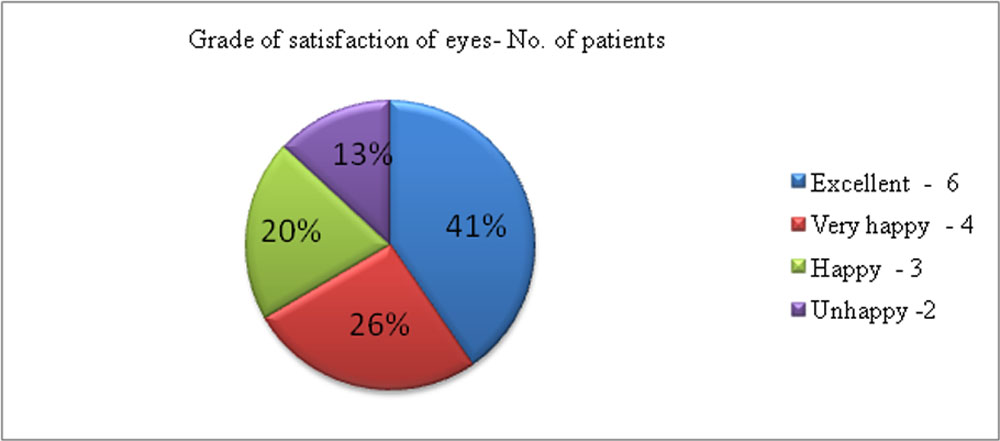
Chart2 : Percentage of patient satisfaction.
A B C
D E F
Figure 1:A 25 yr patient with stick injury in Left eye having adherent leukoma with peripheral nasal thinning. Combined corneal staining was done.
(A) Precut 300 micron blade used to mark and cresent to enter intrastromally. (B) Lamellar dissector used for blunt dissection (C) India ink filled into the pocket in 2-3 layers. (D) Completion of intralamellarprocedure. (E) onlay tattoo with 30G needle. (F) Final outcome
A B
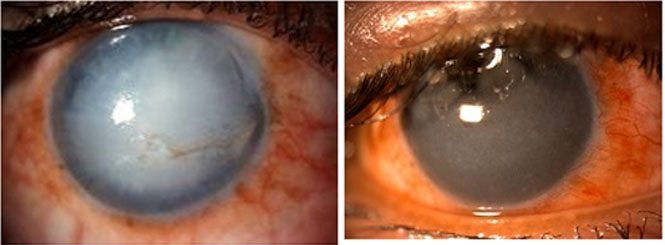 Figure 2: 20yr old male with corneal opacity –Pre and postopappearances
A B
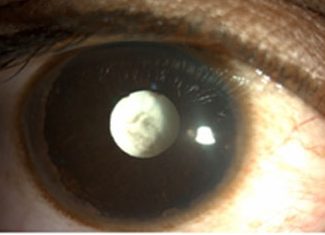
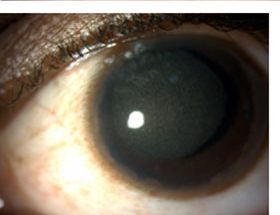
Figure 3:18yr old male with aabsorbedcataract and closed funnel RD-Pre and postopappearances
A B
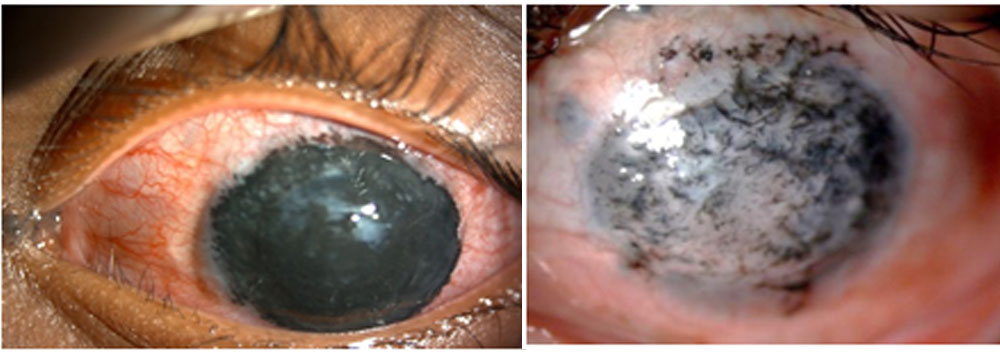
Figure 4: Comparison of follow up of onlay tattoo
- Immediate post op (B) Fading of pigmentation noted follow up
Discussion:
Disfigured corneal opacities can alter a person’sself-confidence and affect badly both social lives and quality of life. Therefore, considering cosmetic repair as an essential line of treatment of corneal opacities in carefully selected cases can improve both the patient’s self-confidence and social life.
Corneal tattooing is one among the options offered to patients with corneal opacities other than colored contact lenses,penetrating keratoplastyor enucleation, or evisceration with orbital prosthesis. 6-10
Chemical tattooing of unsightly corneal scars has proved to be an efficient and a simple technique. It is a safe surgical procedure that does not require expensive materials and offers a viable option to avoid more extensive and invasive reconstructive ocular surgery. 14
Chemical corneal tattooing by our technique gives a stable, satisfactory cosmetic result with high patient satisfaction in all cases and an improved quality of life.Various tattooing methods were used such as chemical dyeing with the use of gold or platinum chloride and nonmetallic tattooing with India ink, China ink, lamp black/soot, and other organic dyes 15-17
Surgeons experimented with different combinations of such chemical products to obtain different shades. The main problem affecting the outcome of previous corneal tattoo studies was the fading of colors, which made the results inconsistent over time.18
In our study we have used India Ink material which was noted to be both cost effective and durable as comparable to few other studies 2.
The safety of ink was evaluated in our study in which intrastromal corneal ink injection was found to be a safe technique of tattooing with no major side effects.
These results are similar to a study of Amestyet al.19in which they have concluded that intrastromalcorneal tattooshows good cosmetic results without adverse effects in the treated eyes.
Two different methods of corneal tattooing were described during the last century. One of them was a chemical dye with gold or platinum chloride, a simple technique, mainly used as onlaytechnique. 20
Most of the studies have noted recurrent corneal erosion and fading of tattoo. Another method was carbon impregnation. Chemical tattooing was easier and quicker than carbon impregnation, but it faded more rapidly than non-metallic tattooing.
There are many reports of introducing the ink intrastromally by either manually dissecting a lamellar corneal pocket/ lamellar flap dissection or using the Femtolaser to create a flap 21-22
In our study the inlay technique was done by intrastromal lamellar pocketing which showed more advantage than only onlaytechnique, as it provides a more homogeneous aspect of the pigmented area, surgery is faster, the patient showed a faster and less symptomatic postoperative recovery, the corneal surface is untouched, and the staining is not exposed to the tear film.
Studies have shown that during onlaytechnique injury to basement membrane of corneal epithelium may regenerate poorly, thus predispose the eye to a condition akin to recurrent corneal erosions. This fact is similar to our studies where patients had on and off mild redness post onlay23
The greater pigment density and its relative permanence is understandable as by the lamellar procedure, two surfaces are being tattooed simultaneously, the corneal bed and the inner surface of the lamellar flap, thus duplicating the amount of pigment deposited in the cornea. Larger the pigment initially deposited in cornea, the greater is the density of tattooing and more durable are the results as proved in our cases with inlay intrastromal tattooing. 19, 23
In a study of Kim et al.24 they reported occurrence of reopacification and fading of color in 7 and 5 eyes, respectively, post tattooing which necessitated retattooing unlike our cases with satisfactory results comparing to our study where Majority of the cases 13 ( 86%) did not require tattooing more than once, if the initial tattooing was satisfactory
The manual lamellar pocket method had some risk of uneven tissue dissection or perforation 24
but our study showed that pre-operative evaluation like ASOCT and pachymetry can aid in deciding the depth of the lamellar pocket.
Limitation of this study is the small number of cases included in comparison to other studies and the need for a long-term follow-up for patients treated with corneal tattooing even when satisfactory results are achieved in the short term.
Thus, we can conclude that India ink corneal tattoo used as described in this study achieves stable, satisfactory cosmetic results, during the follow-up of this study, with high patient satisfaction in corneal leucomas,leukocoria with nil visual potential and improving the patient’s quality of life. According to the results of this clinical study, corneal tattoo is a safe surgical procedure that is easy to learn and perform, does not require expensive materials and avoids more extensive and invasive reconstructive ocular procedures
References:
1.Dougan C, Hill G, Villa Verde N, Hill J. Seeing better through someone else’s eyes. Brown Universityy.
2.Verhoe FH. India ink infiltration: a simple and effective substitute for corneal tattooing. Journal of the American Medical Association. 1917 Oct 24;
3.Burris TE, Holmes-Higgin DK, et al. Lamellar intrastromal corneal tattoo for treating iris defects (artificial iris). Cornea 1998; 17:169–73.
4.S tone NM, Somner JE, Jay JL. Intractable diplopia: a new indication for corneal tattooing. Br J Ophthalmol. 2008; 92:1445, 561–562.
5. Ahn SJ, Han YK, Kwon JW. A case of superficial corneal tattooing for glare after trabeculectomy. Can J Ophthalmol. 2009; 44:e63.
6.Van der Velden-Samderubun EM, Kok JH, Den Dulk LD. corneal tattooing. Cornea 995; 14:225e30.
7.Hallock GG. Cosmetic trauma surgery.PlastReconstrSurg 1995;
8. KuzanJr WM. Plastic surgery. J Am CollSurg 1999;
9.Hoeyberhs JL. Fortnightly review: cosmetic surgery. BMJ 1999;.
10.Custer PL, Kennedy RH, Woog JJ, et al. Orbital implants in enucleation surgery.A report by the American Academy of Ophthalmology.Ophthalmologica 2003;
11.Pitz S, Jahn R, Frisch L, Duis A, Pfeier N. Corneal tattooing: an alternative treatment for disfiguring corneal scars. Br J Ophthalmol. 2002;
12.G. D. Kymionis, T. Ice, A. Galor, and S. H. Yoo, “Femtosecond-assisted anterior lamellar corneal stainingtattooing in a blind eye with leukocoria,” Cornea, vol. 28, no. 2, pp. 211–213, 2009.9A.
13.H. Alsmman Hassan and N. G. AbdElhaliemSoliman, “Intrastromal injection of China painting ink in corneas of male rabbits: clinical and histological study,” Journal of Ophthalmology, vol. 2016,
14.Gupta D, Broadway D. Cost-effective tattooing: the use of sterile ink for corneal tattooing after complicated peripheral iridotomies: an alternative to expensive salts. 2010;19(8):566-567
15.S. Holth, “Revival of Galen’s corneal staining with coppersulfate and tannine should be abandoned,” American Journalof Ophthalmology, vol. 14, pp. 378-379, 1931.
16.E. M. van der VeldenSamderubun and J. H. C. Kok, “Dermatography as a modern treatment for colouringleukoma cornea,” Cornea, vol. 13, no. 4, pp. 349–353, 1994.
17.J. N. Roy, “Tattooing of the cornea 1938,” Canadian Medical Association Journal, vol. 39, no. 5, pp. 436–438, 1938.
18.Gifford SR, Steinberg A. Gold and silver impregnation of cornea forcosmetic purposes. Am J Ophthalmol 1927;10:240–7.
19.M. A. Amesty, A. E. Rodriguez, E. Hern´andez, M. P. De Miguel, and J. L. Alio, “Tolerance of micronized mineral pigments for intrastromalkeratopigmentation: a histopathology and immunopathology experimental study,” Cornea, vol. 35, no. 9, pp. 1199–1205, 2016.
20.Duggan JN, Nanavati BP. Tattooing of corneal opacity with gold and platinum chloride. Br J Ophthalmol 1936;20:419e25
21.Fogla R, Gupta A&Indumathy TR (2010): Microkeratome-assisted corneal tattooing: a case report. Cornea 29: 446–448.
22.Kim C, Kim KH, Han YK, Wee WR, Lee JH & Kwon JW (2009): New surgical strategy for corneal tattooing using a femtosecond laser. Cornea 28: 80–84.
23.Panda A, Mohan M, Chawdhary S. Corneal tattooing—experiences with “lamellar pocket procedure.”Ind J Ophthalmol 1984;32:408–11.
24.C. Kim, K. H. Kim, Y. K. Han, W. R. Wee, J. H. Lee, and J. W. Kwon, “Five-year results of corneal tattooing for cosmetic repair in disfigured eyes,” Cornea, vol. 30, no. 10, pp. 1135–1139, 2011.
Leave a Comment