

Dr.Sanjoy Chowdhury, C06721, Dr.Priti Sinha
ABSTRACT
Amblyopia is a common visual problem with poor response to treatment. Perceptual learning through contextual senses can give good result even in adults. Purpose: To study outcome of customized trial frame mounted miniature synoptophore (MSMS) made from low cost locally available materials integrated with music producing chip. Methods: Miniature synoptophore was designed from locally available “bio-scope “toys mounted on trial frame, fitted with LED light for alternate flashing and sound producing chip.10 amblyopic patients were given this for use at home for 4 weeks and 10 amblyopic exercising on similar miniature SMS not fitted with sound chip were used as controls. Results: Outcome was better with modified miniature spectacle mounted synoptophore with sound chip. Conclusion: MSMS induces Perceptual learning using contextual senses like sound. This can augment outcome in amblyopia at any age as perceptual learning is plastic.
Keywords: Amblyopia, Perceptual learning, MSMS, Contextual senses.
INTRODUCTION
With involvement of 3% of general population, amblyopia represents the most frequent cause of uniocular vision defect in children. Amblyopia is a consequence of abnormal binocular visual experience during the ‘critical period’ of life or during the period of neural plasticity early in life.1 Consequences of amblyopia are expressed as decrease in visual acuity(VA), reduction in contrast-sensitivity function and Vernier acuity as well as spatial distortion2 and impaired contour detection3 in an otherwise healthy eye. These are thought to result from abnormal operation of neuronal networking in primary visual cortex,particularly of orientation-selective neurons and their interactions.4 With traditional amblyopia treatment of occlusion or atropine penalisation, visual deficiency were thought to be irreversible after 1st decade of life.5 But with the emergence of concept of Perceptual Learning (PL) as a new modality of treatment and its promising outcomes in several studies, this thought of irreversibility appears inappropriate. Perceptual Learning has been defined as an evolution in the discernment of a stimulus array after repetitive exposure or practice with this array.6 In Perceptual learning, a single visual percept is given to both eyes simultaneously or under monocular viewing conditions. The perceptual learning procedures train the abnormal neuronal networking by efficient stimulation and effectively promoting their spatial interactions.Synoptophore has been used long to diagnose ocular muscular imbalance and to treat them by orthoptic method. It compensates for the angle of squint and allows the stimuli to be presented to both eyes simultaneously. Synoptophore can also be useful for treating amblyopia by alternate flashing. But its institution based availability and low compliance still poses a problem to be applicable to a population at large. So, an alternative approach with home-based therapy incorporating perceptual learning task might be useful. In this study, we have tried to search an alternative to traditional amblyopia treatment through use of modified spectacle-mounted-synoptophore attached with music chip as a method of perceptual learning with binocular therapy.
METHOD
20 amblyopic patients between 10-60 yr age were enrolled in this study. Miniature spectacle mounted synoptophore was made with locally available “bio-scope” toys and a trial frame. It was fitted with LED light for alternate flashing and sound producing chip. 10 amblyopic patients were given this for exercise at home, and other 10 amblyopes were given this miniature synoptohore without sound producing chip for 10 minute daily exercise upto 4 weeks.
Brief description of spectacle mounted synoptophore (SMS):
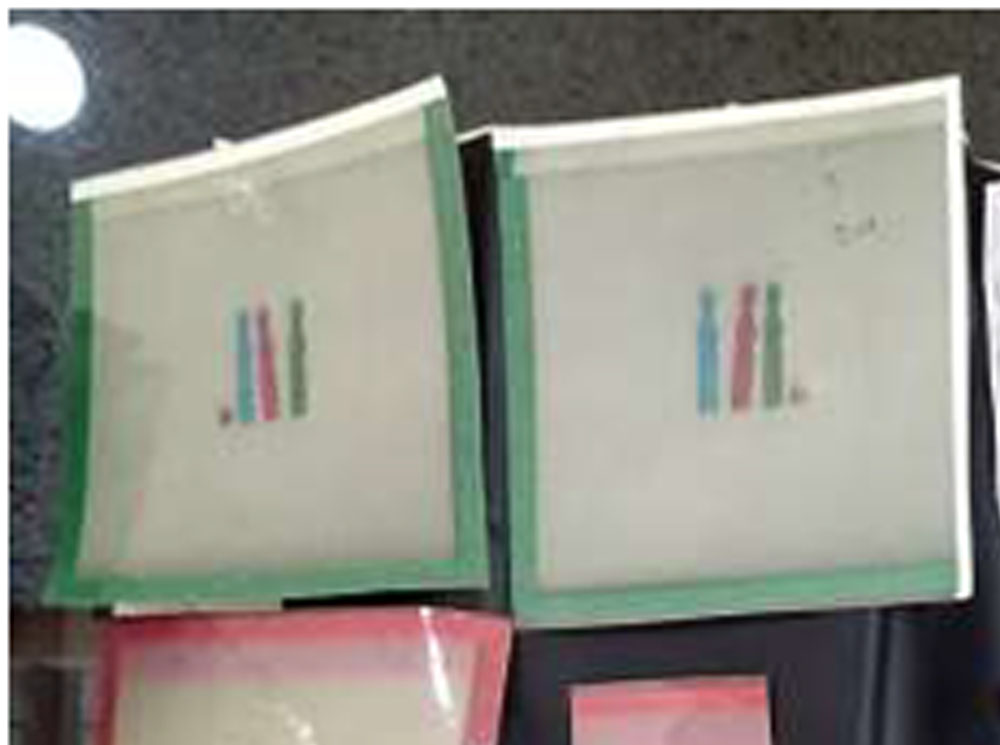
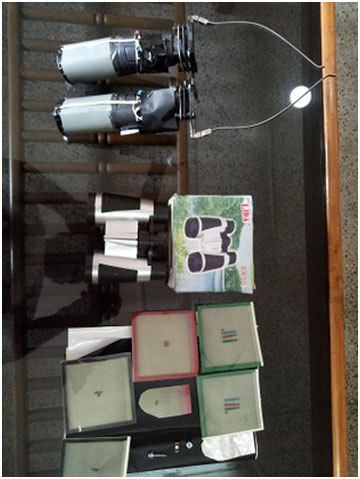
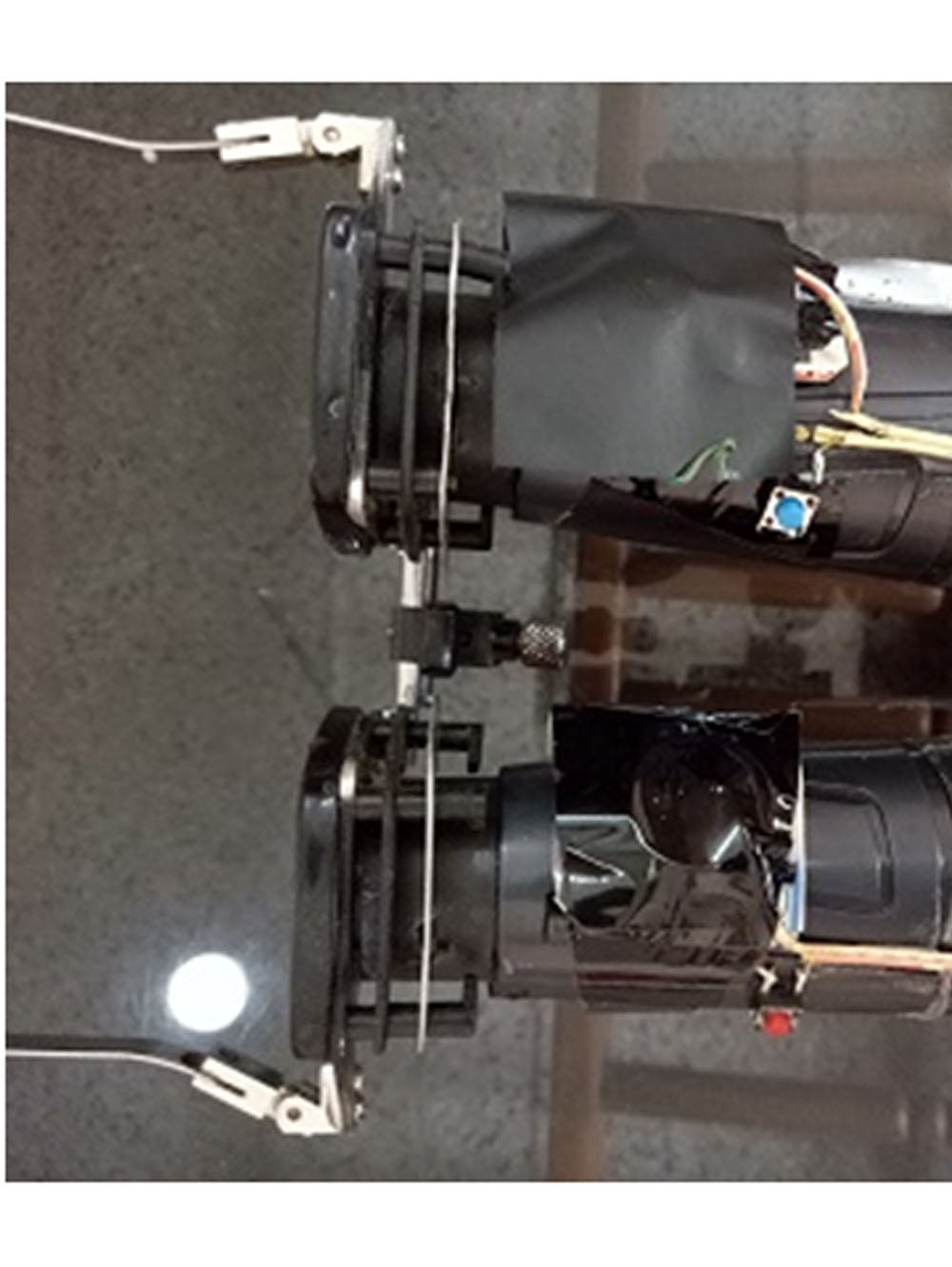
SMS is designed and assembled from locally available cheap components (Illustrations 1-6):
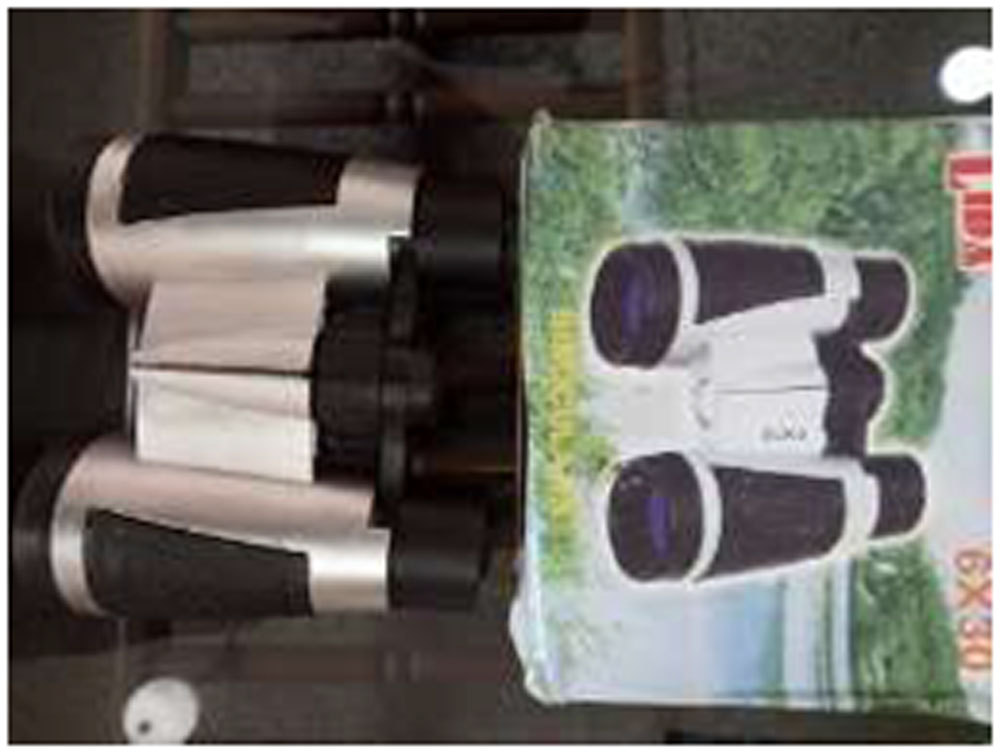
1) Trial Frame: Adjustable to angle of deviation in squint cases 2) Small binocular whose inner wall is covered with nonglossy sticking paper 3) LED bulb and switches
4) Synoptophore slides cut according to the size and shape of binocular tube
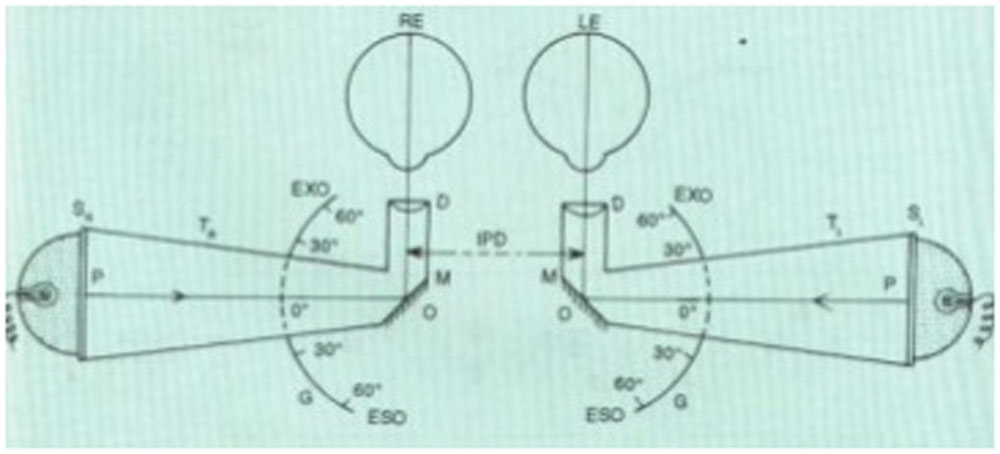
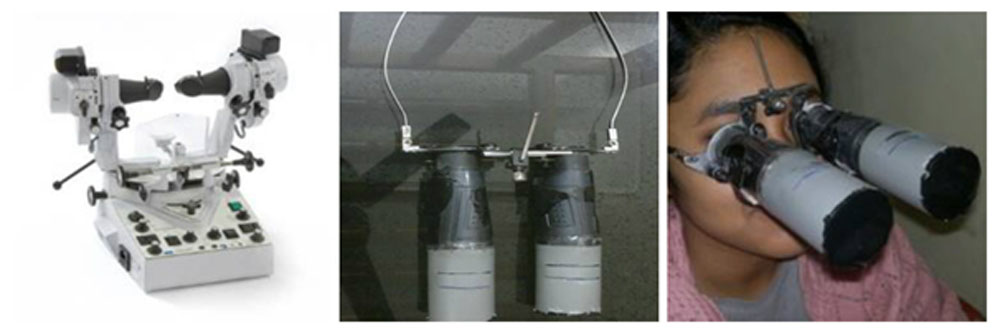
A trial frame fitted with two eyepieces made from small plastic conical toys/binoculars with convex lenses (available in village fare to see different pictures viz. bioscope). Eye pieces can be moved according to the angle of deviation. Pictures are made from synoptophore slides. This is an eye wear or spectacle to improve vergence. Alternate stimulation can be done in amblyopia (lazy eyes). They can be further reinforced with LED lights fitted with the eye pieces. Desired optical correction can also be used to correct refractive errors. Use of sound with visual stimulus acts as a perceptual task in patients.
Salient Features of the innovation:
Lazy eyes are common in children which if detected and treated early can give good visual outcome. Besides occlusion, different orthoptic exercises on synoptophore require institutional approach. This is time consuming hampering studies and not accessible /available everywhere. Simple spectacle designed with very low cost materials will help the amblyopic patients exercise at home. Convergence deficiency or excess is very common among prolonged computer users. This simple device can improve vergence faculty with daily 10 minutes exercise.
Effects of Perceptual learning were quantified by comparing performance before and after training and expressed as PPR or Post: Pre-Ratio.
PPR=1 No improvement
PPR>1 Improvement present
PPR<1 Deterioration
RESULTS
In our study, we found that both the group was compliant with the treatment, as it was home-based and easy to perform. The visual outcome was better in group with MSMS integrated with music chip.
Table 1
| PPR | GROUP- A | GROUP-B |
| PPR=1
PPR>1 PPR<1 |
7
3 Nil |
8
1 1 |
The study has been limited by small number number of participants, limiting its application to population at large. Long term follow-up is also necessary as some studies have shown that effects of perceptual learning last for hours to months without continued practice7.
DISCUSSION
Amblyopia is a unilateral or less commonly bilateral reduction of best-corrected-visual acuity (BCVA) that cannot be attributed directly to the effect of any structural abnormality of eye or visual pathways. It is also the most common cause of unilateral visual impairment in adults younger than 60 years. Abnormal visual experience early in life results in amblyopia and can be caused by any of following:-
a) Strabismus
b) Refractive error: anisometropia or high bilateral refractive errors
c) Visual deprivation
Loss of vision because of amblyopia is preventable or reversible with timely detection and intervention. So, to identify children at risk for amblyopia is very important and thus regular screening throughout childhood is essential. Traditionally, it is often successfully treated by patching the sound eye in infants and young children,but is usually considered to be untreatable in adults. A major factor for treatment failure in amblyopes is non-compliance. Other factors include recurrence and presence of residual amblyopia. A recent study showed that 54% of children treated with occlusion therapy at age of <3-7 years still demonstrated some amblyopia at the age of 10 year8. Older children were even worse; 74% of children aged 7-12 years treated with patching and, 80% treated with atropine have some degree of residual amblyopia on long term follow-up9.
Data from use of an occlusion dose monitor confirmed that some children in spite of excellent compliance failed to show any improvement10.It is generally heldthat the response to treatment seems best when instituted at an early age and is poor in adults, it is now clear that adult amblyopes are benefitted by perceptual learning i.e. repetitive practice of a visual task. Levi and Polat first showed that Vernier acuity in adults with amblyopia was enhanced with practice and that this improvement transferred to improvement in visual acuity in some of their observers11. It is now clear that perceptual learning improves amblyopic performance on a wide range of tasks, including position discrimination, spatial interaction, contrast detection, and letter recognition. Recently home based video games, dichoptic movie viewing etc. are also beingstudied. In this study compliance and visual outcome was better as this SMS could becustomized according to patient’s preference.However this is being a prototype need further refinement before commercial use.
CONCLUSION
Innovative home exercise for amblyopia is possible with trial frame mounted miniaturesynoptophore. This study suggests that amblyopia can be improved with the help of orthopticstimulation by using spectacle mount synoptophore. It can improve the level of vision, at thefirst phase, to a certain degree for the children to accept the patching and resume their usualdaily life. Thus, the compliance of the treatment can be well achieved.Science and technology are the fundamental for economic development of a country. India isdeveloping nation with world leading technological advancements in many fields; computertechnology is one of them. At the same time one fourth of blind population resides in Indiaand most of this blindness is avoidable. We perform maximum number of cataract surgerystill backlog remains. Mammoth population of more than 125 crore is cited as a reasonbehind all problems. But affordable Medicare and technology can help to solve this. AsEinstein once said “Innovation is not the product of logical thought, although the result is tiedto logical structure”. For this, interaction between science and Industry is required.Innovative research to find products which can be made locally can reduce the cost. Patentingour innovative idea, design or discovery is the first step. Primary source of support forpatented technology is the employer of the inventor, usually the assignee. Indianophthalmologists, mostly working independently or under some institutes either govt. or private cannot apply for patents ,mostly due to different administrative strictures, lack of interests as they are overburdened with patient burden. AIOS can provide some platform for this by collaborating with industries.
REFERENCES
1) Ciuffreda, K. J., Levi, D. M. &Selenow, A. (1991) Amblyopia: Basic and Clinical Aspects (Butterworth, Boston).
2) Sireteanu, R., Lagreze, W. D. & Constantinescu, D. H. (1993) Vision Res. 33,677–690.
3) Hess, R. F., McIlhagga, W. & Field, D. J. (1997) Vision Res. 37, 3145–3161.
4) Polat, U. (1999) Spat. Vis. 12, 143–162.
5) Greenwald, M. J. & Parks, M. M. (1999) in Clinical Ophthalmology, ed. Duane,(Harper and Row, Hagerstown, MD), Vol. 1.
6) Gibson EJ. Perceptual learning. Annu Rev Psychol 1983; 14:29-56
7)Qu Z, Song Y, Ding Y. ERP evidence for distinct mechanisms of fast and slow visual perceptual learning. Neuropsychologia2010;48:1869–74.
8) Repka MX, Kraker RT, Beck RW, et al. Pediatric Eye Disease Investigator Group. Arandomized trial of atropine vs patching for treatment of moderate amblyopia: followupat age 10 years. Arch Ophthalmol2008;126:1039–44.
9)Scheiman MM, Hertle RW, Kraker RT, et al. Pediatric Eye Disease Investigator Group. Patching vs atropine to treat amblyopia in children aged 7 to 12 years: a randomized trial. Arch Ophthalmol2008;126:1634–42.
10)Stewart CE, Moseley MJ, Stephens DA, et al. Treatment dose-response in amblyopia therapy: the Monitored Occlusion Treatment of Amblyopia Study (MOTAS). Invest Ophthalmol Vis Sci 2004;45:3048–54.
Illustrations
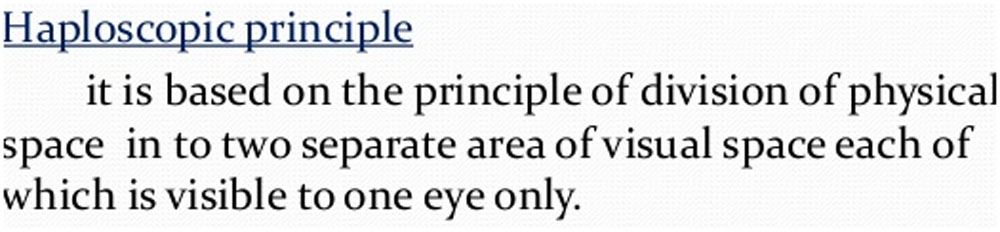
1.Principle:
2.Binocular tube used as main body which was mounted on trial frame
3.Customised slides and LED bulbs, switches
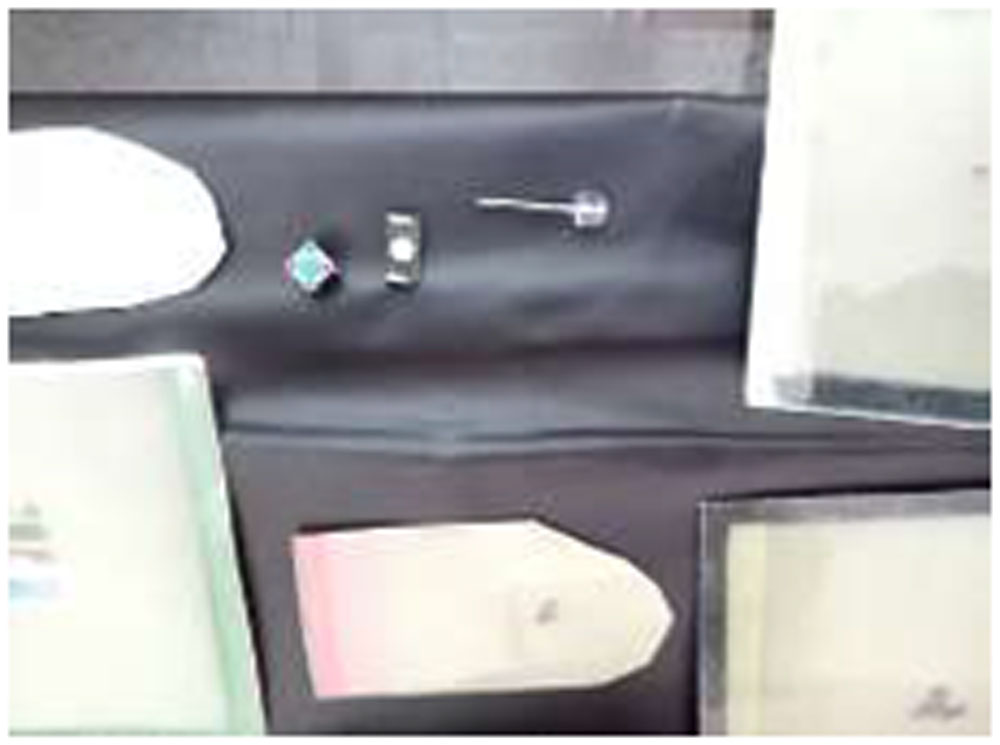
4.Different slides, reflectingoccluder
5.Whole device with different components
6.Underside of the SMS with switches connecting LED lights to illuminate slides which can perform alternate flashing with music
7.From synoptophore to spectacle mounted miniature haploscope with music chip: perceptual learning as amblyopia therapy
Leave a Comment