

Dr. A. Balraj, B19536, Dr. Subashini S
To analyse the causes and course of isolated and combined oculomotor nerve palsies in south India, a prospective study was conducted between January 2015 – December 2017 at a tertiary eye centre. We identified 436 patients with 3rd, 4th, 6th and multiple cranial nerve palsies. 82% were isolated; 18% were combined. Commonest symptom was double vision-72%, followed by ptosis-28 %, headache-16 % and deviation of eyes-13 %. Commonest nerve was 6th – 48 % followed by 3rd- 24 % and 4th- 10%. Commonest cause was ischemic in 6th and 3rd, traumatic in 4th nerve. Combined palsies were mainly due to inflammation and trauma. Pupil involvement was seen in 46 patients (69 % tumors,9% aneurysm,12% trauma,4% meningitis,4% demyelination & 2% arteritic). Though majority of vasculopathic palsies resolved spontaneously, vascular risk factors were also found in 49 % of non vascular causes. Thorough clinical exam with patient tailored investigations will help uncover life threatening associations of nerve palsies.
Key-words: isolated and combined oculomotor nerve palsies,3rd, 4th, 6th and multiple cranial nerve palsies, ocular motor palsies.
INTRODUCTION:
Ocular motor nerves supply extra ocular muscles, Levator palpebrae superioris, sphincter pupillae and ciliary muscle. Ocular motor nerve palsies can be caused by lesions that affect the nerves at any location from their nuclear origin to their termination in the extra ocular muscles. It may be unilateral or bilateral, may involve one or more nerves at the same time. Clinicalmanifestations of these palsies may differ according to the type and localization of the lesions. Ocular motor nerve palsies are commonly encountered in clinical practice and usually express an underlying local, regional or general disease. Isolated third, fourth, and sixth cranial nerve palsies in adult frequently occur from presumed microvascular ischemia to the nerve in the setting of atherosclerotic risk factors, such as older age, diabetes mellitus, hypertension, and hyperlipidemia.(1-2) In recent years, the twin developments of advancing technology and proliferating sub-specialities have made accurate neuro-ophthalmic diagnosis a widespread reality.(3)
This study highlights the various etiologies of third, fourth and sixth cranial nerve palsies. We also determined the incidence of pupillary abnormalities associated with third nerve palsies.
MATERIALS AND METHODS:
It was a Hospital based retrospective observational study. 3rd, 4th and 6th cranial nerve palsies either singly or in combination, who attended the ophthalmology OPD during the period between January 2015 to December 2017 were included in the study.
Inclusion Criteria: All age groups and both sexes are being included.
Exclusion Criteria: Congenital cranial nerve palsies and Ocular nerve palsy secondary to neurosurgery.
Detailed history was taken followed by systematic general, ocular and neurological examination in each patient. In past history importance was given to diseases such as diabetes mellitus, hypertension and tuberculosis.
Besides routine investigations like urine analysis, complete blood picture, VDRL, Mantoux test etc. some special investigations like blood sugar levels (fasting and post lunch), CSF analysis, angiogram, and X-ray of paranasal sinuses were taken and X-ray chest was taken when required. Radioimaging like CT Brain and Orbits-plain / contrast and MRI of brain,CT angiogram was done. Whenever required patient was advised Vascular imaging techniques like Contrast Angiography, MRA (Magnetic Resonance Angiography). Institutional Review Boards approved all study protocols.
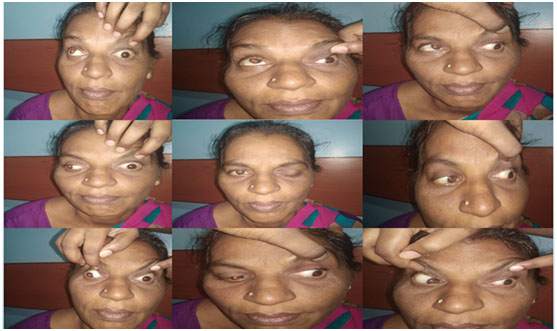
FIGURE 1: Showing restriction of ocular movements (Abduction, Depression, Elevation) with complete ptosis in LE 3RD nerve palsy
RESULTS
In total, 436 patients were included in the study(Males =248 & Females=188). Isolated cranial nerve palsies (82%) presented more common than that of combined palsies (18%). 6th Cranial nerve (48%) was the commonest nerve to be involved followed by 3rd cranial nerve (24%) and 4th cranial nerve (10%)(Figure 2). Commonest symptom at presentation was double vision (56%) followed by ptosis (28%), headache (16%) and deviation of eyes (13%).
The main cause for isolated third nerve dysfunction was vasculapthy(80%) followed by trauma(12%), tumor(3%) and inflammatory(5%)(Table 1). Pupil involvement was seen in 46 patients (43.8%) of Third cranial nerve palsy. The most common cause for pupil involving 3rd nerve palsy was Tumors (69%) followed by trauma(12%), aneurysm(9%), meningitis(4%), demyelination(4%) & arteritic(2%)(Table 2).
The main cause for isolated fourth nerve dysfunction was trauma(43%) followed by vasculapthy(30%), tumor(18%) and inflammatory(7%)(Table 1).
The main cause for isolated sixth nerve dysfunction was vasculapthy(42%) followed by trauma(32%), tumor(14%), raised intracranial hypertension(7%) and inflammatory(5%)(Table 1).
The main cause for combined cranial nerve palsies was trauma(34%) in our series followed by cavernous sinus thrombosis(18%), infarcts in the brain(13%), orbital apex syndrome(12%). The other causes for combined cranial nerve palsies were cerebellopontine angle tumors(6%), skull base tumors(4%), multiple sclerosis(3%) and meningitis(4%) in our case series(Table 3).
We also compared age wise distribution of multiple cranial nerve palsies(Both isolated and combined) and we found that meningitis(68%) was the most common cause for patients aged less than 40 years, aneurysms(59%) was the most common cause for patients aged between 40-60 years and for patients aged more than 60 years giant cell arteritis(88%) was the most common cause(Table 4).
FIGURE 2:Showingfrequency of third, fourth, and sixth cranial nerve dysfunction
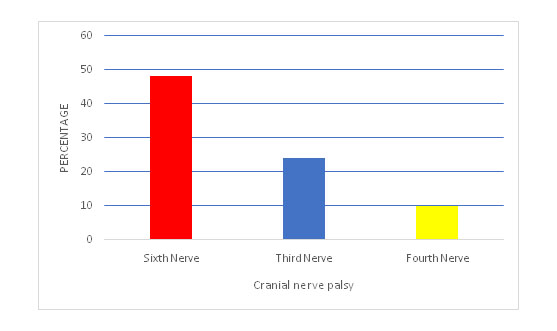
Table 1: Causes of neurologically isolated third, fourth and sixth cranial nerve dysfunction
| CAUSES | 3rd palsy(%) | 4th palsy(%) | 6th palsy(%) |
| Vasculopathy
(Pupil sparing) |
80 | 32 | 42 |
| Trauma | 12 | 43 | 32 |
| Tumors | 3 | 18 | 14 |
| Inflammatory | 5 | 7 | 5 |
| Raised Intracranial Tension | 0 | 0 | 7 |
Table 2: Causes of pupil involving third cranial nerve dysfunction
| CAUSES | Percentage(%) |
| Tumors | 69 |
| Aneurysm | 9 |
| Trauma | 12 |
| Meningitis | 4 |
| Demyelination | 4 |
| Arteritic | 2 |
Table 3: Causes of neurologically combined cranial nerve dysfunction
| CAUSES | Percentage(%) |
| Cavernous sinus thrombosis | 18 |
| Orbital apex syndrome | 12 |
| Trauma | 34 |
| Cerebellopontine angle tumors | 6 |
| Skull base tumors | 4 |
| Multiple sclerosis | 3 |
| Meningitis | 4 |
| Infarcts | 13 |
Table 4: Causes of various cranial nerve palsies according to Age wise distribution
| CAUSES | < 40 YEARS(%) | 40-60 YEARS(%) | > 60 YEARS(%) |
| Tumors | 22 | 30 | 48 |
| Demyelination | 52 | 41 | 7 |
| Trauma | 38 | 33 | 29 |
| Vasculopathy | 4 | 26 | 70 |
| Giant cell arteritis | 0 | 12 | 88 |
| Aneurysms | 16 | 59 | 25 |
| Meningitis | 68 | 23 | 9 |
Prognosis of isolated and combined nerve palsies:
We followed the patients with isolated and combined nerve palsies for three months to confirm whether they recovered from the binocular diplopia. The recovery for vascupathy was more than 90% in 3 months for all cranial nerve palsies. In case of trauma, there was 60% recovery for fourth and sixth nerve palsies and <30% for third nerve palsy. Meningitis showed more than 70% recovery rate in cranial nerve palsies. Giant cell arteritis showed more than 90% recovery at three months follow-up. Aneurysms showed 75% recovery rate. Tumors showed variable recovery rate based on management and usually poor prognosis. Especially, combined nerve palsies took longer recovery time.
Discussion
Symptoms in ocular motor nerve palsies In the present study was double vision (56%) followed by ptosis (28%), headache (16%) and deviation of eyes (13%). In Mwanza et al(4) study diplopia was seen in 35.4% of cases, ptosis in 41.9% and visual impairment in 12.9%.
The commonest cranial nerve to involve was 6th nerve(48%) closely followed by 3rd nerve(24%) and last is 4th nerve(10%) which is similar in trend to the study done by Menon et al(5) and Akagi et al(6).(Table 5)
Table 5: Comparison of distribution of nerve palsies (%) with other studies.
| Cranial nerve palsy | Akagi et al(6) | Rush and young(7) | Menon et al(5) | Berlit P et al(8) | Mwanza et al(4) | Sitaula S et al (9) | Dharmaraju et al(10) | Present study |
| 3rd nerve | 28.5 | 29 | 32 | 41.70 | 11 | 22 | 30 | 24 |
| 4th nerve | 18.6 | 17.2 | 6.1 | 6 | – | 10 | – | 10 |
| 6th nerve | 52.9 | 51.5 | 44.6 | 40 | 12 | 49 | 36 | 48 |
| Multiple nerves | 12.7 | 17.3 | – | 8 | 10 | 34 | 28 |
In this study vascular aetiology (33%) was found to be the most common cause, followed by Trauma (26%) and Neoplasms (24%). In a south Indian study by Dharmaraju et al(10) inflammatory aetiology (48%) was found to be the most common. In comparison to Nepal study by Sitaula S et al(9) (6.1%) in the present study there is an increase in vascular aetiology (33%).This may be due to an increase in prevalence of systemic diseases like diabetes and hypertension. In present study Trauma was the cause in 26% cases which is in accordance with earlier studies by Rush and Young(7) (19.7%), Menon v et al(5) (18.7%), Sitaula et al(9)(15.38%) and Dharmaraju et al(10)(14%). In earlier studies by Rush and Young(7)(26.3%), Menon V et al(5)(30.5%), Sitaula et al(9)(31.8%) more number of cases of undetermined aetiology were found for which no definite explanation was offered.(Table 6)
Table 6: Comparisons of Aetiologies(%)with other studies
| Aetiology | Rush and Young(7) | Menon et al(5) | Sitaula S et al(9) | Dharmaraju S et al(10) | Present series |
| Vascular | 17.2 | 7.1 | 26.37 | 12 | 33 |
| Trauma | 19.7 | 18.7 | 15.38 | 14 | 26 |
| Infections | – | 7.6 | – | – | – |
| Neoplasms | 14.3 | 12.2 | 9.89 | 8 | 24 |
| Others | 15.4 | 21.75 | 15.38 | – | 10 |
| Undetermined | 26.3 | 30.5 | 31.87 | 16 | – |
| Inflammatory | – | 7.6 | – | 48 | 5 |
| BIH | – | – | 1.10 | – | – |
| Aneurysm | – | – | – | 2 | 2 |
In this study vascular aetiology was found to be the most common (80%) that correlates well with the study conducted by Sitaula S et al(9)(36.39%) and Berlit P et al(8)(40%). On comparing the present study to both studies in Menon V et al(5) (30.15%) & Rush and Young(7) study(27%) more number of cases were of undetermined aetiology. In PS Reddy et al(11)study most common cause of third nerve palsy was Tuberculosis followed by vascular cause. In Dharmaraju et al(10)study inflammatory aetiology(46.6%) was the most common cause.(Table 7) In the present study pupillary involvement was seen in 43.8% of third nerve palsy. Pupillary involvement in isolated third nerve palsies was 73.7% in Dharmaraju et al(10) study and 36.8% in Mwanza et al(4)study.(Table 7)Menon et al(5)found pupil involvement in about one third of their cases(35%). The most common cause for pupil involving 3rd nerve palsy was Tumors (69%) which was contrary to the study done by Akagi et al(6), they found aneurysm (90%) as the cause compared to other cause.
Table 7:Comparison of aetiology of isolated 3rd cranial nerve palsy(%) with other studies.
| Aetiology | Rush and Young(7) | Menon V et al(5) | Sitaula et al(9) | Dharmaraju S et al(10) | Present series |
| Vascular | 20.7 | 3.15 | 36.30 | 26.66 | 80 |
| Trauma | 16.2 | 22.2 | 13.60 | 13.33 | 12 |
| Infectious | – | – | 9.1 | – | – |
| Neoplasms | 11.7 | 9.5 | 13.60 | 6.66 | 3 |
| Inflammatory | – | 9.5 | – | 46.66 | 5 |
| Aneurysms | 13.8 | 3.15 | – | 2 | – |
| Others | 14.5 | 22.2 | – | – | – |
| Undetermined | 23.1 | 30.15 | 27 | 6.66 | – |
Isolated sixth nerve palsy was the most common ocular motor nerve palsy (48%) in this study. The main cause for isolated sixth nerve dysfunction was vasculapthy(42%) followed by trauma(32%), tumor(14%), raised intracranial hypertension(7%) and inflammatory(5%). In a study by Rush and Young(7) the aetiology of sixth nerve palsy was relatively comparable to our study.(Table 8)
Table 8: Comparison of Aetiology of sixth nerve palsy(%) with others studies
| Aetiology | Rush and Young(7) | Menon V et al(5) | Sitaula JC et al(9) | Dharmaraju S et al(10) | Present study |
| Vascular | 17.7 | 5.1 | 20.30 | 16.66 | 42 |
| Trauma | 16.7 | 10.2 | 8.16 | 27.77 | 32 |
| Infectious | – | 3.4 | – | 22.22 | – |
| Neoplasms | 14.6 | 10.2 | 2.04 | 11.11 | 14 |
| Inflammatory | – | – | – | – | 5 |
| Aneurysms | 3.6 | 5.1 | – | – | – |
| Others | 17.4 | 18.18 | 24.40 | – | 7 |
| undetermined | 29.6 | 36.3 | 40.80 | 22.22 | – |
Out of 436 cases included in the study 78(18%) were of multiple ocular motor nerve involvement. This is almost similar to that reported by Menon V et al(5) (17.3%).In Rush and Young study(7) it was 12.7%.Combined palsies were mainly due to trauma(34%) which is similar as reported by Menon et al(5)(26.4%). In PS Reddy et al(11) study most common cause was tuberculosis followed by cases of undetermined aetiology.(Table 9)
Table 9: Comparison of aetiology of multiple nerve palsies(%)
| Aetiology | Rush and Young(7) | Menon V et al (5) | Sitaula J et al(9) | Present study |
| Vascular | 5.04 | – | 30 | – |
| Trauma | 21 | 26.4 | 10 | 34 |
| Infectious | – | – | – | – |
| Neoplasms | 34.45 | 20.5 | 40 | 10 |
| Inflammatory | – | 23.5 | – | 7 |
| Aneurysm | 10.92 | – | – | – |
| Others | 20.06 | 14.7 | – | 36 |
| Undetermined | 8.4 | 14.7 | 20 | – |
Vascular risk factors were also found in 49 % of non vascular causes which is similar to the study done by Akagi et al(6).
Though majority of vasculopathic palsies resolved spontaneously(90%) which is contrary to the study done by Rush et al(7)found only 50% resolved spontaneously in their group.
In a study done by Park et al(12), they found Overall recovery rate was highest in patients with traumatic cause (100.0%), followed by vascular cause (86.7%) which is contrary to our study in which recovery rate was more in case of vasculopathic causes(90%) for all cranial nerve palsies followed by traumatic causes which showed 60% recovery rate in case of fourth and sixth cranial nerve palsies and 30% in case of third cranial nerve dysfunction.
In conclusion, Isolated third, fourth, and sixth nerve palsies are a common cause of acute diplopia in neurological practice; the advances in the management of multiple sclerosis, stroke, and neoplasms make early diagnosis and treatment of these conditions more important than in the past. Although the presence of vasculopathic risk factors in patients aged at least 50 years is a significant predictor for a presumed microvascular cause for an isolated ocular motor mononeuropathy, a substantial proportion of our patients with other causes also harbored vasculopathic risk factors.Thorough clinical exam with patient tailored investigations will help uncover life threatening associations of nerve palsies.
REFERENCES
- Bendszus M, Beck A, Koltzenburg M, et al. MRI in isolated sixth nerve palsies. Neuroradiology. 2001;43:742–5
- Patel SV, Mutyala S, Leske DA, Hodge DO, Holmes JM. Incidence, associations, and evaluation of sixth nerve palsy using a population-based method. Ophthalmology. 2004 Feb 1;111(2):369-75.
- Duke Elder S,Scott GI.The motor System.Section III.In: Neuro- ophthalmology in System of ophthalmology,Duke Elder S (ed).London:Henry Kimpton 1974;713-793.
- Mwanza JC, Ngweme GB, Kayembe DL. Oculo motor nerve palsy, a clinical and aetiological study.IJO.2006:54(3); 173-176.
- Menon V, Singh J, Praka sh P. Aetiological patterns of ocular motor nerve palsies.Indian J Ophthalmol 1984;32:447-453.
- Akagi T, Miyamoto K, Kashii S, Yoshimura N. Cause and prognosis of neurologically isolated third, fourth, or sixth cranial nerve dysfunction in cases of oculomotor palsy. Japanese journal of ophthalmology. 2008 Feb 1;52(1):32-5.
- Rush JA.Young BR.Paralysis of cranial nerves III, IV and VI: causes and prognosis in thousand cases. Arch Ophthalmol 1981; 99:76-79
- Berlit P.Isolated and combined paresis of cranial nerves third, fourth and sixth .Retrospective study of 412 patients .J Neurol SCI1991; 103:10-15.
- Sitaula S, Sharma AK, Shrestha GB, Gajurel BP, Shrestha GS.Clinical manifestation of ocular motor nerve palsies. Journal of institute of medicine.2014:36(3)
- Dharmaraju, Giridhar B, Chethana L. A clinical study of aetiological factors contributing to third, fourth and sixth cranial nerve palsies. Asian Pac.J.Health Sci., 2016; 3(3):10-17.
- Reddy PS, Reddy RC, Satapathy M. Aetiological study of the third, fourth and sixth cranial nerve paralysis. Indian journal of ophthalmology. 1972 Dec 1;20(4):159
- Park UC, Kim SJ, Hwang JM, Yu YS. Clinical features and natural history of acquired third, fourth, and sixth cranial nerve palsy. Eye. 2008 May;22(5):691.
Leave a Comment